USF Reform Draft Expected By End Of May, Lawmaker Says
Energy and Commerce Subcommittee Chairman Richard Hudson calls current funding model unsustainable as reform talks advance.

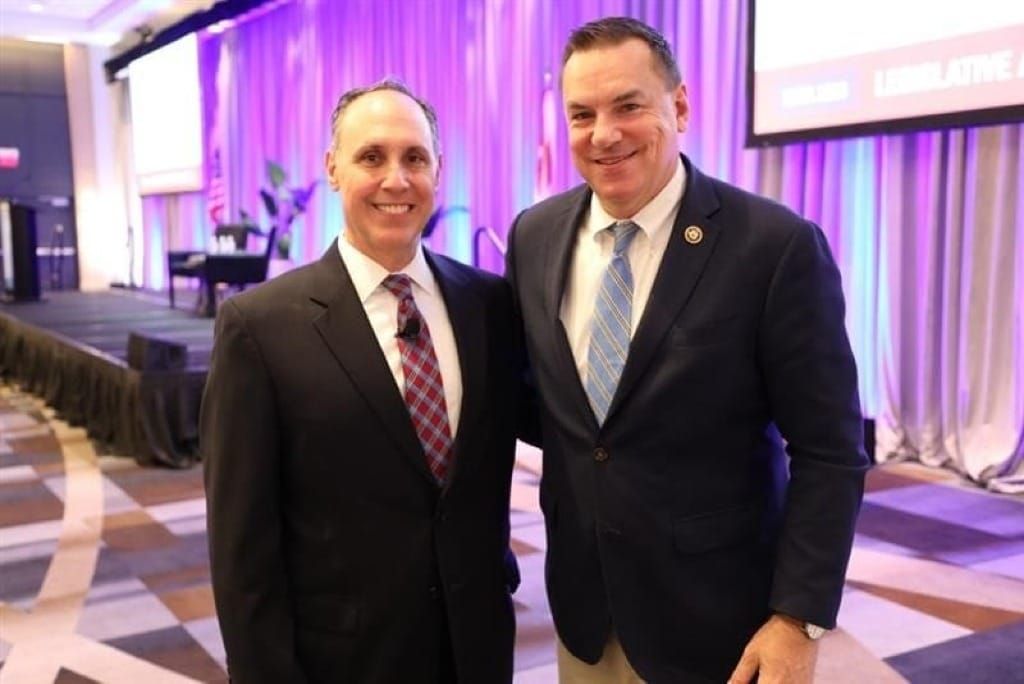
WASHINGTON, April 27, 2026 – Energy and Commerce Subcommittee Chairman Richard Hudson, R-N.C., said lawmakers aim to release draft legislation to reform the Universal Service Fund by the end of May, citing bipartisan progress.
“We’ve made tremendous progress the last six months,” Hudson said Monday at a legislative and policy conference hosted by NTCA, “by the end of May we’ll have a text ready to go.”
The $8 billion-per-year federal subsidy program supports broadband access in rural areas, low-income communities, schools, libraries, and health care providers. It is funded through fees on interstate and international voice revenues, a base lawmakers say is shrinking.

Both parties agree the current model is unsustainable, Hudson said. “We can’t continue to allow the system to rely on voice as that percentage shrinks,” he said.
Lawmakers must modernize the funding mechanism without disrupting existing programs.
“With all the money we’ve spent over the years, are we still spending it in the way that makes sense? We need to do that without breaking the programs you all rely on,” he said.
Reform efforts focus on sustainability, accountability, and predictability for long-term investment, Hudson said. “If you’re going to make a 20-year investment, you need to know what the rules of the game are,” he said.
Coordination with the Federal Communications Commission has been strong as Congress works on the legislation, Hudson said.
Hudson also addressed the Broadband Equity, Access, and Deployment program, a separate federal initiative to fund broadband expansion.
“I’m really pleased at how quickly NTIA moved,” he said, adding North Carolina is expected to begin receiving funding.
Accountability remains a concern for Hudson. “I’m a little concerned that we’re not transparent enough in the current framework,” he said.
Hudson then turned to permitting reform, calling it critical to speed deployment. He said he is “very optimistic” Congress can pass permitting reform, calling it a bipartisan priority.
“Companies need predictability,” he said, “You need to know how long it’s going to take to get those permits so you can make those investments.”
Several permitting bills have advanced in the House, though disagreements remain over impacts to local control. “Municipalities can still approve or disapprove,” Hudson said. “They just can’t take forever.”
Aligning telecom and energy permitting reforms will be key to accelerating deployment, he said.