Swedish Software Firm and AT&T Lead Open Access Standards Push in U.S.
A 165-member standards body aims to make it cheaper and faster for internet providers to share fiber networks across North America.

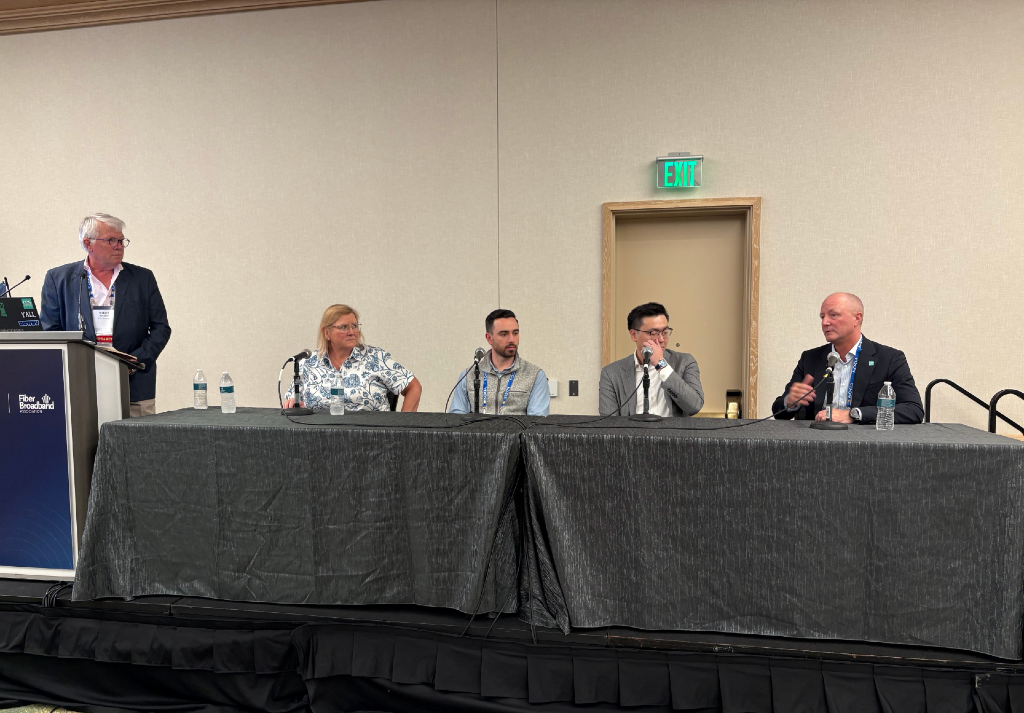
ORLANDO, May 17, 2026 — A new industry standards body launched in February to solve the integration bottleneck blocking open access fiber, a model in which a single network owner leases infrastructure to multiple competing internet service providers, from scaling in North America.
AT&T and COS Systems, a Swedish internet access software company, are co-leading the effort.
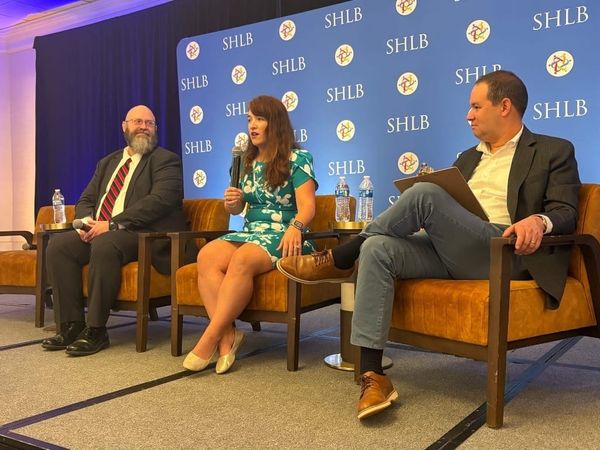
COS Systems hosted Open Access Day 2026 as a pre-conference session here at Fiber Connect, the annual gathering of the U.S. fiber industry. The event draws operators, investors, vendors and infrastructure owners from around the world.
The forum arrived as the U.S. fiber industry may be entering a consolidation phase and capital costs are climbing. Operators from Sweden, South Africa, and Canada said that prioritizing homes passed, the industry metric for how many households a network runs past regardless of whether they subscribe, over connected customers has produced uneven results across European fiber markets.
Open access means a single entity, typically a municipality, utility, or private network operator, builds and owns physical fiber infrastructure and leases access to multiple competing internet service providers, who sell directly to subscribers. The infrastructure owner collects wholesale fees, where the ISPs compete on price, service, and brand.
Since the infrastructure is shared, a customer unhappy with one provider can switch to another without changing their physical connection. That competition has driven take rates, the share of homes on a network that actually subscribe, well above 50 percent across Scandinavia and parts of Europe. In the United States, open access remains a much smaller fraction of total fiber deployment.
One core obstacle has been integration costs. Every time an ISP joins an open access network, the two sides must connect their billing systems, provisioning platforms, and technical interfaces without shared standards, meaning each connection is built from scratch.
That process discourages smaller ISPs from joining networks and slows the model's expansion.
The standards problem
COS Systems CEO Mikael Philipsson, said the absence of shared standards has been the defining constraint on open access adoption in North America. Philipsson oversaw the construction of open access networks passing one million homes in Sweden, achieving average take rates of 70 percent.
The Open Access Network Forum, known as OANF, is housed within the Alliance for Telecommunications Industry Solutions (ATIS), a Washington-based standards organization with 165 member companies including AT&T, Verizon, T-Mobile, and Nokia. It launched Feb. 5, 2026, to develop a unified specification covering the business, operational, and technical requirements that govern how ISPs connect to open access networks across North America.
Scott Baker, who chairs the forum from his role at AT&T Technology Services, said Gigapower, the open access fiber joint venture AT&T launched with investment firm BlackRock in 2022, exposed the integration problem at scale. Each new ISP that joined the network required a custom technical and operational build, a cost that made the model difficult to replicate across markets.
COS Systems Chief Tecnhology Officer Sajan Parikh is vice chair of the forum.
"If every time you add an ISP it's a bespoke integration, you don't have open access," said Amy Wheelus, chief technology and infrastructure officer at Gigapower. "You just have a bunch of exceptions."
What open access unlocks for mergers and acquisitions
Open access architecture also changes the economics of mergers and acquisitions in a consolidating fiber market. Because the model separates the network layer, the physical fiber and the systems that run it, from the service layer, where ISPs handle billing, customer support, and marketing, the two can be migrated independently after a deal closes. An acquiring company can take control of the infrastructure while leaving the acquired ISP's billing systems and customer relationships in place, then integrating them on a separate timeline.
"The ISP with all that billing and customer support could stay on there for a while," Philipsson said. "That has been the biggest effect of open access technology on mergers and acquisitions."
Founder of Toronto-based infrastructure investment firm Nexxcap Tony Ding said standardization changes how investors evaluate open access deals. Investors need confidence that adding or swapping ISPs on a network will not require custom and bespoke technical work each time, because those costs eat directly into returns.
After an acquisition, panelists argued, the acquiring company does not have to retire the purchased ISP's brand. Keeping competing brands on the same network is analogous to what wireless carriers do with Mobile Virtual Network Operators, or MVNOs, companies that sell mobile phone service under their own name using another carrier's towers and spectrum without owning any physical infrastructure.
Applied to fiber, the same logic holds: Customers who would never subscribe to AT&T might subscribe to a smaller local brand running on the same network. Maintaining that competition, panelists said, could potentially push take rates from roughly 40 percent toward 60 percent or higher.
Beyond fiber
A second panel examined whether open access works across technologies beyond fiber, including fixed wireless access, or FWA, a technology that delivers broadband using radio signals from towers or rooftop antennas rather than physical cables.
Craig Walton, who manages AT&T's participation as an ISP on open access networks, said the company enforces strict service level agreements, contracts specifying minimum performance standards and penalties for failing to meet them, with every open access provider it operates on.
Prime Fiber CEO Rob Johnson argued that cable network architecture was not designed for the clean layer separation open access requires. Without that separation, cable operators cannot cleanly hand off the service layer to competing ISPs, making the model structurally difficult to adopt regardless of commercial interest.
What Europe learned and the U.S. should know
Founder Pär Cedergren of OciusX, a Stockholm-based fiber network project management software company, said European investors spent years racing to maximize homes passed rather than connecting customers. The result was massive overbuilding and a fiber sector now under financial stress across national markets.
"My advice to the U.S. market: don't follow the European model by chasing homes passed," Cedergren said. "Connect customers. Offer services. Send invoices."
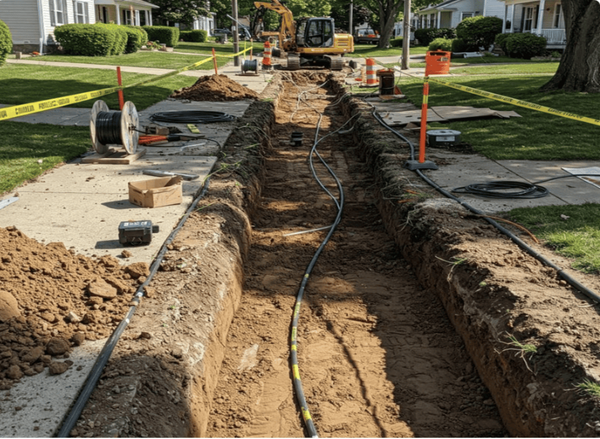
Rudolf Pretorius, whose South African fiber business Rizz Fibre has expanded into the U.S. market, described five competing providers digging up the same street in Pretoria five times to lay parallel networks.
The panel also worked through the anchor tenant model, in which a single large ISP commits to serving customers on a new network from day one, giving investors a baseline revenue projection.
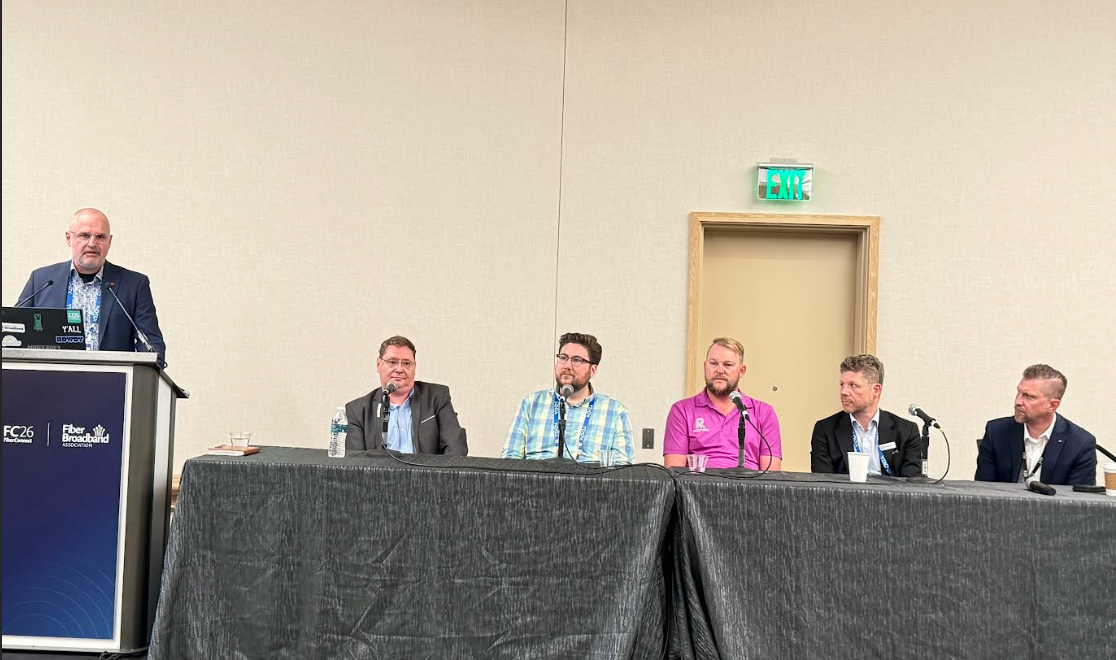
Intellipop co-founder Aaron Hildreth, a Utah-based ISP operating on open access networks across five states, said anchors remain a practical necessity because investors will not fund a network without a committed first customer. Pretorius countered that networks locked to one dominant provider leave smaller ISPs with the least profitable customers once exclusivity ends.
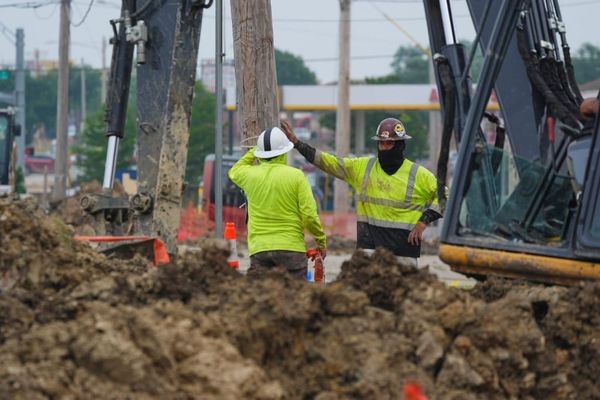
The U.S. fiber buildout, accelerated by the Broadband Equity, Access, and Deployment program, the $42.5 billion federal grant initiative connecting unserved communities, risks the same dynamic if operators optimize for miles deployed rather than customers connected.
"Laying fiber is one thing," Pretorius said. "Connecting homes is where you need to go."
Correction: A previous version of this article incorrectly identified COS Systems CEO Mikael Philipsson as vice chair of the Open Access Network Forum. That role belongs to COS Systems Chief Technology Officer Sajan Parikh. The article also incorrectly identified Scott Baker of AT&T Technology Services as co-chair of the forum. He is the chair. The article has been updated.