
Virginia Looking to Get Fiber to 81 Percent of BEAD Locations
About 10 percent of the state's eligible locations would be served by satellite under its plan.

WASHINGTON, August 7, 2025 – In Virginia, fiber is still a winner.
After a new round of bidding mandated by the Trump administration, Virginia plans to get fiber to 81 percent of its eligible homes and businesses under the Broadband Equity, Access, and Deployment program.
Meanwhile satellite providers SpaceX and Kuiper are set to connect nearly 10 percent of the eligible locations, according to a draft of Virginia’s final BEAD proposal the state released for public comment on Wednesday. Getting the final proposal approved by the Commerce Department is the last step before states can begin funding projects. The filing deadline is Sept. 4, 2025.

The state would spend more than $613 million of its $1.48 billion in Biden-era BEAD allocation on broadband deployment to its 127,005 locations that still lack high-speed internet. The draft proposal said that was $200 million less than it had planned before the Trump administration changed the program’s rules in June.
The new rules eliminated an explicit preference for fiber and made it easier for other technologies like satellite to compete on the basis of deployment cost, where fiber is at a disadvantage. Virginia’s 81 percent fiber proportion would be on par with Nevada’s plan under the Biden administration rules, but lower than neighboring West Virginia, which had a plan to get fiber to all of its 110,220 eligible locations with $946 million of its $1.2 billion allocation.
The biggest winners in Virginia would be All Points Broadband and Comcast. All Points would take home $171.4 million to get fiber to 19,801 locations, and Comcast would receive $146.4 million to serve 24,343 locations with a combination of fiber and cable. Of those, 9,710 would receive cable.
SpaceX would receive $3.3 million to serve 5,579 locations, and Amazon would receive $4.5 million to cover 6,957 locations.
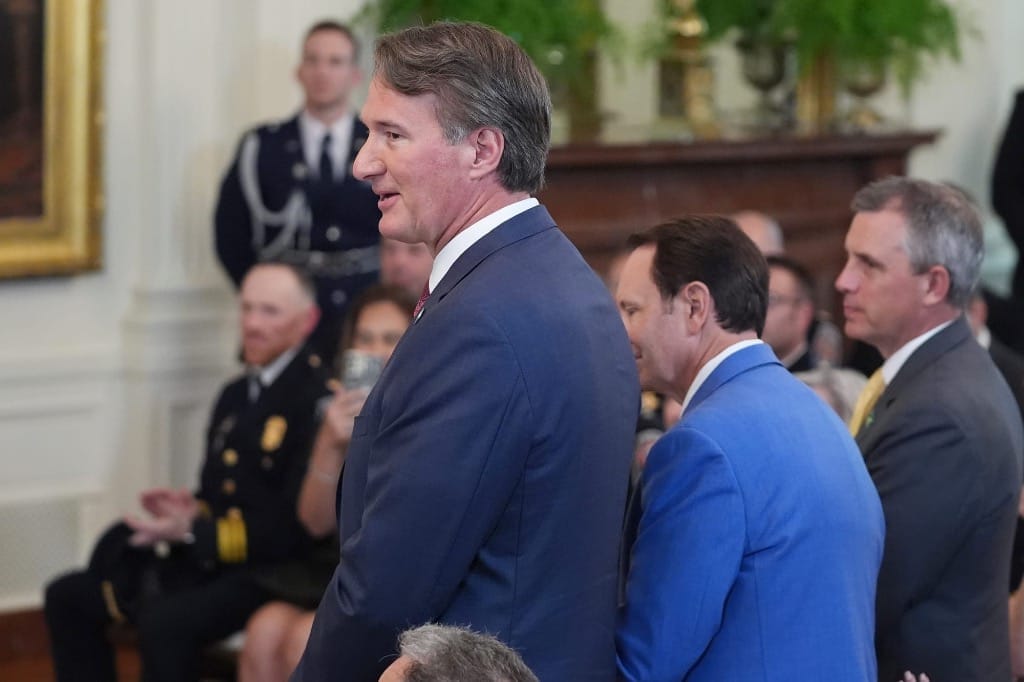
“Day one, we made a promise to connect all Virginia homes and businesses to reliable, high-speed internet, and these grants, once approved, will fund the last step to keeping that promise,” Virginia Governor Glenn Youngkin (R) said in a statement.
Priority projects
Exactly how much funding gets shifted away from fiber and toward fixed wireless and satellite will depend on how states interpret the Trump administration’s definition of a priority project, which gets first consideration for a given area even if it costs more than a non-priority application.
The Infrastructure Act, which stood up the $42.5 billion BEAD program, defined a priority project as one that meets the program’s minimum speed and latency standards and can “easily scale speeds over time” to meet future connectivity needs and support 5G deployments.
The Biden administration had determined that only applied to fiber and categorically pushed other technologies, which have lower maximum capacities, to non-priority status.
The Trump administration has now asked states to make the determinations themselves on an application-by-application basis, opening the door to other technologies receiving the designation and potentially beating out fiber applicants that would require more funding.
Virginia said in the draft proposal that it evaluated how easily a provider could scale and whether terrain and tree cover could degrade service as part of its priority project determination, and implied both could cut against low-earth orbit satellites.
The state said that a system requiring “additional regulatory approvals, such as zoning, spectrum, or orbital clearances” could “introduce uncertainty,” and that “technologies with shorter operational lifespans may pose replacement risks that could impact long-term reliability and cost-effectiveness.”
SpaceX and Kuiper are seeking Federal Communications Commission approval to access more spectrum and increase power levels in some bands. Kuiper’s constellation is still in the early stages of launching and its service is not operational yet, while SpaceX satellites have a lifespan of about 5 years.
Virginia also noted that “Broadband technologies with obstructed line-of-sight, specifically wireless and LEO technologies, can have signal degradation, increased latency, and reduced reliability,” and said that it factored an area's tree coverage into its review of fixed wireless and satellite applications.
Of SpaceX and Kuiper, Virginia’s broadband office said it determined each company “meets the statutory definition of a priority broadband project for specific project areas, but does not in others,” and that awarded locations include “both areas where this applicant was deemed as priority, as well as not deemed priority.”
Under the new rules, some states have reported fiber providers that applied the first time being less interested in resubmitting materials under less favorable rules, while others have been able to maintain participation. Bidding data from states that have released it show SpaceX and Kuiper have been bidding aggressively in some places.
Nondeployment
While Virginia would have more than $868 million in BEAD cash left over, the state’s plan did not mention nondeployment projects. The NTIA rescinded approval of nondeployment efforts of any kind in June, including some that were already underway, and said more guidance was coming in the future.
The Infrastructure Act says efforts to promote broadband adoption, plus anything else NTIA greenlights, would be an allowed use of funding after all of a state’s locations are connected.
Virginia had planned to use nondeployment funding for additional cell towers to reach more parts of the state with mobile service, broadband adoption programs, a program to improve connectivity in apartment buildings, and improve LEO satellite capacity.





Member discussion