What to Do With Remaining BEAD Funds, a.k.a 'Non-Deployment'?
As states complete their broadband spending plans, a fight is brewing over the remaining $21 billion.

Drew Clark
The Broadband Equity, Access, and Deployment program's $42.45 billion was never just about laying fiber (or offering wireless or satellite service).
12 Days of Broadband 2025 (click to open)
- On the First Day of Broadband, my true love sent to me: One Carr driving the Federal Communications Commission.
- On the Second Day of Broadband, my true love sent to me: Two superpowers racing toward AI superintelligence dominance.
- On the Third Day of Broadband, my true love sent to me: Three branches of government (and some formerly independent agencies).
- On the Fourth Day of Broadband, my true love sent to me: Four programs with Universal Service Funds.
- On the Fifth Day of Broadband, my true love sent to me: 56 states and territories without digital equity grants.
- On the Sixth Day of Broadband, my true love sent to me: Less than 6 months for a broadband permit.
- On the Seventh Day of Broadband, my true love sent to me: Data center-powered electricity bills up 70 percent.
- On the Eighth Day of Broadband, my true love sent to me: 800 megahertz of spectrum to sell at auction.
When Congress passed the Infrastructure Investment and Jobs Act in 2021, it explicitly authorized states to use BEAD funds beyond infrastructure deployment: Workforce development, digital literacy training, broadband adoption programs, connecting community anchor institutions, device subsidies and cybersecurity education. States spent two years planning how to leverage these so-called "non-deployment" dollars – now just “remaining funds – to ensure that new networks would actually translate into connected communities.
For example, Louisiana budgeted $510 million for telehealth expansion, precision agriculture training through LSU's AgCenter, and digital skills programs in correctional facilities. Florida earmarked roughly $200 million for workforce development, recognizing that its deployment goals depended on scaling up the labor pool. Maine's broadband authority argued it couldn't build infrastructure without first addressing its workforce shortage—and that non-deployment investments needed to proceed in parallel with construction.

Then came the Trump administration's "Benefit of the Bargain" changes to BEAD.
The BEAD Restructuring Policy Notice issued by the National Telecommunications and Information Administration of the Commerce Department on June 6, prioritized lowest-cost bids, voided previously approved state plans, and rescinded authorization for all non-deployment activities. States had 90 days to resubmit proposals under the new framework, which eliminated scoring criteria for labor practices, climate resilience, and affordability in favor of a single metric: Total BEAD cost per location.
Deployment costs plummeted as states reopened bidding and technologies like fixed wireless and satellite competed without offering fiber extra benefits, as had been the case under the Biden administration. Instead of an uncertain amount available, NTIA now estimates that across 56 states and territories, there would be approximately $21 billion in "savings"—money allocated by Congress but no longer designated for specific projects.
The central question: who gets that money, and for what?
'Not a Non-Deployment Program'
The administration's position appeared to harden over the summer. At the Mountain Connect conference in August, NTIA's Chief of Staff Brooke Donilon declared that BEAD was "a deployment program...,, not a non-deployment program." States faced a Sept. 4 deadline to resubmit plans under the new rules, with no clarity on whether they would retain leftover funds for the adoption and workforce initiatives they had spent years developing.
State broadband officials expressed frustration with the shifting guidance. Vermont Community Broadband Board Chair Christine Hallquist noted the contradictory signals: the policy notice said to disregard the original funding opportunity announcement regarding non-deployment, but a footnote instructed states to "follow the statute"—and the statute explicitly authorizes non-deployment uses. Minnesota's Office of Broadband Development director Bree Maki worried about how the narrowed program would affect community anchor institutions that states had defined based on local knowledge.
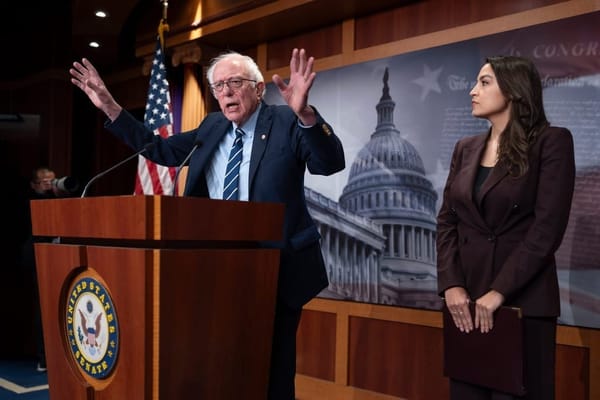
To the extent Congress has put forth a formal response to the controversy, it has been bipartisan pushback – including several vocal Republicans. Sen. Shelley Moore Capito, R-W.V., said on local radio that she would "hold the Trump administration's feet to the fire" to preserve her state's $1.2 billion allocation, of which roughly half would remain after deployment.
Louisiana Gov. Jeff Landry, also a Republican, proposed redirecting non-deployment funds toward AI infrastructure and workforce training aligned with the White House's "America First" priorities—framing the ask in terms the administration might embrace.
And, in a Sept. 22 email, Sen. Roger Wicker, R-Miss., said, “Congress was clear: States can use this remaining grant money. That policy rewards those who wisely stewarded their deployment funds. It could also help states maximize the impact of the 2021 law – if we direct the funds wisely.”
On Tuesday, Dec. 9, a bi-partisan group of 164 state legislators sent a letter to Commerce Secretary Howard Lutnick and NTIA Administrator Arielle Roth urging the release of non-deployment dollars. The signatories warned that "prolonged uncertainty will stall planning and undermine the approved strategies that states spent two years developing."
"Network deployment is BEAD's top priority," they wrote. "But it is not its only priority."
On the other side, Sen. Joni Ernst, R-Iowa, has drafted legislation that would claw back all non-deployment funds for deficit reduction. The RECAPTURE Act, which has not yet been introduced, would divert to the Treasury any funding not designated for a specific use in states' final proposals—which, under the restructured rules, means only deployment projects qualify.
While touting the benefits of saving money with deployment expenditures, Roth said at a Free State Foundation event on Dec. 2 that NTIA was "operating under the assumption that states will get to use their BEAD savings"—while emphasizing that nothing had been finalized and guidance would not come until early 2026.
Conditioning funds on AI policy?
A draft executive order leaked in November added a new dimension to the fight.
In the draft order, Titled "Eliminating State Law Obstruction of National AI Policy," the White House would have directed the NTIA to issue guidance providing that states with "onerous" AI laws would be ineligible for non-deployment funds. California and Colorado—both of which have enacted transparency and disclosure requirements for AI developers—are explicitly cited as examples of the "patchwork" regulatory landscape the administration seeks to override.
The draft order framed state AI regulations as threatening not just innovation but broadband itself, arguing that fragmented rules would "undermine BEAD-funded deployments" and "the growth of AI applications reliant on high-speed networks."
The legal basis is contested. The Senate rejected a similar provision 99-1 in July 2025, when it was proposed as part of the budget reconciliation bill. Drew Garner of the Benton Institute for Broadband & Society said that the administration is "essentially taking these nondeployment funds hostage," adding: "I don't see anything in that structure that allows NTIA to do this."
Mackenzie Arnold, director of U.S. policy at the Institute for Law and AI, speaking at a Broadband Breakfast event on the topic on Wednesday, Dec. 10, noted that BEAD's statutory text is "quite formulaic"—funds are assigned via formula, not discretionary judgment—and that the administration "would have the weakest hand" in litigation because "courts are increasingly skeptical of reading broad powers into legislation where it's not explicitly granted by Congress."
Supporters argue the connection between broadband and AI is not far-fetched. Speaking at the same event, Nathan Leamer, executive director of the advocacy group Build American AI, contended that "the digital economy also means the AI economy"—whether in telemedicine, robotics, or manufacturing—and that connecting Americans to broadband necessarily involves preparing them for AI applications.
Joel Thayer, president of the Digital Progress Institute, praised NTIA's "course correction" but expressed skepticism about using BEAD as leverage for AI preemption "without further insights from Congress."
Amy Huffman, policy director at the National Digital Inclusion Alliance, pushed back on the premise. "Congress got it right the first time when they wrote this law," she said at the same event. "Anything that's related to AI, particularly AI skilling, is already built into the law."
The stakes for states
The dollars involved are substantial. Texas came in more than $2 billion under budget, allocated more than $3.31 billion but planning to spend just $1.27 billion on deployment. Georgia expects to spend only $310 million of its $1.3 billion allocation. Among the 30 states with approved final proposals, deployment spending ranges from roughly 57 percent to 66 percent of allocations—leaving hundreds of millions per state potentially in limbo.
States had planned to use these funds for workforce pipelines, adoption programs to ensure people actually subscribe to new networks, and digital skills training. The need is acute: a Pew Charitable Trusts analysis found that 41 states and Washington, D.C., identified workforce challenges in their BEAD or Digital Equity plans, and NTIA itself projects shortages of key worker types by next year. A Commerce Department inspector general report warned that states have only three years to add thousands of jobs, "which is difficult when training programs last for 12 to 24 months."
Maine's broadband office put it bluntly in a recent stakeholder communication: "In order to achieve the true benefit of the bargain we need to ensure the long-term sustainability of infrastructure deployment through critical enabling investments identified in the legislation that created the BEAD Program."
Critics of the cost-first approach draw comparisons to the Rural Digital Opportunity Fund, created under the first Trump administration. RDOF awarded $9.2 billion to connect 5.2 million locations using lowest-cost bidding. By 2025, according to the Benton Institute, $3.3 billion in awards had defaulted and 1.9 million locations lost their service commitments—a failure rate exceeding one in three.
House Commerce Committee Democrats warned in a November letter to Roth that the restructured BEAD program risks repeating those failures. "Trump's RDOF program funded internet service providers that bid to serve the highest number of locations using the fewest dollars," they wrote. "This approach incentivized widespread underbidding and other anticompetitive behavior that has led to massive defaults."
What’s next
NTIA has promised guidance on non-deployment funds in the first quarter of 2026. The options on the table range widely.
Roth has also floated permitting streamlining as a priority—using non-deployment dollars to accelerate environmental reviews and pole attachment processes ahead of a wave of BEAD-funded construction.
“NTIA is also considering how states can use some of the BEAD savings – what has commonly been referred to as non-deployment money – on key outcomes like permitting reform,” she said at a Hudson Institute event. “No final decisions have been made, but this could be a powerful way to advance BEAD’s goals.”
Landry's proposal would redirect funds toward AI infrastructure, data centers, and workforce training for the AI economy—an attempt to frame non-deployment spending in terms the White House favors. Digital inclusion advocates continue to push for the adoption and affordability programs Congress originally envisioned, arguing that building networks without ensuring people can use them defeats the purpose.
And Ernst's RECAPTURE Act remains a possibility, though it is unclear whether the bill has any prospect of passing—or whether the administration would prefer to retain flexibility over the funds rather than send them to Treasury.
Whether the draft AI executive order is released will likely shape how seriously the Trump administration is taking efforts to restrict the remaining BEAD funds. Although states remain in limbo, the outcome for these funds is beginning to emerge in view.
Member discussion