Whistleblower Suit Against Array Can Continue Judge Says
A district judge said private parties can sue under the False Claims Act

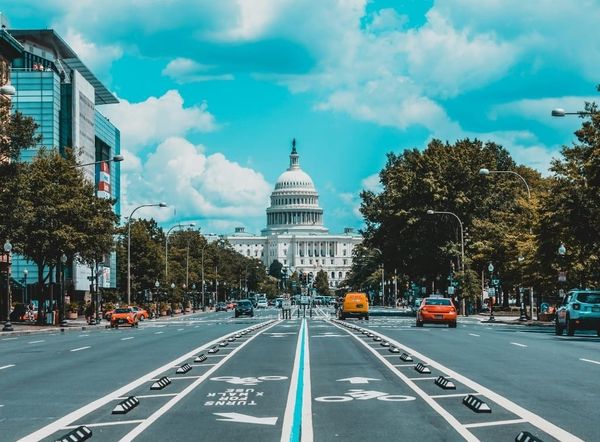
WASHINGTON, Aug. 19, 2026 – A federal judge decided a longstanding whistleblower lawsuit against Array Digital Infrastructure can continue.
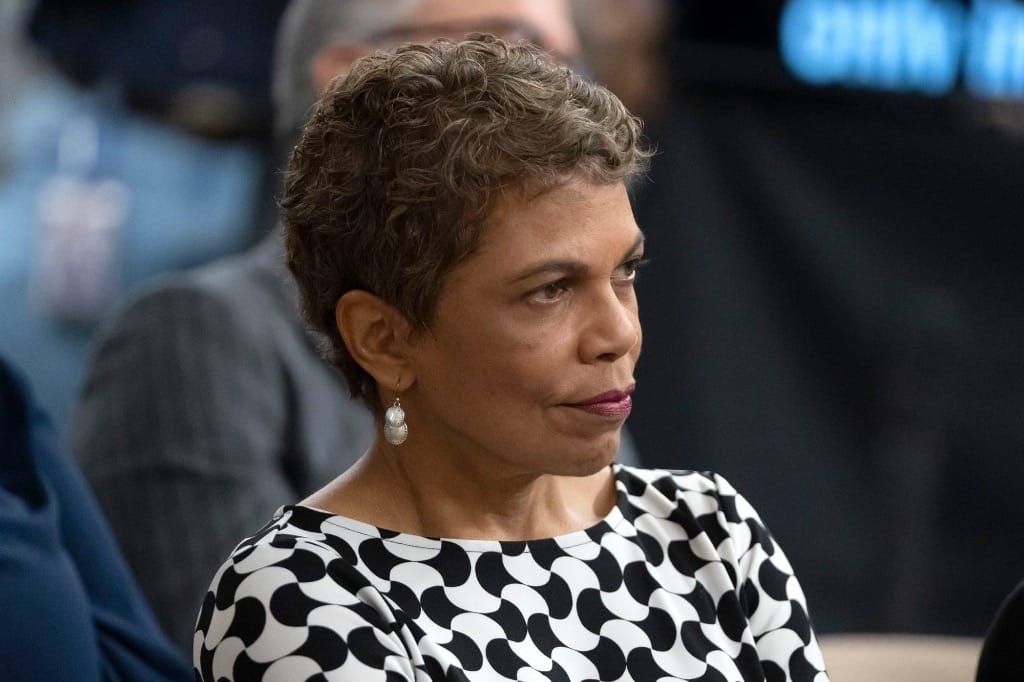
District Judge Tanya Chutkan of the U.S. District Court for the District of Columbia said in an Aug. 7 opinion that two telecom attorneys were allowed to sue under the False Claims Act.
Array, formerly UScellular, had asked Chutkan to find that provision of the law unconstitutional and dismiss the case. An AT&T subsidiary has made a similar argument, and three conservative Supreme Court justices have signalled they’re open to it.
The FCA mandates higher damages for fraudulently seeking government cash, and allows private parties to sue under the law if they have information about misconduct.
“These provisions are not only critical, but also constitutional — at least according to every U.S. Court of Appeals to address the question,” Chutkan wrote.
Attorneys, Mark O’Connor and Sara Leibman, a former FCC lawyer, are suing under those provisions. They allege that in a 2014 spectrum auction the company used sham subsidiaries to improperly obtain $113 million in small business credits, allowing it to buy spectrum for less than if it bid directly.
The company insists it did nothing improper, and the issue has not dissuaded the FCC from approving Array’s requests to sell its wireless operations and spectrum for billions of dollars.
Array had argued the provisions allowing private parties to sue violated the U.S. Constitution by allowing those people to serve as “officers of the United States,” which are supposed to be appointed by the president or the head of an agency.
Chutkan was not convinced. She said officers have to occupy posts that exist regardless of who holds them, while people suing under the FCA can’t be replaced.
An AT&T subsidiary made a similar argument in another FCA case. Supreme Court Justices Amy Coney Barrett, Brett Kavanaugh, and Clarence Thomas have indicated in concurring opinions they’re open to the argument.
Several appellate courts have already upheld the FCA provisions at issue, but the Eleventh Circuit is mulling the issue for the first time after hearing oral arguments in December 2025.
Morgan Lewis attorneys said in a blog post that it was difficult to predict the outcome, but if judges there found the provisions unconstitutional it would “wreak havoc” on “the vast majority” of the FCA docket.
Array also raised several other arguments in its attempt to get O’Connor and Leibman’s case tossed. It said the two hadn’t surfaced new information beyond what was disclosed in an older 2008 lawsuit that alleged a similar scheme, and that they weren’t specific enough in outlining the creation of shell companies to avoid FCC scrutiny.
Chutkan sided with O’Connor and Leibman and declined to dismiss their case.
In January, the Supreme Court declined to revive a separate, similar lawsuit by the two attorneys against Array. The U.S. Court of Appeals for the D.C. Circuit dismissed that case, and the Supreme Court declined to review the decision.
Array, formerly the fifth largest wireless carrier in the country, changed its name after selling those operations and a chunk of spectrum to T-Mobile for $4.3 billion. It now operates its roughly 4,400 towers.
The company also sold $1 billion worth of spectrum each to AT&T and Verizon. O’COnnor and Leibman had petitioned to deny the deals, but the FCC wasn’t swayed and let them move forward.
After the company closed the Verizon sale in June, all three of those deals are complete. Array is still looking to sell its remaining spectrum, mostly C-band licenses.
About $400 million of the T-Mobile purchase price and $232 million of the AT&T sale were related to spectrum licenses won by the smaller companies, known as designated entities in FCC bidding rules, in which Array has an interest.