
2025 Was a Year of More BEAD Turmoil
Based on tentative results, about 65% of BEAD locations are in line for fiber. Another 22% will get satellite, and 10% will get fixed wireless.

Editor's Note: Published on Dec. 15, 2025; republished on Jan. 5, 2026.
In January, three states’ spending plans under the $42.45 billion Broadband Equity, Access, and Deployment program had been approved by the Commerce Department, and more than a dozen others had begun taking grant applications.
12 Days of Broadband 2025 (click to open)
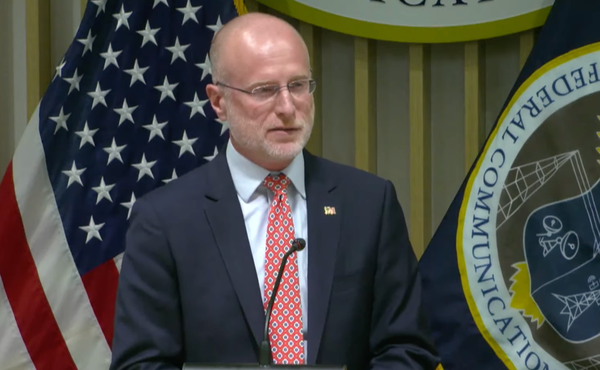
- On the First Day of Broadband, my true love sent to me: One Carr driving the Federal Communications Commission.
- On the Second Day of Broadband, my true love sent to me: Two superpowers racing toward AI superintelligence dominance.
- On the Third Day of Broadband, my true love sent to me: Three branches of government (and some formerly independent agencies).
- On the Fourth Day of Broadband, my true love sent to me: Four programs with Universal Service Funds.
- On the Fifth Day of Broadband, my true love sent to me: 56 states and territories without digital equity grants.
- On the Sixth Day of Broadband, my true level sent to me: Less than 6 months for a broadband permit.
- On the Seventh Day of Broadband, my true love sent to me: Data center-powered electricity bills up 70 percent.
- On the Eighth Day of Broadband, my true love sent to me: 800 megahertz of spectrum to sell at auction.
- On the Ninth Day of Broadband, my true love sent to me: $9 billion + 12 billion (or $21 billion) in BEAD remaining funds.
- On the Tenth Day of Broadband, my true love sent to me: Not even $10/month for an affordable connectivity program.
- On the Eleventh Day of Broadband, my true love sent to me: Through BEAD and broadband, 110 million locations served.
- On the Twelfth Day of Broadband, my true love sent to me: More than 1200 megahertz of spectrum for unlicensed wireless.
By June, that would no longer be the case. The National Telecommunications and Information Administration issued a directive rescinding those approvals and requiring states to hold another bidding rounds – by then more than 40 states had begun fielding applications – under new rules that were less favorable to fiber.
The directive wasn’t entirely unexpected. Commerce Secretary Howard Lutnick had said in March the agency was reviewing the program to make it more “tech-neutral” and cut down spending – fiber can be more expensive to deploy.




Member discussion