Advocates Want Tribal Licensing Window in Future Auctions

The FCC declined to set on for its upper C-band auction next year

Advocates Want Tribal Licensing Window in Future Auctions
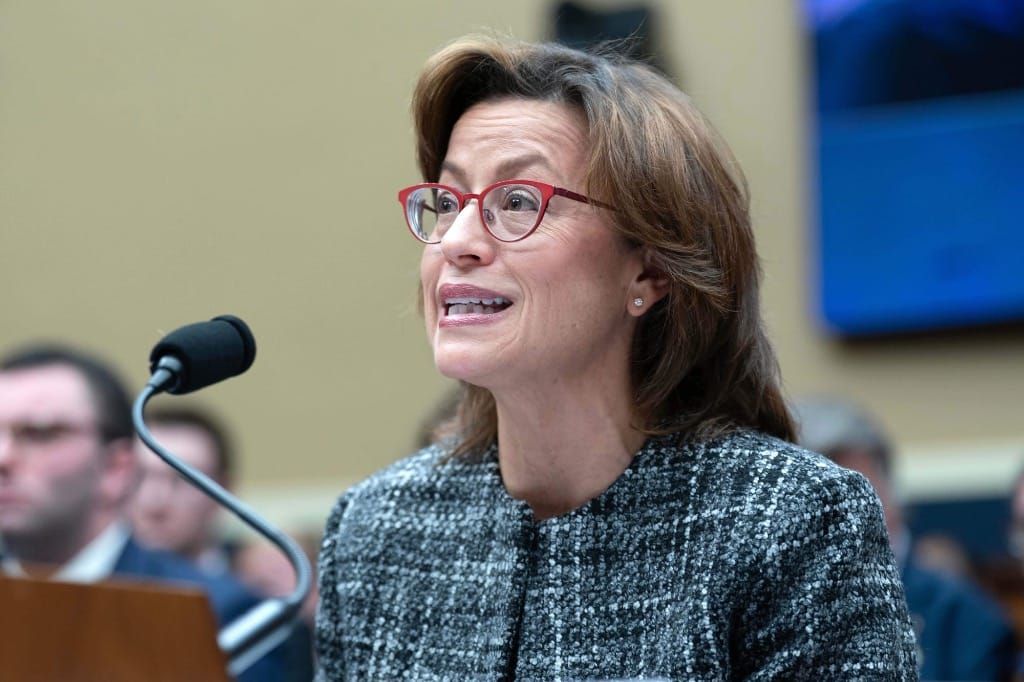
Photo of FCC Commissioner Anna Gomez testifying at a House oversight hearing on Jan. 14, 2026 by Jose Luis Magana/AP

WASHINGTON, Aug. 27, 2026 – Advocates and tribal organizations are still pushing federal regulators to allow tribes to pursue spectrum licenses in future auctions.

In July the Federal Communications Commission declined to set a tribal licensing window for its 2027 upper C-band auction, but groups including Public Knowledge and the Omaha Tribe of Nebraska want to keep the door open for future auctions.
The groups also wanted any leftover licenses to be made available to tribes. They filed Thursday a petition for reconsideration on the July upper C-band decision, but said they didn’t want to see the auction itself held up. 

A tribal licensing window, like the one the agency held in the 2.5 GigaHertz (GHz) auction during the first Trump administration, allows tribes to apply for free licenses covering their territories. 

tribal lands tend to be sparsely populated and less attractive for national network deployments, but tribes still can’t compete at auction with deep-pocketed carriers looking to acquire as much spectrum as possible. Proponents of tribal licensing windows have argued they’re a way for tribes to deploy their own networks and get more connectivity quicker.

The FCC didn’t go with a tribal window for the upper C-band auction in part because the law requiring the auction said the agency had to complete “a system of competitive bidding.” That doesn’t include tribes applying for free licenses, the agency reasoned in its July order.

The problem, the advocacy groups wrote, is that the same One Big Beautiful Bill Act  requires the agency to make more spectrum available via a system of competitive bidding. So a finding that that phrase blocks a tribal licensing window for upper C-band could block one in future auctions.

The groups argued allowing tribes to apply for a small number of licenses was fine under the law.

“The statute does not command that every license must have bidders,” they wrote. “An auction that includes an opportunity for a small, limited and clearly identified class of applicants to apply for a limited number of licenses surely qualifies as part of a ‘system of competitive bidding’ as plainly understood.”

The filing was led by Harold Feld, vice president of Public Knowledge. New America’s Open Technology Institute, the Institute for Local Self-Reliance, the Omaha Tribe of Nebraska, the Hoopa Valley Public Utilities District, and five other tribal groups signed on.

FCC Commissioner Anna Gomez, the agency’s lone Democrat, dissented in part from the upper C-band order in July over the tribal window issue. 

Lobbying from the advocacy groups ahead of the vote appeared to have some effect though, since the approved draft didn’t explicitly say future spectrum auctions were bad candidates for a tribal window. That language had been included inthe public draft of the item.

In the event there are licenses left over, one whose winning bidder is disqualified, after the auction, those should be made available to Tribes, the advocates wrote.

“While such an event seems unlikely for C-Band, the Commission should nevertheless consider the contingency,” they wrote. “The reasons given for denying a TLW in the Order will no longer apply.”

CTIA, the wireless industry group, had opposed a tribal window on the grounds it would delay the auction. CTIA CEO Ajit Pai was chairman of the FCC during the 2.5 GHz tribal window.

Popular Tags