Several Groups Want Tweaks to Upper C-Band Draft
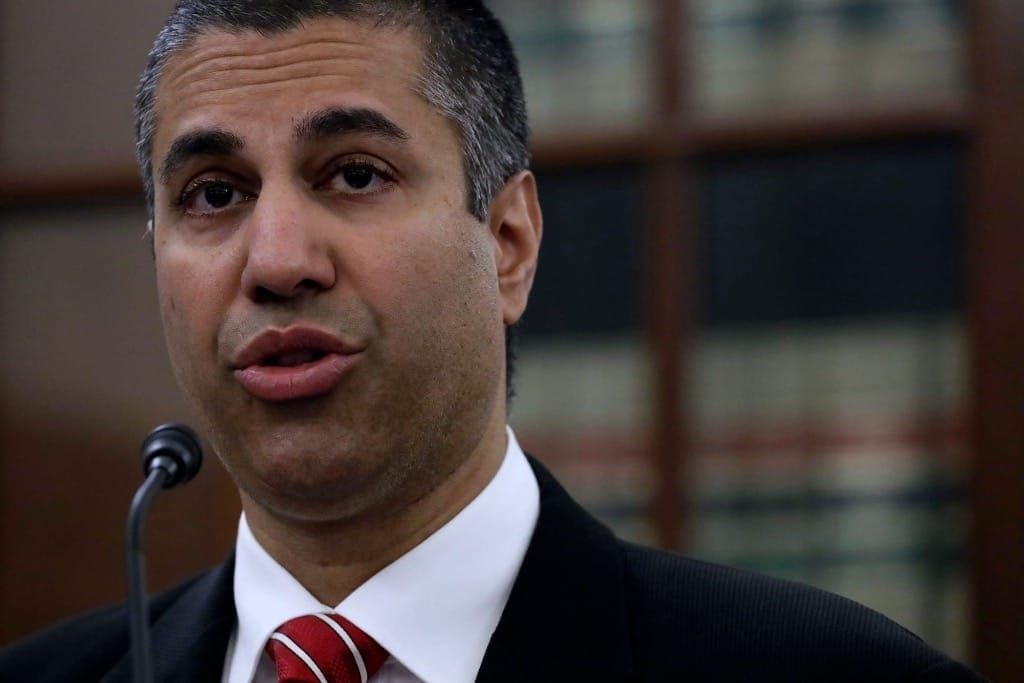
FCC Chairman Brendan Carr said the auction is expected to bring in anywhere from $30 billion to $60 billion

Jake Neenan
WASHINGTON, July 16, 2026 – The Federal Communications Commission’s plan to auction 160 megahertz of upper C-band spectrum is getting a lot of input ahead of the agency’s July 22 meeting, where commissioners will vote on the order.
FCC Chairman Brendan Carr also said at an event Wednesday that the auction is expected to bring in anywhere from $30 billion to $60 billion. Winning bidders are expected to be able to turn the spectrum on in December 2030.
The wireless carriers want to see extended deployment deadlines and a cap on their reimbursement payments to airlines that will have to replace gear using adjacent spectrum, CTIA told the agency in multiple letters and meetings.
CTIA CEO Ajit Pai, who was FCC chairman under the first Trump administration, met with each of the three current FCC commissioners Tuesday to outline the group’s requests.
The agency’s draft order would set deployment deadlines of one year and five years after the band is cleared by satellite operators and safe to use, which CTIA said isn’t enough time. The group said the still-developing equipment ecosystem, as well as large cash outlays required to cover bids and satellite and aviation transition costs, would make one year too short a timeline.
The group recommended two- and six-year deadlines instead.
“A two-year interim benchmark is still extremely aggressive and preserves the FCC’s goal of ensuring spectrum is put to use as rapidly as possible,” Scott Bergmann, CTIA’s senior vice president of regulatory affairs, wrote in an ex parte filing posted Thursday.
The group also wanted a cap on the total airline retrofit rebates winning bidders will have to pay. CTIA didn’t set out a number — airlines have estimated it could cost at least $4.5 billion — but said certainty “will ensure bidders can appropriately plan their bids at auction and will benefit the overall success of the auction.”
CBRS users
Also on Tuesday, representatives from several groups that use and promote the Citizens Broadband Radio Service met with FCC Commissioner Olivia Trusty and staff from the other two commissioners’ offices.
They said a provision of the draft order that would raise power limits in the lower C-band, from 3.7-3.98 GigaHertz (GHz), concerned them. That’s adjacent to the 3.55-3.7 GHz used by CBRS.
“We expressed our strong concerns that these types of client power levels in Lower C-Band (just above the 3.7 GHz band edge with CBRS) could result in significantly increased interference to CBRS devices operating in the CBRS channels near this band edge,” David Wright, policy director at Spectrum for the Future, wrote in a filing posted Thursday.
NCTA, which represents the cable industry, also sent representatives to meet with staff from each commissioner’s office in recent days with the same concern. Cable giants Charter and Comcast own CBRS priority licenses and use the spectrum to handle some traffic from the mobile service, which saves them money under their deal with Verizon.
The group said power levels in the lower C-band should be moved to a proposal rather than an order to give stakeholders time to develop a record.
CTIA did not like that, calling the complaints a “naked, eleventh-hour attempt to restrain innovation and restrict growing competition in the broadband marketplace.” The group said it had proposed the idea in previous comments in the docket and did not receive opposition.
The carriers dislike CBRS’s shared spectrum model generally, preferring the higher power, exclusive licenses their networks run on.
Rural carriers
A group of rural wireless carriers also set attorneys to meet with staff from the offices of Carr and FCC Commissioner Anna Gomez, the agency’s lone Democrat.
The Coalition of Rural Wireless Carriers said the agency should consider auctioning off 120 megahertz in a general auction, in which rural providers will certainly be outbid by the national carriers, and auction another 40 megahertz in a reserve auction for rural participants.
The FCC has bidding credits for small businesses, but CRWC said that wasn’t enough. In the recent AWS-3 auction, small carriers won two of the 200 licenses up for grabs.
“The Commission’s claim that its bidding credit mechanism is a success because it makes opportunities available for rural service providers rings hollow when rural service providers are outbid by larger carriers that ‘bid through’ the credits in small markets where the dollar amounts bid are nominal to them,” wrote David LaFuria, an attorney representing CRWC.
Rural wireless providers have been asking the FCC to address what they see as an untenable situation in which spectrum and regional providers are so consolidated among the big three. That’s snuffing out rural carriers and leaving them owning money-losing towers that still provide communities’ only wireless service, they say.
Tribal advocates
Tribal entities and other advocates urged the FCC to rethink its decision not to have a Tribal priority window in the upper C-band auction. The agency’s draft order said it wouldn’t accept Tribal nations’ applications for free licenses covering their territories before the auction, unlike the 2.5 GHz auction under Pai.
The agency cited the Congressional deadline of July 2027 for this auction, plus the less mature equipment ecosystem and delayed deployments because of the airline gear replacements.
Advocacy groups like Public Knowledge and New America’s Open Technology Institute, plus several Tribal entities, met with staff from Carr’s and Gomez’s offices on July 9 to argue for a Tribal window.
The groups said the window could be held during the auction and wouldn’t affect proceeds, as Tribal lands were sparsely populated enough that licences covering them were not central to the carriers’ bidding plans. They also said tribes could still benefit despite the delayed timeline.
“Refusal to hold a Tribal licensing window means that potentially eligible Tribes will never benefit from holding C-Band licenses. As between waiting 3 years and never, the greater benefit is clear,” wrote Harold Feld, senior vice president at Public Knowledge.
They also argued the agency should not make generalizations outside the upper C-band auction if it still declined to hold a Tribal licensing window. The agency’s draft said that other upcoming auctions were unlikely to be good candidates for one.
SpaceX
In a meeting with FCC staff SpaceX continued to push for satellite use in the upper C-band, something the agency didn't go for in its draft order.
The company said the agency should allow buildout milestones to be met with direct-to-device service, and allow satellite use in the 40 megahertz of the band that isn't being auctioned.