After Playing the Villain in the Midterms, Data Center Operators Regroup and Plan to Smile More
Why the hatred over data centers? They haven’t been talking and smiling, even in Texas

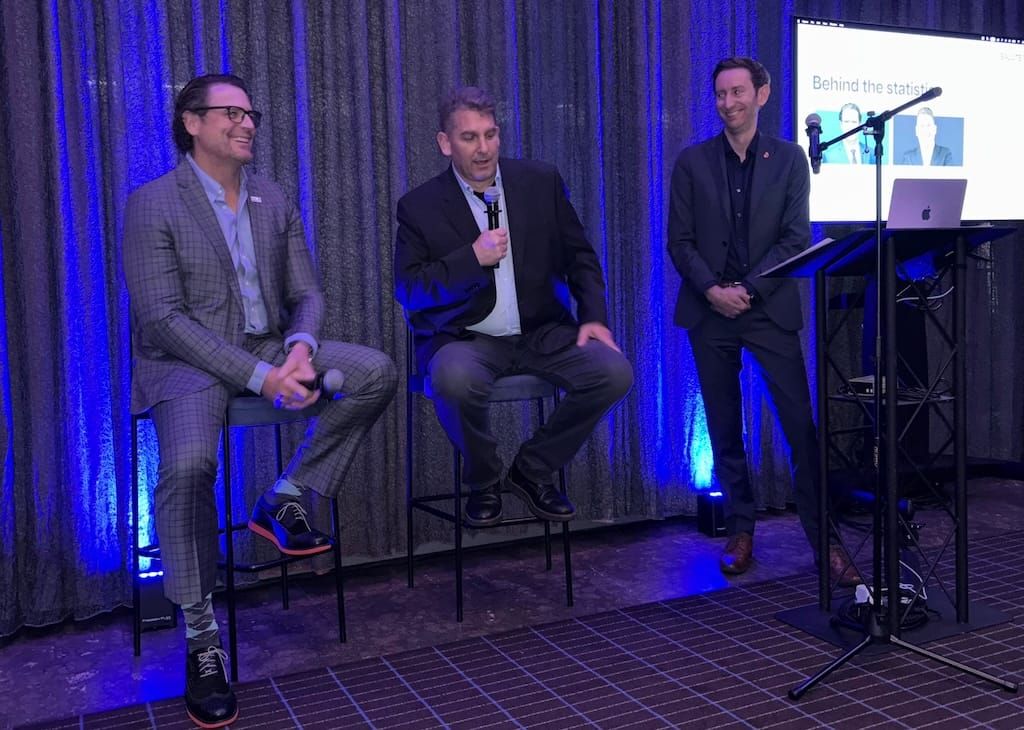
NEW YORK, Nov. 5, 2026 – Besides President Donald Trump and Elon Musk, the third biggest loser in the midterm elections Tuesday was probably the data center industry.
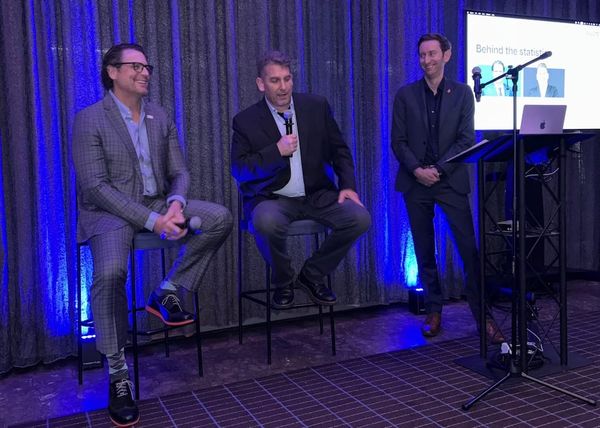
Yet here the data center industry was, the day after Election Day, gathered at a swanky hotel in New York City to lick their wounds and plot a new strategy designed to keep American artificial intelligence infrastructure humming.
Their strategy: Talk more, smile more. Make sure you let them know what’s at stake and what you’re fighting for.
At a series of dinner presentations here on Wednesday convened by Salute, a global data center services provider, the message delivered was urgent. Big changes in approach will particularly be needed in Texas, already the biggest data center state, and the one most likely to be jolted by the effects of the data center backlash.
But the evening’s message was also conversational: Start talking with your local neighbors. Start smiling about what you are doing for the community. And stop hiding behind non-disclosure agreements.
'Americans understand what’s at stake in the race with China’
The event was timed to coincide with the launch of the company’s 2026 Digital Infrastructure Report.
The more significant timing, of course, was that the dinner occurred on the day after the midterm elections in which roughly $172 million was spent on political advertising targeting AI data centers, almost none of which was friendly, said Erich Sanchack, CEO of Salute. "100% of those ads were focused on negative data center positioning," he said.
The survey released Wednesday, however, found that public opinion is less hostile to data centers than the ads might suggest.
Only 41% of Americans would support a new AI data center in their region, but just 27% would oppose one, and a quarter are undecided.
But framed as competition with China, support rises to 48% and opposition falls to 21%, according to the report. Seven in 10 Americans said they would be concerned if China became the world's leading AI superpower.
“The demand for AI” – and hence the demand for data centers – “has been unprecedented,” Sanchack said in a corporate video released with the report.
Highlighting the promise of AI for “citizen services” in the future, Sanchack leaned into an argument that President Trump has frequently made: America must stay ahead in that global AI competition.
“Those that are in front of that race, those that are developing for the AI of the future, will be the ones that will determine how we live in the future,” he said in the video.
The beginning of honest conversations
And yet that future “happens through open, honest conversations,” said Lucas Workman, vice president of economic development and community affairs for Salute. Many of the leaders of the company are veterans, and the company emphasizes its mission of supporting armed forces veterans in the “mission-critical environment” of a data center.
It was in that framing of open and honest conversations that the report acknowledges that 84% of operators felt the impact of community opposition.
That's happening at a time, according to the survey, when 76% of U.S. data center decision makers rate their trust with local communities as high. The report was based upon a comprehensive September survey of 500 U.S. and 500 U.K. industry executives plus 1,000 U.S. consumers.
The brunt of the opposition to data centers – to the extent there is a public face on it – is against what are called hyperscalers, the polite word for “Big Tech” companies like Google, Amazon Web Services and social media giant Meta.
Salute, which is neither the owner nor the investor of the data center asset, said it could do more to open the conversation up.
J. David Britt, executive vice president of federal for Salute, posed the question to his CEO: "So how can we as Salute – we don't own these assets – How do we have a voice in that conversation?"
Sanchack repeated: “We don't develop, we don't own data centers. We don't want to compete with our customers. We want to be partners for them and their ambitions. We don't own land. We don't develop land. And so we actually are the citizens that live in the communities where these data center assets operate. And we happen to be fairly well-educated on how they operate."
And because data center operators haven’t been talking more, they ended up being pushed in the position of being the fall guy in this year’s midterm elections.
And not just politically.
Over the past year, in other survey findings, six in 10 U.S. operators paid more for consultation, mitigation or legal work. Nearly half (49%) had permits or approvals delayed, and almost a third (32%) had a site relocated or canceled. Only 16% escaped without any impact.
'A rocky road' in Texas
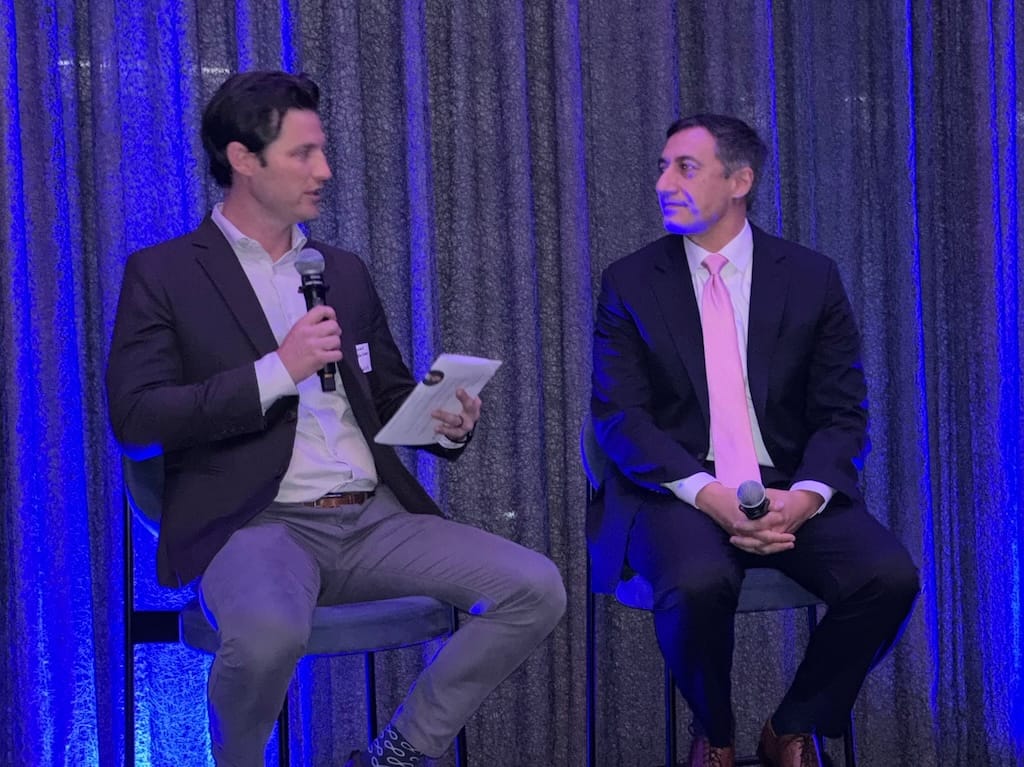
The backlash landed hardest in Texas, the industry's biggest market, and the one that has – until recently – been growing the fastest.
"I woke up today, and for the first time in 30 years, Republicans are in the minority," Texas State Rep. Giovanni Capriglione (R) told the room. "We have a Democrat governor."
Although the senatorial victory of James Talarico, D-Texas, over Republican senatorial candidate Ken Paxton, the Texas attorney general, might have gathered more attention nation-wide, it is the victory of Gov.-Elect Gina Hinojosa over existing Gov. Greg Abbott that will have a greater impact on the state's data center industry.
The political math has flipped.
What had been an 88-62 Republican majority became a Democratic majority with at least 76 seats declared for Democrats, 61 for Republicans, and 13 seats that remain uncalled.
Capriglione is also a data center industry executive, as the president of the Digital Infrastructure Network. (He not run for reelection.)
He also recounted how the political shift will impact state bodies governing where data centers get built and powered, including the Texas Commission on Environmental Quality, which issues environmental permits; ERCOT, which runs most of the state's power grid; and the Public Utility Commission, which oversees it.
"When you think about how you're going to build this, it's a rocky road," Capriglione said. Many defeated Republicans believe "the data center people didn't help them enough," he added. "There was mailer after mailer after mailer."
How much is too much for a 'pro-business' state?
Even in what he called a “pro-business" state, “you had citizens opposing data centers, mostly based on untruths and half-truths, such as that they use too much water, that it was responsible for too much electricity, that they were too noisy, that they were going to take people's jobs, or that they didn't provide enough jobs.”
He said that the industry didn't react quickly enough, and didn't engage the public on these "half-truths."
"It just didn't. And unfortunately, that information started to fester."
“When I started first getting involved, we started to realize that these town halls didn't have just one or two people going to them,” Capriglione continued. “If you've ever been to a city hall [meeting], for the most part, you'll have a handful of people, usually the same people going over and over again."
But at data-center related events, "You started to see 10 people. 20 people, 100 people, 600 people coming to these events. And the industry and the public got this huge disconnect and were not able to provide each other the information that they need."
A short window of time
Capriglione's prescription? A educational sprint.
The industry has "about two or three months" to explain to the incoming state and federal leadership what data centers mean for revenue, jobs and national security, he said.
And for Texas at least, he argued, the state will not turn its back on energy. "You can't say no to oil, you can't say no to gas, and you're not going to be able to say no to energy development."
Some of the damage in the state was self-inflicted, he said. When the state of Texas asked data centers and cryptocurrency miners to report their water use voluntarily, only about 20% did.
"People start to think that there's something to hide," Capriglione said. One company that refused the survey and skipped a legislative hearing later had its permits pulled by Gov. Abbott, he said.
Instead of just offering a voluntary code of conduct, he said, it is time for an enforceable data center code of ethics regarding water, noise use and lighting controls, and to turn that code into law. "Let's turn this into an actual bill," he said. "Let's get it signed."
The case for a boring building
Capriglione and other panelists at the event argued that industry has a strong story it simply stopped telling.
Ten years ago, Capriglione said, communities welcomed data centers for their property taxes and because they added no students to local schools. "Someone along the line lost the message."
In one city outside Austin, all homes and businesses together carried $1.2 billion in taxable value.
A single data center under construction there adds $5 billion. In some rural counties, he said, homeowners over 50 may stop paying property taxes because of a data center 30 miles away.
By comparison, a typical Home Depot draws 4,000 to 5,000 people a day and two or three police calls, yet pays little in property tax, he said.
His favorite tactic – whether as a state legislator or as a lobbyist – was to offer up the site tour.
Local officials arrive expecting something sinister. Yet they left having taken "the most boring tour that they've ever been on," he said.
"This is just a building with computers."