Data Center Coalition's Josh Levi Manages a New Political Reality
The trade group says its members pay their own way for power but should not be singled out

WASHINGTON, Nov. 28, 2026 – The data center industry's main trade group says its members already pay the full cost of the power they use. With a Democratic House arriving in January, lawmakers are weighing whether to write that promise into law.
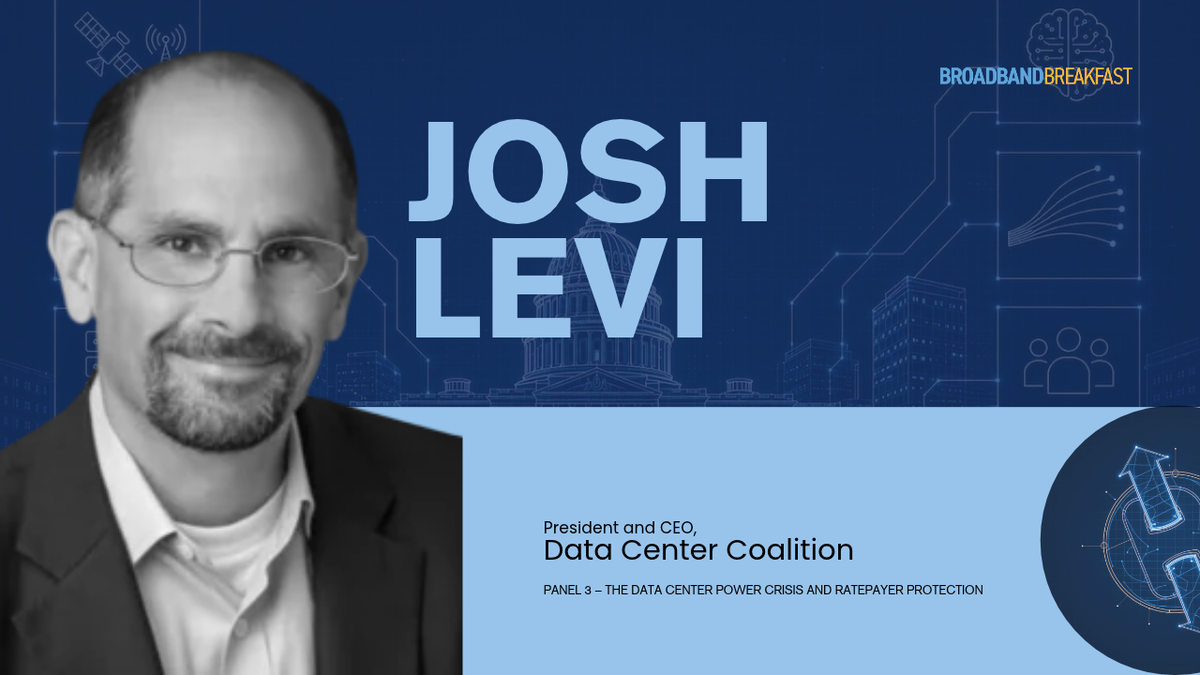
Making the industry's case on the 1:30 p.m. Dec. 1 panel "The Data Center Power Crisis and Ratepayer Protection," is the president and CEO of the Data Center Coalition, Josh Levi. The moderator of the event is Lauren Feiner, senior policy reporter at The Verge.


A Virginia tech policy veteran
Since 2019, Levi has led the coalition, whose members build and operate data centers, and testified for it before House committees.
Before that he spent nearly 20 years at the Northern Virginia Technology Council, a regional trade group, rising to vice president for policy. "Data centers are not optional infrastructure," he said March 4, as the coalition welcomed a White House pledge on power costs.
Full cost, no special class
Coalition members are "committed to paying their full cost of service for power generation, distribution, and transmission," Levi told a House Oversight subcommittee in April 2025. He cited a Virginia legislative audit that found the state's data centers already did.
The voluntary White House Ratepayer Protection Pledge commits signers to "build, bring, or buy" their own new power and pay for grid upgrades. Seven tech companies signed first, and the White House list now names 327 organizations.
In May, the coalition released a review of more than 10 studies by the energy consulting firm E3. It found no historical evidence that data centers raise residential bills under existing rates. It also tied roughly half of the recent capacity price rise at PJM, the grid operator for 13 states and D.C., to data center load.
Rules aimed at one industry
House Energy and Commerce narrowed the Ratepayer Protection Act, H.R. 9340, to sites of 100 megawatts or more that mainly power computing and data storage. State utility commissions would have two years to consider a standard recovering "the full, incremental cost" of upgrades from that customer.
The changes "narrow its scope to single out the data center industry," Levi said. The House passed the bill 417 to 3 on Sept. 16, and Senate Democrats later blocked it proceeding to a full vote in the Senate.
Democrats who will run the House want answers. An Oct. 28, 2025 letter from 20 House Democrats, led by Rep. Kevin Mullin, D-Calif., asked Levi whether Congress should weigh minimum usage commitments, separate rate classes or upfront cost recovery.
One signer, Rep. Greg Landsman, D-Ohio, has gone further.
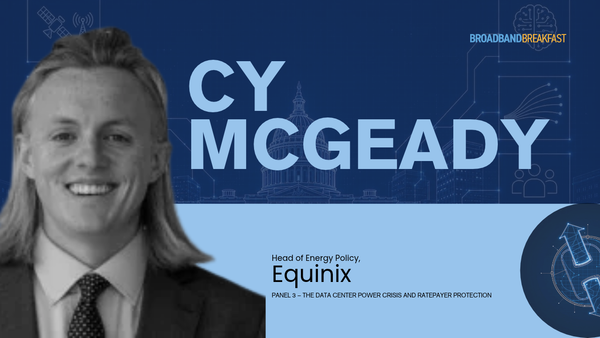
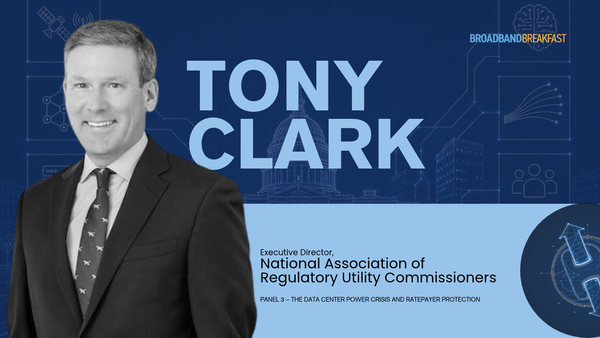
His No Harm Data Centers Act would give the Federal Energy Regulatory Commission "the sole authority" over retail rates for data centers above 50 megawatts. His aide Tashia Roberson-Wing sits on the panel with Tony Clark of NARUC, the state utility regulators' association, and Cy McGeady of the data center company Equinix.
What to watch at 'Broadband and AI in the Next Congress'
- Would the coalition back a binding federal cost standard if it covered all large power users, not only data centers?
- Has it answered the Mullin letter's question on separate rate classes?
- Does it see the White House pledge as a floor for legislation or a substitute for it?
Sign up for Broadband and AI in the Next Congress on Dec. 1.