America Loses Dish, a National Wireless Carrier, in 2025

Is the EchoStar saga a success story for spectrum entrepreneurship, or cautionary tale about consolidation in wireless?

America Loses Dish, a National Wireless Carrier, in 2025

At the beginning of 2025, there were four national wireless carriers in the United States. By the end, there were three.

12 Days of Broadband 2025 (click to open)

Click to read each of the 12 Days of Broadband articles!

After Federal Communications Commission probes into its spectrum licenses, EchoStar reached deals this fall with AT&T and SpaceX to sell much of those licenses in deals totalling $42.6 billion.

As a result of those deals, EchoStar is decommissioning its wireless network but will continue serving its Boost Mobile customers largely on AT&T infrastructure. That’s already led to a legal battle with a major tower company as EchoStar looks to exit contracts related to the network.

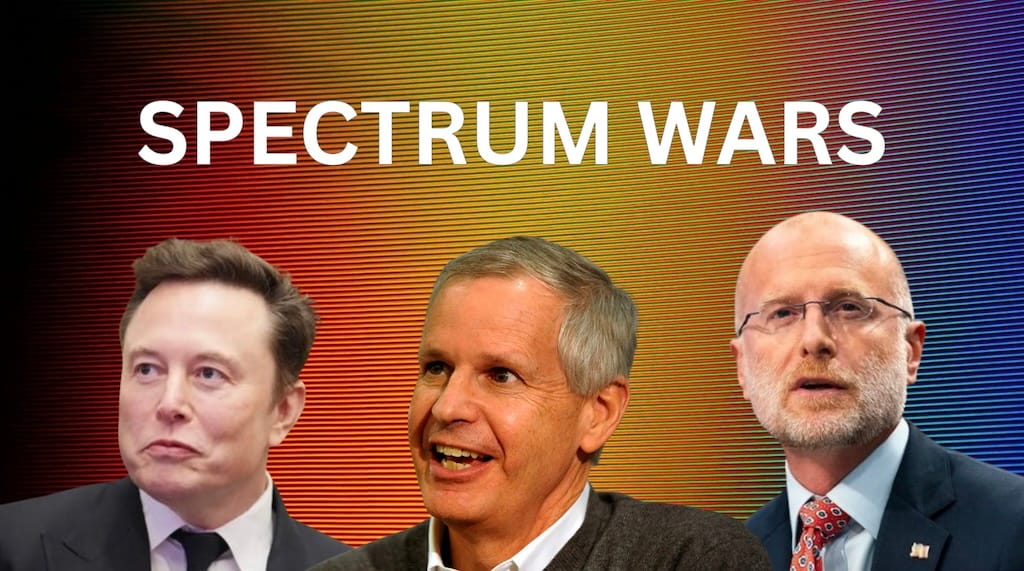
See also Broadband Breakfast's 'Spectrum Wars' feature:

Jostling in the Airwaves Resumes After Passage of Trump’s Budget Bill
Trump’s budget law mandated a ‘spectrum pipeline’ to sell off 800 megahertz of spectrum. Coupled with FCC pressure, the law is quickly re-arranging the commercial airwaves

The probes, opened in May, were centered around whether EchoStar met usage obligations for its 2 GigaHertz (GHz) mobile-satellite service spectrum, and whether it met buildout obligations related to its licenses to use the same airwaves for terrestrial connectivity.

FCC Chairman Brendan Carr said EchoStar wasn’t putting its airwaves to good use at a time when the agency was trying to open up spectrum. Once the deals were signed, and the licenses on their way to other companies, Carr directed the agency to end the probes on Sept. 9.

EchoStar backstory

As part of T-Mobile’s merger with Sprint, Dish, now owned by EchoStar, acquired Sprint’s Boost Mobile brand in 2020. That was necessary for the Justice Department to approve the deal under the first Trump term, with the thinking being that Dish would take Sprint’s place as a fourth national competitor in the wireless industry.

Dish, which was acquired by EchoStar in 2023, did build out a network that covered most of the population. Both companies were started by Charlie Ergen, who now serves as EchoStar CEO.

But, as Carr noted in a July FCC press conference, Boost Mobile lost nearly 2 million subscribers since Dish took it over, down to about 7 million.

“What’s clear to me is that the status quo itself is just not acceptable,” Carr said. “We’re pushing hard to free up spectrum, and you have Dish effectively, over the years, sitting on a tremendous amount of spectrum that simply isn’t loaded.”

The trend had started to reverse by then, but not enough to assuage the FCC boss. In 2025, the company has so far added 585,000 wireless subscribers after years of losses.

MoffettNathanson founder Craig Moffett said after the AT&T sale that he had questions about whether Ergen had ever intended to build out a network. He said Ergen’s AWS-4 purchase was “an opportunistic buy-and flip” and the later AWS-3 purchase in 2014 could be seen as either the beginning of Dish’s carrier ambitions, or a bid to drive up value for the AWS-4 licenses.

“It was only much later that Dish Network actually began to build anything at all, and even then it was initially just a ‘narrowband IoT’ (internet of things) network that was explicitly just a placeholder to satisfy FCC buildout requirements,” he wrote. 

Open RAN

Dish had an open radio access network, or open RAN network, meaning it was built with components that could be mixed and matched from different vendors, rather than proprietary systems that couldn’t be modified. The idea was to help stand up an ecosystem of cheaper equipment vendors and increase competition.

The U.S. government, beginning in the first Trump administration, had been supportive of open RAN as a means of providing alternatives to Chinese firm Huawei in other parts of the world. Dish won a $50 million grant from the Commerce Department in January to create a test lab for open RAN equipment.

Dish’s exit is not great news for the industry, and Congress cut the nearly $1 billion yet to be allocated from the grant program that supported Dish’s lab.

AT&T is planning to adopt open RAN hardware in its network, though. The company says it’s aiming to have 70 percent of its network traffic on such equipment by 2027.

Competition

Carr’s FCC doesn’t view the wireless industry as being too consolidated. The agency cheered the EchoStar sales, widely seen as the end goal of the probes to begin with, and also allowed T-Mobile to buy up UScellular, then the fifth largest wireless carrier, earlier this year.

The Justice Department has a different view. 

When the DOJ cleared the UScellular deal, it did so with reservation. The agency said it was concerned the dominant three carriers were scooping up spectrum resources and making it harder and harder for new companies to compete in the way Dish was supposed to.

“It is of concern to the United States that continued spectrum aggregation by the Big 3 threatens to impede the path for a fourth national player to emerge and challenge the entrenched incumbents with new and innovative offerings,” Gail Slater, the Trump administration’s top antitrust attorney, said in July. “Where future spectrum consolidation transactions threaten this path, the Antitrust Division stands ready to investigate and, if warranted by the facts and evidence, use its enforcement power to protect competition and American consumers.”

Still, the EchoStar-AT&T deal isn’t likely to face real DOJ resistance, and neither would a Verizon purchase of more EchoStar licences, New Street Research policy advisor Blair Levin told investors in September. Verizon is reportedly interested in EchoStar’s remaining AWS-2 licenses.

He wrote the DOJ would have little choice but to accept that any given carrier would be the only party willing to spend billions on the licenses they bought, aside from the other two dominant carriers. The cable giants, which offer mobile services through deals with Verizon and T-Mobile, are likely satisfied with that arrangement and wouldn’t be interested, he predicted.

“There’s not a particular magic number,” Carr said of the wireless industry at the same July meeting. “It’s a dynamic situation right now where mobile wireless is not just competing with mobile wireless. The companies that are taking the largest amount of market share in mobile wireless are cable companies.”

The finding that cable companies are meaningful competition to the carriers was part of the agency’s analysis in approving the UScellular sale. Rural carriers and consumer groups have asked the agency to reconsider that, as the cable companies are dependent on deals with the carriers to offer the service. 

Tower lawsuits

Dish is telling tower companies and contractors that it was effectively forced by the FCC into selling its airwaves, and thus can exit contracts and reduce payments.

Ergen insisted on the company’s third quarter earnings call that Dish was a separate company from EchoStar, which is in line for a $40 billion payday, and that Dish was prevented from fulfilling its obligations because of the spectrum liquidation.

“EchoStar has not-so-subtly threatened to bankrupt its own subsidiary, Dish Wireless LLC, in order to shelter the parent company’s cash from the liabilities incurred in EchoStar’s erstwhile effort to build a wireless network,” Moffett wrote in a recent investor note. “Dish’s creditors will be left to fight over issues of asset conveyance. Creditor on creditor violence.” 

American Tower and Crown Castle sued Dish over the issue, arguing the company couldn’t exit its long-term contracts with them. The infrastructure companies argued the FCC didn’t actually tell Dish’s parent company to sell its licenses, rather EchoStar chose to do so to get the agency off its back and raked in billions in the process.

Dish naturally disputes those claims. According to court documents the company reiterated to the tower companies that it wasn’t entitled to the proceeds from EchoStar’s spectrum sales and would eventually be unable to meet its obligations.

Dish responded to the American Tower lawsuit this month, but the document was restricted because it dealt with contract terms and negotiations. Dish asked for additional time, until Jan. 9., to respond to the Crown Castle suit.

EchoStar is setting up a new division called EchoStar Capital, which it said will invest the cash from its spectrum liquidation – it expects to have about $21 billion left over after paying off debts. The company is expected to sell all its remaining licenses.

“Perhaps foolishly, we had assumed that EchoStar, now flush with cash, would actually pay its bills. Silly us,” Moffett wrote in a recent investor note.

Member discussion

Popular Tags