AT&T Loses Bid to Temporarily Halt California's Enforcement of COLR Obligations

A federal judge denied AT&T’s preliminary injunction request, but allowed advocates, local governments, and a telecom group to enter the case

AT&T Loses Bid to Temporarily Halt California's Enforcement of COLR Obligations
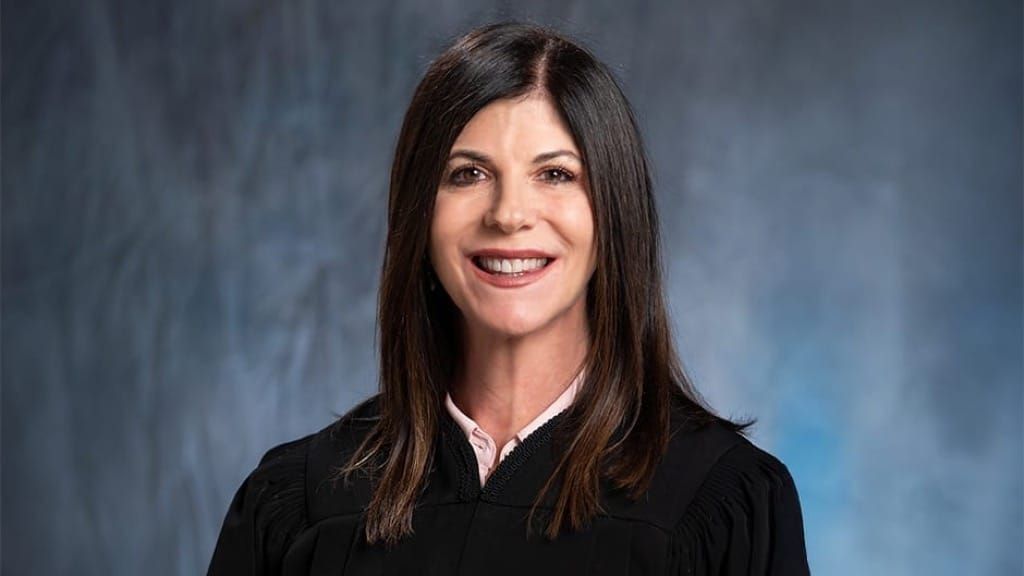
Photo of the Hon. Linda Lopez, Judge of the U.S. District Court for the Southern District of California.

WASHINGTON, July 17, 2026 – A federal judge Thursday rejected an effort by AT&T to temporarily stop California regulators from requiring the company to provide basic telephone service.

AT&T had sought a preliminary injunction in its suit challenging the California Public Utilities Commission’s carrier of last resort rules. U.S. District Judge Linda Lopez of the Southern District of California denied AT&T’s request, allowing the rules to remain in effect while the case moves forward.

As California’s largest designated COLR, the company has been required to offer phone service upon request to all residential and business customers within the service territories it covers since 1996.

In a statement shared with Broadband Breakfast, AT&T said Lopez’s decision does not change the company’s plans to transition customers away from traditional copper-based telephone service. The company said it is investing $19 billion to upgrade its fiber and wireless networks, and that existing customers can keep their traditional landline service until it is discontinued on or after June 1, 2027.

“We appreciate the court’s attention to this matter and are proceeding with our plans to end the sales of traditional phone service to new customers as we upgrade Californians to faster, more reliable services,” a spokesperson for AT&T said. “With the issues better clarified, we look forward to continuing our dialogue with California regulators on our plans.”

The company has already received federal approval to discontinue copper-based voice services at more than 184,000 locations in California, but a separate request that federal regulators override state copper retirement rules remains pending.

In a separate order Wednesday, Lopez allowed local governments and consumer and labor advocates to participate in the case as defendants, finding the dispute has “potential ramifications beyond the parties directly involved.”

Despite opposition from AT&T, Lopez granted requests from associations to participate as amici, including the California State Association of Counties and the Rural County Representatives of California, which represent more than 100 rural counties, as well as The Utility Reform Network (TURN), and the Communications Workers of America.

Lopez also granted an unopposed request from industry group USTelecom to participate as an amicus supporting AT&T’s position, stating that USTelecom’s members include communications companies with similar interests.

Before being granted party status in the case, TURN and its coalition partners had previously filed an amicus curiae brief supporting the CPUC and California Attorney General Rob Bonta’s position.

In a brief filed June 26, the groups argued that the CPUC is acting within its authority to protect universal service, a policy they said is important at both the state and federal levels.

“The CPUC is appropriately and lawfully performing its role, explicitly protected by federal law, to further a policy of importance at both the federal and state level: universal service,” the coalition wrote.

TURN Executive Director Mark Toney said Thursday California’s COLR rules are essential to ensuring residents maintain access to voice service, including for emergencies and other critical communications.

“California’s COLR rules are the cornerstone to ensuring that every California resident is able to access voice services,” Toney said in a release. “Without them, the impacts will be felt statewide as providers discontinue services and households are left with unreliable ways to reach emergency services, first responders, family, or friends. Any efforts to reduce these protections should be met with the highest scrutiny and should be dismissed if even one California resident would be cut off from service.”

The coalition has argued that AT&T’s request for a preliminary injunction gave insufficient consideration to the public interest and the role Congress gave states in protecting universal service.

“Instead, AT&T focuse[d] almost exclusively on erroneous federal preemption arguments and the alleged irreparable harm California’s regulations present to its own business interests,” the coalition’s June 26 filing states.

The CPUC has defended its COLR rules, arguing that AT&T has mischaracterized the state regulation, which it said are technology-neutral and do not require providers to maintain copper networks. The CPUC is separately updating its COLR regulations and has opposed AT&T's request for federal forbearance.

The dispute has caused a rift among Republicans. California gubernatorial candidate Steve Hilton (R) criticized the Republican-led FCC’s decision last week, arguing that federal action overriding California’s COLR rules raises Tenth Amendment and states’ rights concerns.

Popular Tags