
CBRS Could Be Key to Scaling Fixed Wireless Broadband
Panelists said the mid-band spectrum enables lower-cost broadband in areas where fiber is difficult to deploy.

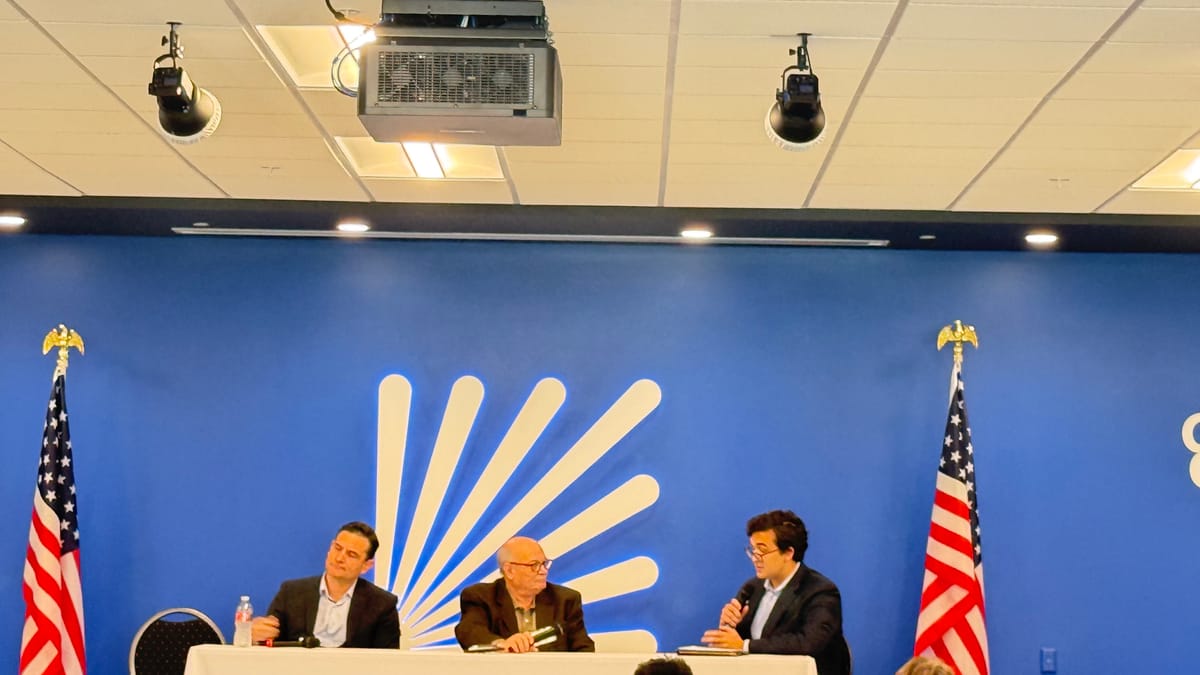
MILPITAS, Calif., Jan. 29, 2026 — Broadband providers and spectrum advocates warned that changes to the Citizens Broadband Radio Service (CBRS) could disrupt fixed wireless broadband deployments serving hundreds of thousands of households.
They called the shared-spectrum framework a critical component of U.S. broadband expansion.
CBRS, which allows multiple commercial and government users to share the same mid-band spectrum under federal coordination, is a band of 150 megahertz, from 3550 MegaHertz (MHz) to 3700 MHz, overseen by the Federal Communications Commission. Unlike spectrum sold through exclusive auctions, CBRS uses a tiered licensing system.

Naval radars get interference protection from users that purchased priority licenses, and those license holders are authorized to use the band on a free general access basis.
Next phase of CBRS deployment
Sergiu Nedevschi, chief strategy officer and co-founder of Tarana Wireless, said the company is advancing “a next phase of CBRS deployment,” focused on improving how shared spectrum is aggregated and managed. He said the priority is interference resilience, or the ability of networks to operate reliably when multiple operators transmit in the same area.
Nedevschi said CBRS plays a critical role in difficult deployment environments, including hilly, forested, and uneven terrain where traditional wireless systems struggle. He said Tarana designed its products around shared spectrum from the outset, betting that spectrum sharing rather than exclusive licenses would shape broadband expansion.
Nedevschi said Tarana CBRS radios alone currently connect about 150,000 homes, passing roughly 10 million households, meaning the signal reaches those locations even if service is not active. That number is significantly larger, potentially in the millions of connected homes, when including all active vendors in CBRS.
Many of those builds originated under the Connect America Fund, a prior federal rural broadband program, and are now positioned to support projects under the BEAD program.
The dominant CBRS use case today is fixed wireless access, which delivers home internet using outdoor radios installed at customer locations rather than mobile devices. Unlike mobile traffic, which fluctuates as users move, fixed wireless traffic is steady and capacity-intensive, placing greater demands on network design, Nedevschi said.
He added that CBRS presents technical challenges because it is a shared band, with multiple operators often deploying overlapping networks in the same areas.
To address those limits, Tarana radios employ unique interference cancellation mechanisms that allow multiple networks to co-exist unimpeded in the same coverage area. In addition, Tarana aggregates CBRS with other unlicensed bands to boost speed and capacity, enabling networks to exceed 6 Gigabits per second (Gbps) per sector and operate reliably where CBRS availability is constrained, including General Authorized Access-only zones.
Richard Bernhardt, vice president of spectrum and industry at the Wireless Internet Service Providers Association, said CBRS has produced economies of scale because it is not an exclusive license band. Lower entry costs, he said, allow smaller providers to deploy broadband without purchasing expensive nationwide spectrum licenses.
Bernhardt said CBRS must coexist with incumbent federal users, including U.S. government radar systems and Navy operations, as well as satellite and broadcast services. Increasing power limits, he said, would raise interference and reduce overall network efficiency.
“Reducing CBRS would effectively end spectrum sharing in the United States,” Bernhardt said.
The band has also been standardized globally as Band 48 by the 3rd Generation Partnership Project (3GPP), the international body that sets cellular standards. That designation allows CBRS equipment to be manufactured at global scale and enables operators to rely on established cellular security and interoperability frameworks rather than proprietary hardware.
With little new spectrum available, panelists urged regulators to preserve CBRS as a model for supporting more broadband users without allocating additional airwaves, particularly as BEAD-funded networks move from planning into operation.









Member discussion