CBRS Proponents Reiterate Opposition to Higher Power
‘The spectrum access systems have no way of dealing with this.’

WASHINGTON, May 6, 2026 – Proponents of the Citizens Broadband Radio Service reiterated their opposition to higher power levels in the shared band Wednesday.
Users and supporters of CBRS have been making clear in recent months they don’t want to see higher power, or any of the band auctioned off. The spectrum wasn’t exempted from a July 2025 budget bill mandating the auction of 800 megahertz, but there’s also a pending rulemaking at the Federal Communications Commission that asked questions about whether the agency should raise power levels in CBRS.
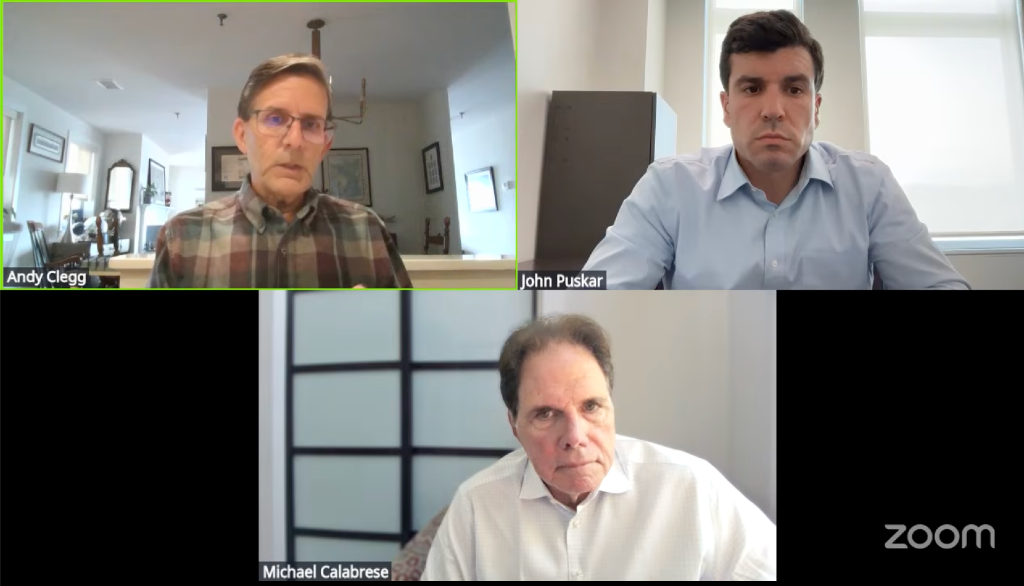
“There’s concern the FCC may be taking those seriously,” said Michael Calabrese, head of New America’s Wireless Future Program, addressing a New America webinar.

CBRS uses a tiered licensing system, where Navy radars get protected from any interference, and those who purchase priority licenses get protection from free general access users. The New America webinar sought to argue that higher power would be disruptive to manufacturers and other companies that use CBRS for private networks
Andy Clegg, a former Google engineer that helped create the CBRS framework, said one problem would be that the spectrum access systems that manage CBRS spectrum use aren’t designed to prevent interference from adjacent channels of spectrum. But turning up the power can create that kind of interference, he said.
“The spectrum access systems have no way of dealing with this,” he said. “There’s nothing in the FCC rules, and there’s nothing in the SAS standards, that deals with adjacent channel interference.”
In addition to increased interference, Clegg said higher power would increase the areas around priority license holders and Navy radars where general access users could be kicked off.
Wireless carriers prefer the exclusive spectrum licenses they use to shared models, partly because exclusively licensed spectrum allows for higher power and is better for mobile coverage.
Carriers have told the FCC the lower power of CBRS has hampered its usefulness. Verizon, which spent nearly $2 billion on priority CBRS licenses when the FCC auctioned them in 2020, has proposed a new category of CBRS devices that would use much higher power. AT&T has supported higher power, but also floated the idea of relocating users and auctioning off CBRS to the carriers.
Tom Power, a former FCC official and former general counsel for wireless industry group CTIA, said on a Feb. 11 Technology Policy Institute webinar that the auction proposal “has not got a lot of momentum behind it.”
At the same webinar, Arpan Sura, a top advisor to FCC Chairman Brendan Carr, said he wanted more study into how the band was being used.
“I think it’s healthy going forward that there be a more productive conversation about: What does success look like in this band? And how do we gauge success in a way that’s quantitative, in a way that isn’t just pointing to our favorite examples but actually gets to the heart of the matter?” he said.
Sura said he wanted to “interrogate” whether the number of deployed CBRS devices – there are over 400,000 – was a good indicator for utilization and asked fellow panelists how they would quantify success for the band.
John Puskar, head of the American-Made 5G coalition, a group of pro-CBRS companies and ISPs, also spoke at the New American webinar Wednesday. He sought to tie the band to the Trump administration’s desire to onshore manufacturing.
He cited a study commissioned by the American-Made 5G Coalition that found there were 1,500 private networks used by manufacturers and other companies in the U.S., 75 percent of which used CBRS. The analysis projected that the number would balloon to more than 7,500 in 2032, with as much as 80 percent using CBRS.
Raising power “would be a headwind for reshoring,” he said. “A less reliable CBRS layer really slows down private 5G adoption when 75 percent of these networks are powered by CBRS.”
Clegg, who also founded Valo Analytica, referred to a study his firm conducted on behalf of Spectrum for the Future, another pro-spectrum sharing group that opposes changes to CBRS. It includes consumer groups, wireless ISPs, and cable companies.