Communications Subcommittee to Consider Bill Requiring National Broadband Strategy to Close the Digital Divide
Six bills before the panel would create new responsibilities for NTIA and the FCC.

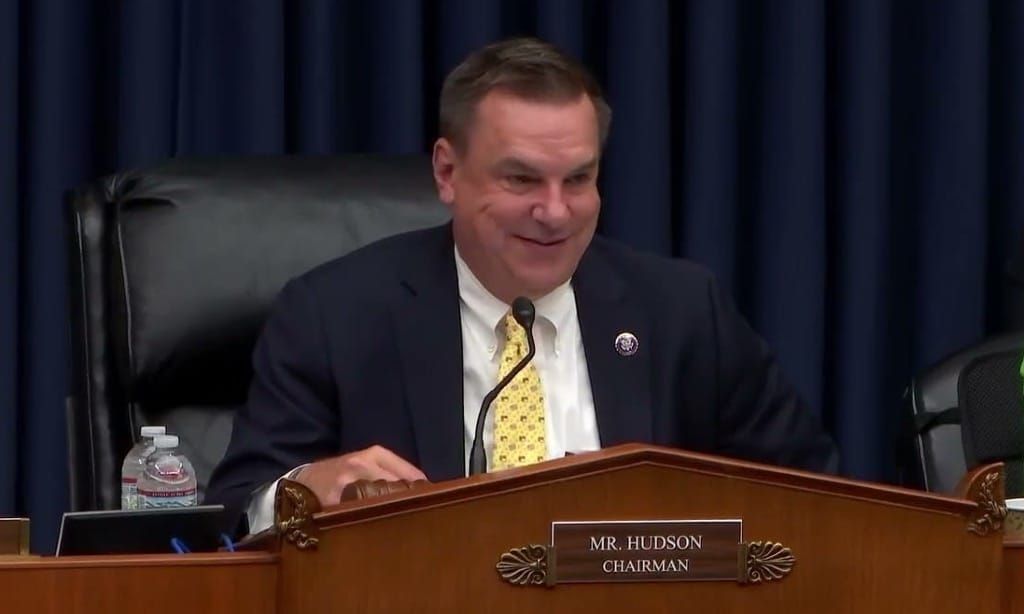
WASHINGTON, July 16, 2026 – Lawmakers on the House Communications and Technology Subcommittee will consider a range of emerging communications policy issues next Wednesday.
The subcommittee, chaired by Rep. Richard Hudson, R-N.C., will hold a legislative hearing June 22 examining six bills that address communications policy priorities, including developing a national broadband strategy, addressing emerging artificial intelligence challenges, and protecting consumers from unwanted and fraudulent communications.
On broadband connectivity, lawmakers will consider H.R. 2805, the PLAN for Broadband Act, sponsored by Rep. Tim Walberg, R-Mich., and Rep. Scott Peters, D-Calif.
The bill would direct the Commerce Department’s National Telecommunications and Information Administration to develop a national broadband strategy designed to close the digital divide, as well as a plan to execute its strategy.
The Senate companion bill has advanced further in the legislative process. The measure was reported favorably by the Senate Commerce Committee on May 21, and was subsequently placed on the Senate legislative calendar. Committee Chairman Sen. Ted Cruz, R-Texas, filed the committee report on June 1, allowing the bill to move forward for consideration by the full Senate.
The original PLAN Act legislation was titled the NTIA Reauthorization Act and passed through the House on May 16, 2024, before being referred to the Senate Commerce Committee and placed on the Senate legislative calendar, where it received no further action.
The PLAN Act was reintroduced following a Government Accountability Office report in 2022 finding that efforts to close America’s digital divide often overlap and are fragmented between more than 100 federal broadband programs split between 15 agencies.
NTIA Administrator Arielle Roth would be tasked with developing a strategy to synchronize federal broadband programs.
Other bills under consideration Wednesday would introduce new responsibilities for the Federal Communications Commission.
H.R. 9129, the GUARD Act, sponsored by Rep. John Moolenaar, R-Mich., and Rep. Jennifer McClellan, D-Va., aims to address potential security risks associated with emerging connected technologies.
The bill would require the FCC review certain communications equipment and services used in advanced robots, including human-like and four-legged robots, and potentially restrict those linked to national security risks by adding them to the FCC’s Covered List.
H.R. 6152, the Foreign Robocall Elimination Act, sponsored by Rep. Addison McDowell, R-N.C., and Rep. Kelly Morrison, D-Minn., would direct the FCC to establish a task force focused on combating unlawful robocalls, particularly those originating from foreign actors.
And, H.R. 4950, the Data BRIDGE Act, sponsored by Rep. Erin Houchin, R-Ind., and Rep. Mike Kelly, R-Pa., would direct the FCC to add agricultural area data to the National Broadband Map to improve broadband data collection and mapping efforts.
Two bills before the subcommittee focus on the opportunities and challenges presented by artificial intelligence.
H.R. 1027, the QUIET Act, sponsored by Reps. Eric Sorensen, D-Ill., and Juan Ciscomani, R-Ariz., would amend the Communications Act of 1934 to require disclosures with respect to robocalls using artificial intelligence, and allow enhanced penalties for certain violations involving AI voice or text message impersonations.
H.R. 7294, the AI for Secure Networks Act, sponsored by Rep. Rob Menendez, D-N.J., and Rep. August Pfluger, R-Texas, would direct Roth to study the impacts of artificial intelligence on the security of telecommunications networks in collaboration with the FCC, and submit a report on findings within one year.
If approved by the subcommittee, the bills move to the full Energy and Commerce Committee for another markup, before potentially being moved to the full House for consideration.