Former Officials: FCC’s Independence ‘Obliterated’ Under Carr

The FCC now serves political interests instead of the public, former agency officials said.

Former Officials: FCC’s Independence ‘Obliterated’ Under Carr
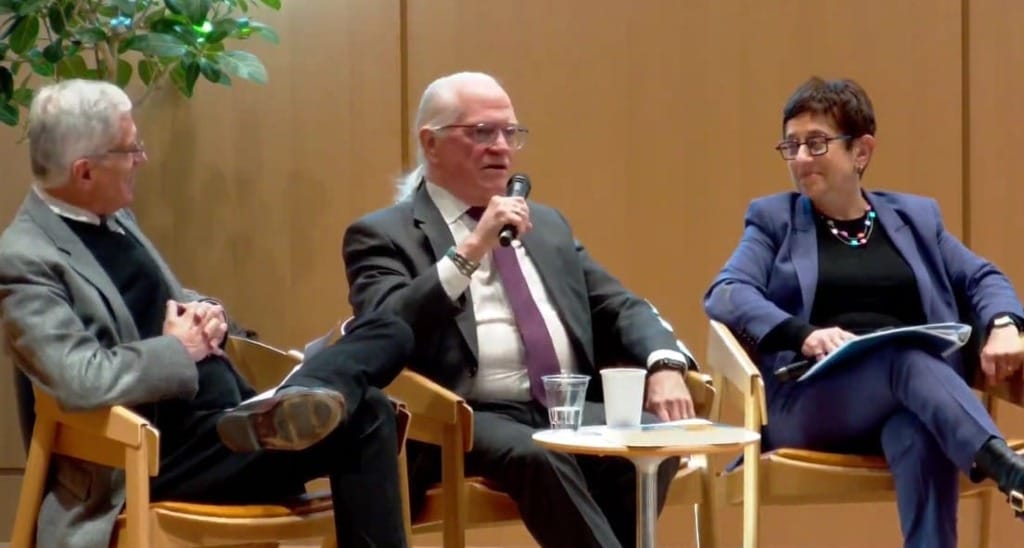
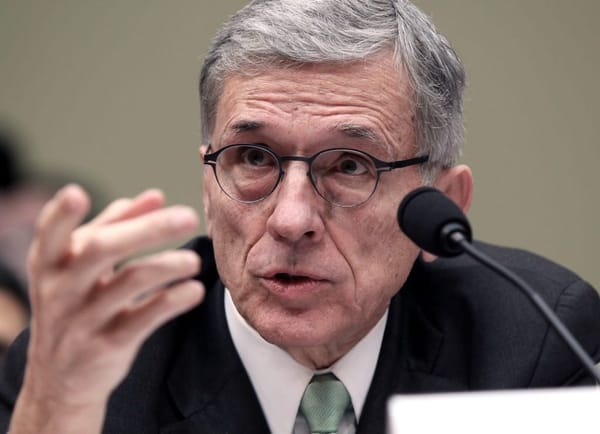
Screenshot (from left) of Tom Wheeler, Visiting Fellow in Governance Studies at the Brookings Institution; Bob Corn-Revere, Chief Counsel for the Foundation for Individual Rights and Expression; and Gigi Sohn, Executive Director of the American Association of Public Broadband, speak at Public Knowledge’s People’s Oversight Hearing in Washington on Wed., Nov. 12, 2025.

WASHINGTON, Nov. 12, 2025 – Former regulators and policy advocates accused Federal Communications Commission Chairman Brendan Carr of having “obliterated” the FCC’s credibility as an independent, expert regulatory body. 

Speaking at the People’s Oversight Hearing convened Wednesday by digital rights group Public Knowledge, experts examined whether the FCC could still serve the public interest or whether, as some argued, it had become too politically captured to function as an independent regulator.

Former FCC Chairman Tom Wheeler, who led the agency under President Obama, said the the FCC’s statutory independence had collapsed under Carr. “The FCC was designed to exist as an amphibian between the administration and Congress,” he said. “But when an authoritarian president steps in and overturns that balance, there are consequences.”

Wheeler cited a February executive order requiring the FCC to obtain White House pre-approval for certain actions as evidence of undue influence from the executive branch. “That destroys the concept of an independent agency,” he said.

He listed several ways he said the FCC had abandoned its duty to protect the public interest.  “If you rewrite broadcast rules to make an illegal transaction legal, you're not fulfilling that. If you coerce competitive wireless carriers to withdraw from the market, you are not living up to that, and if you reallocate spectrum to a presidential pal, you're not living up to that,” Wheeler said.

'Formal and informal assertions of power'

The event also featured testimonials from former FCC chief counsel Bob Corn-Revere, chief counsel for the Foundation for Individual Rights and Expression, and former FCC nominee Gigi Sohn, executive director of the the American Association of Public Broadband. 

“Over the past 11 months, we've witnessed an extraordinary number of formal and informal assertions of power over the broadcast media and national networks,” Corn-Revere said, citing Carr’s threats against Disney and ABC over Jimmy Kimmel Live! as the clearest illustration. 

“None of this behavior is normal, authorized by the Communications Act, or permitted by the First Amendment,” Corn-Revere said.

“Congress designed the FCC to be independent, bipartisan and to operate within constitutional bounds,” he said. “The Communications Act denies the FCC the power of censorship, as well as the ability to promulgate any regulation that interferes with freedom of speech, and the Supreme Court has long made it clear that the public interest standard necessarily invites reference to First Amendment principles.”

Sohn warned that the stakes extended beyond the current administration. “Not long ago, the question ‘will the FCC exist in ten years?’ would have sounded absurd,” she said. “Today, it feels chillingly plausible.”

Should the FCC be folded into Commerce Department?

The FCC, she said, had become so politicized that some former staffers believe it should simply be folded into the Commerce Department’s National Telecommunications and Information Administration

“That sentiment is spreading, and it's dangerous,” Sohn said, saying it reflects how far the agency has drifted from its mission. 

She said she had worked alongside nonpartisan FCC staff “devoted to keeping Americans connected and protecting consumers,” many of whom have since left the agency “exhausted, disillusioned, or pushed out.”

“The FCC is your creation, and only Congress can save it,” Sohn said, urging lawmakers to restore regular, public oversight.

Convened amid the ongoing government shutdown at Washington’s historic True Reformer Building, the mock hearing was intended to stand in for formal congressional oversight hearings that have yet to occur this year. The event also examined issues of regulatory independence at the Federal Trade Commission and Consumer Financial Protection Bureau.

Member discussion

Popular Tags