From New Deal's Electrification Loans to a Rural Broadband Dispute
Nearly nine in 10 American farms lacked electricity in 1930. In response, Washington financed an unusual kind of utility: Cooperatives owned by the rural customers they served.

This article summarizes several of the key points in Lesson 7: The New Deal and Rural Electrification, which is part of Broadband Breakfast's online course, "150 Years of American Telecommunications." A new lesson will be released every Monday.
About nine in 10 American farms lacked electric service in 1930, while nearly nine in 10 homes outside farms were wired.

The obstacle was the cost of extending power lines into sparsely populated areas. Private utilities estimated construction costs at as much as $2,000 a mile (or more than $30,000 in 2020 dollars). With few customers along each mile, most utility companies doubted that electricity sales would recover the investment.
Washington lent the money, and the borrowers were new
Rural electrification became part of President Franklin D. Roosevelt’s New Deal, the federal response to the Great Depression. His administration offered construction loans to bring electricity to farms private utilities had largely passed over.
An executive order created the Rural Electrification Administration, a federal agency financing rural power projects, on May 11, 1935. Congress had set aside $100 million for rural electrification. A year later, the Rural Electrification Act of 1936 established the agency in law and set its lending terms.
Construction loans had to be “self-liquidating,” meaning revenue from electricity sales had to repay the loans within 25 years. Borrowers paid the federal government’s average interest rate on its long-term debt, generally below what private lenders charged.
The 1936 law gave preference to public bodies, cooperatives, nonprofits and associations that limited dividends to investors. Most private utilities declined to borrow from the Rural Electrification Administration.
The loan offers limited how utilities used the money, and the companies could not agree with the agency on those terms, Carl Kitchens, an economic historian at Florida State University, told the Richmond Fed.
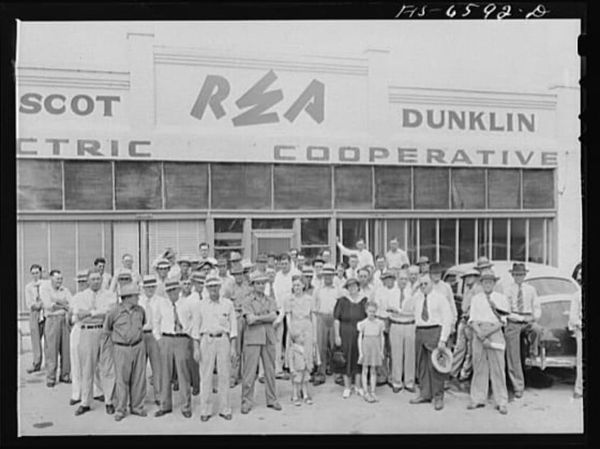
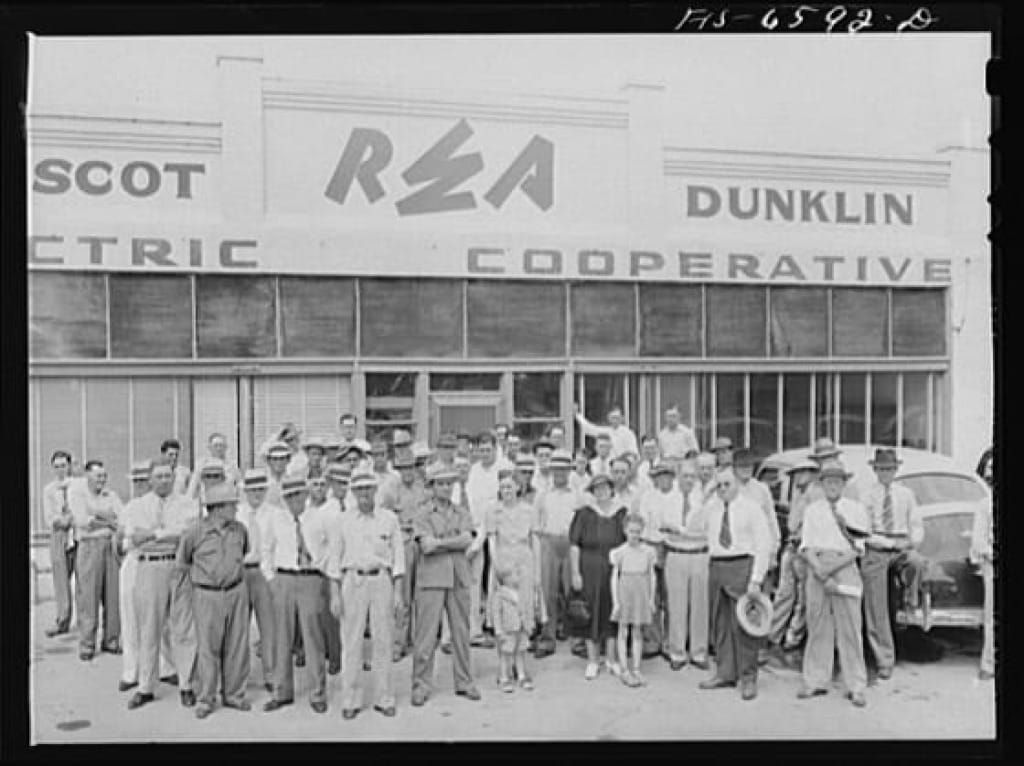
The electrification agency turned to cooperatives, nonprofit utilities owned by the customers they serve. Only 33 electric cooperatives operated in the country in 1930. A farm family would generally pay $5 to join one of the new cooperatives, becoming both a customer and an owner.
In 1942, the cooperatives formed the National Rural Electric Cooperative Association, a trade group representing electric cooperatives in Washington.
With help from the electrification agency’s engineers, average power-line construction costs fell below $825 a mile by the end of the 1930s. Fewer than 1 percent of the agency’s loans defaulted, according to the Richmond Fed’s history. By 1954, 93 percent of American farms reported electricity, according to the Census of Agriculture, the federal survey of farms.
(Read the full Lesson 7 for the other two ownership models Washington considered and why it chose cooperatives.)
 Broadband Breakfast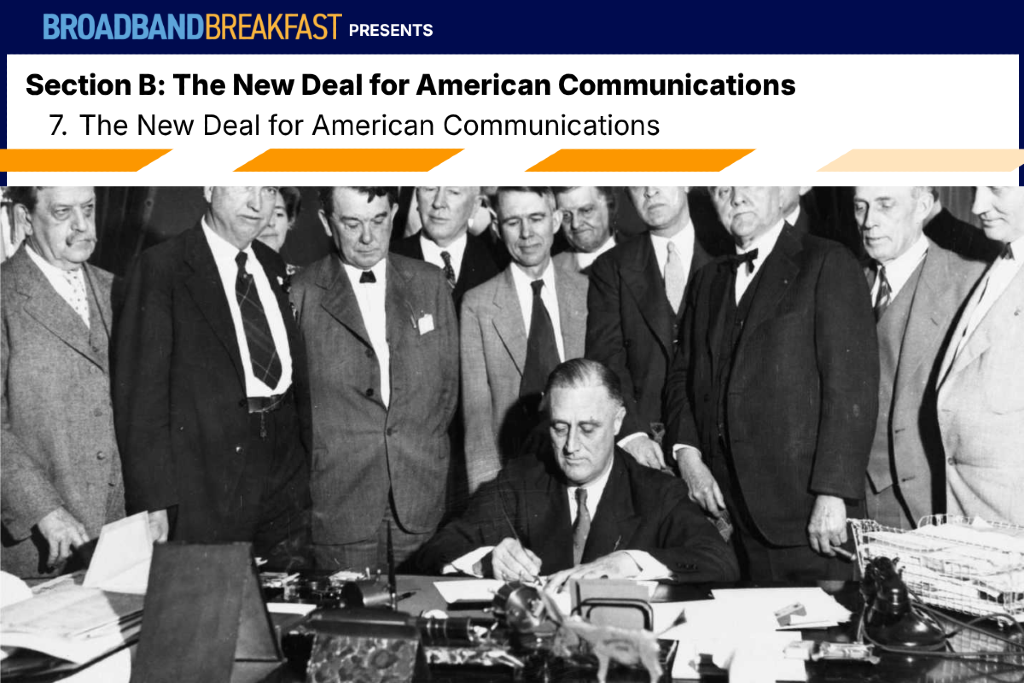

Public ownership was a threat held in reserve
The idea of using public ownership to restrain private utility monopolies preceded the lending program. Roosevelt made that case as the Democratic presidential nominee in a Sept. 21, 1932, campaign speech in Portland, Oregon. He cited Matthew Hale, a 17th-century English judge, and the requirement that a monopoly ferry operator “take but reasonable toll.”
State utility commissions should ensure adequate electric service and reasonable rates, Roosevelt argued. He rejected government ownership of all utilities, favoring private operation as the general rule.
Government ownership was the remedy when regulation failed, in FDR’s view. He compared a community’s right to build and operate its own utility to a “birch rod” kept in a cupboard until a scolding no longer worked. The prospect of a competing public utility, he argued, would encourage private electric companies to improve service and lower rates.
The rural lending program backed a different owner: the customers themselves.
Most cooperatives bought electricity wholesale from private utilities and distributed the power to cooperative customers. When a cooperative could not agree with a private supplier on price and other terms, the electrification agency stood ready to finance a power plant owned by the cooperative.
Federal lending “created competition over territory that hadn’t been claimed yet,” Kitchens told the Richmond Fed.
The cooperatives now own the poles
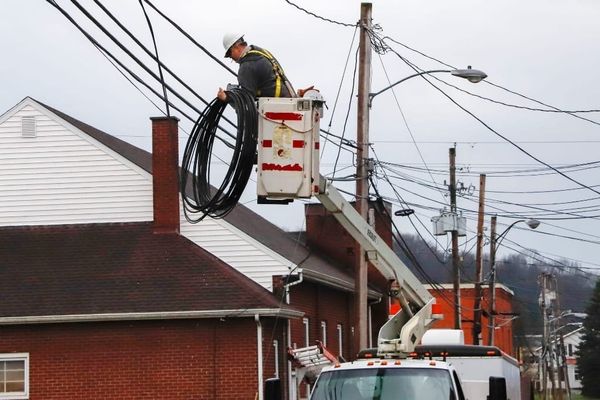
Congress extended the Rural Electrification Act to communications in 1949, authorizing loans for rural telephone service. About 890 electric cooperatives operate today, still owned by electricity customers. Cooperative-owned poles support communications cables as well as electric lines, making the utilities important to rural broadband construction.
Control of those poles has brought cooperatives into a dispute over the Broadband Equity, Access, and Deployment program, or BEAD, the $42.45 billion federal broadband construction fund. Federal law has excluded cooperatives from the Federal Communications Commission’s pole attachment rules since 1978. The FCC rules govern what pole owners charge communications providers to hang cables and how quickly pole owners must provide access.
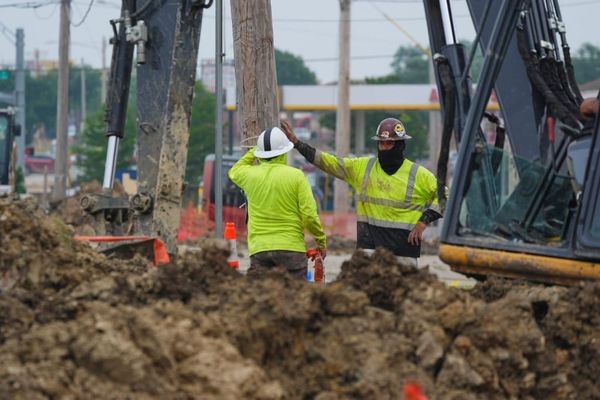
In January 2026, the Commerce Department made compliance with FCC pole rules a condition of BEAD grants. Cooperatives that accept them must apply those rules to poles not already covered by state or federal attachment regulation.
The condition covers a cooperative’s poles throughout the state receiving BEAD funds, beyond the poles used in funded projects, without removing the coops aforementioned statutory exemption.
Twenty of the 63 cooperatives awarded BEAD funding had withdrawn, the National Rural Electric Cooperative Association told the Commerce Department in a Sept. 16 letter. The association cited the pole requirements and rising equipment costs among the concerns facing cooperatives considering participation.
In the 1930s, federal loans helped establish cooperatives to serve farms private utilities had largely passed over. Ninety years later, those cooperatives control the poles that broadband providers need to reach rural customers. Washington is again pressing for access on terms that federal pole law calls “just and reasonable.”