
John Strand: Denmark's Promises on Greenland Must Be Delivered, Not Just Declared
By mid-2024, Denmark had spent only about 1 percent of the $224 million in pledged funds.


The current tensions surrounding Greenland are not about a realistic risk of U.S. invasion. They are about something far more uncomfortable for Europe: Credibility.
Specifically, they expose the gap between what NATO allies—Denmark included—promise on security, and what they actually deliver. That gap matters not only for Arctic defense, but increasingly for telecommunications infrastructure, vendor risk, and the future shape of global networks.
Greenland has become a strategic test case. Not of American imperial ambition, but of whether European allies can be trusted to follow through on commitments in regions that are militarily, economically, and technologically critical.
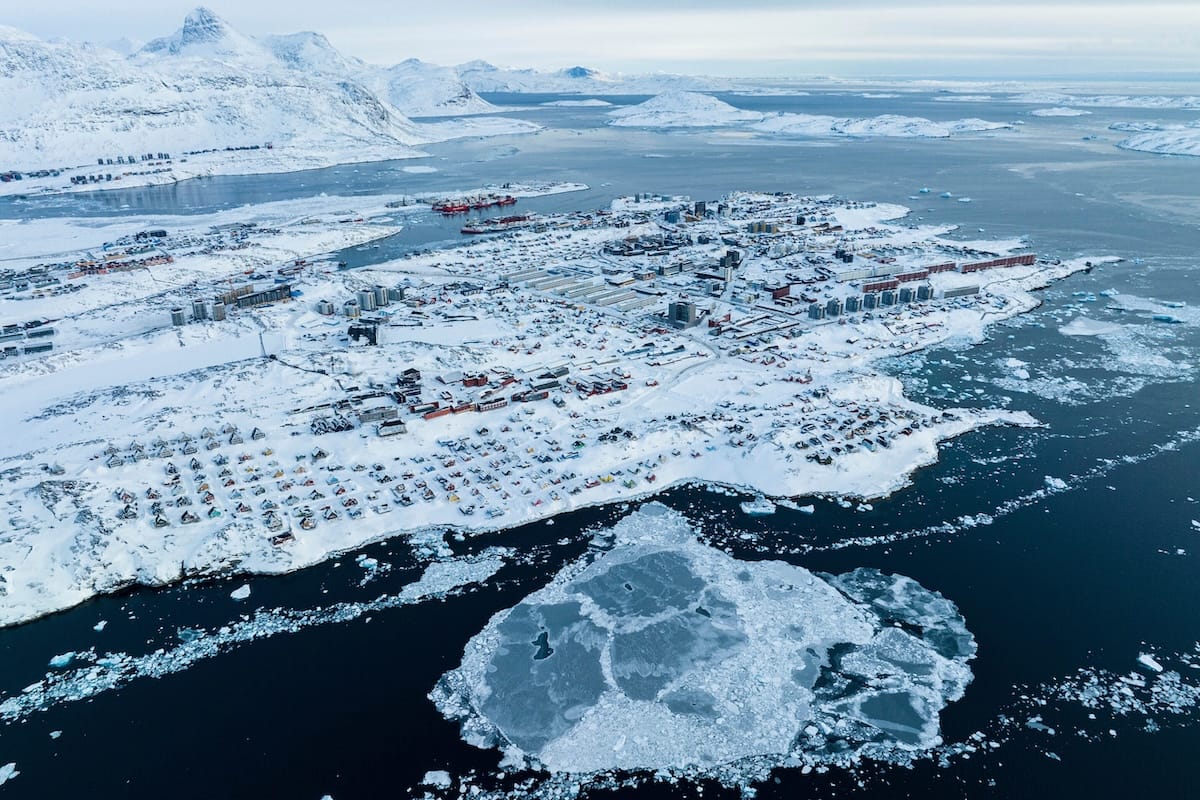
Greenland, politics, and the media narrative
Media stories suggesting that Donald Trump wants to “buy” or invade Greenland are heavily inflated. They serve Danish domestic politics far more than they reflect any genuine U.S. military intent.
In Denmark, the Greenland “crisis” has been politically useful. Prime Minister Mette Frederiksen and Foreign Minister Lars Løkke Rasmussen lead an unpopular coalition facing difficult elections. Historically, Frederiksen has benefited politically from crises—COVID-19, the Ukraine war, and now Greenland—each of which has helped consolidate authority and mute domestic opposition.
Maintaining a sense of external threat is politically convenient, particularly when it deflects attention from uncomfortable questions about Denmark’s own record.
Those questions include Denmark’s long-standing treatment of Greenland less as a strategic partner and more as a budget line item. Copenhagen has relied on annual subsidies rather than sustained investment in economic self-reliance, infrastructure, or long-term development. The contrast with the Faroe Islands is instructive: through fisheries reform and economic diversification, the Faroes have approached near self-reliance. Greenland has not.
As a result, full Greenlandic independence remains unrealistic in the near term. This dependency creates a temptation among some Greenlandic leaders to leverage interest from China—financial, infrastructural, or symbolic—as a bargaining chip. That tactic may resonate locally, but it is fundamentally incompatible with U.S. security expectations in the Arctic.
Arctic promises and broken trust
The core of U.S.–Danish friction lies not in rhetoric, but in delivery.
At a White House meeting on 4 December 2019, Prime Minister Frederiksen committed Denmark to a DKK 1.5 billion Arctic capacity package—roughly €200 million or $224 million. The package included drones, satellite surveillance, early-warning systems, and ground infrastructure to strengthen situational awareness in the Arctic. These commitments were not symbolic; they were meant to address real security gaps between Russia and North America.
By mid-2024, however, Denmark had spent only about 1 percent of the pledged funds. Most of that went to basic education for 22 Greenlandic students. The core defense elements—drones, satellites, surveillance capabilities—remained largely unrealized.
In effect, Denmark paused its Arctic ambitions once the Biden administration replaced Trump. This pause occurred despite deteriorating security conditions following Russia’s invasion of Ukraine and China’s increasingly assertive Arctic posture. In Washington, this did not go unnoticed.
Only in 2025, under renewed pressure from Trump and growing U.S. concern about Greenland’s vulnerability, did Denmark reverse course. Copenhagen announced two major Arctic and North Atlantic defense packages totaling DKK 41.4–42 billion (around €5.6 billion), covering ships, long-range drones, satellites, surveillance, and research.
The spending surge is historically significant. But credibility, once lost, is not instantly restored. From a U.S. perspective, years of underdelivery matter more than last-minute budget corrections.
China as leverage—and as liability
U.S. skepticism is reinforced by a recurring Greenlandic pattern: invoking China as an alternative partner if Europe and the United States do not invest.
This is not hypothetical. In 2017, Greenland explored airport financing with Chinese state banks. More recently, Greenlandic leaders have again suggested that if Western partners hesitate, Chinese investment should be welcomed. From Washington’s standpoint, this is a red line. Chinese infrastructure investment in the Arctic is not viewed as commercial—it is strategic.
For the United States, allowing Chinese footholds in Arctic logistics, airports, data links, or telecom infrastructure is incompatible with a close security partnership. Greenland cannot simultaneously signal alignment with U.S. defense priorities while courting Chinese state actors.
Special envoys and Trump’s logic
Much Danish commentary has portrayed the U.S. appointment of special envoys to Greenland and the Arctic as provocative or abnormal. It is neither.
Special envoys are a routine tool of U.S. diplomacy, used across administrations. Under Biden, Michael Sfraga served as Arctic ambassador. Under Trump, Arctic engagement involved figures such as Tom Dans. The personnel may change; the message does not. Across administrations, the U.S. position has been consistent: Greenland is strategically vital and cannot be neglected.
Trump’s blunt rhetoric—refusing to rule out force or speaking loosely about “ownership”—should be understood as strategic signaling rather than literal annexation plans. The United States already has legal frameworks that allow it to expand military presence in Greenland without buying territory. An invasion scenario is implausible.
What Trump is doing, instead, is applying pressure. He uses media attention and sharp language to force allies to honor commitments they have already made—particularly in a European context where many states have long underinvested in defense while relying on U.S. guarantees.
Danish outrage over unconventional U.S. diplomacy also rings hollow. Denmark itself pioneered a “tech ambassador” in Silicon Valley and has pursued direct cooperation agreements with U.S. states such as California. Sub-state and corporate diplomacy are not foreign concepts in Copenhagen. Direct U.S. engagement with Greenland is not qualitatively different.
Europe, France, and the Ukraine ledger
The Greenland episode reflects a broader European pattern: strong declarations, weak delivery.
France provides a stark example. Paris has been vocal in supporting Denmark and calling for robust backing of Ukraine. Yet France’s per-capita military aid to Ukraine stands at roughly €89, compared with Denmark’s €1,536. In 2024 alone, France spent around €3.5 billion on Russian energy—approximately equal to its total military aid to Ukraine over three years.
Across Europe, cumulative spending on Russian energy since 2022 exceeds total military support for Ukraine. This imbalance exposes a structural credibility problem.
Denmark, to its credit, has provided exceptional per-capita military aid to Ukraine and has largely eliminated dependence on Russian energy. That makes its failure on Greenland all the more striking. Rather than seeking political cover through European statements of solidarity, Copenhagen would have been better served pressing larger EU states to raise their Ukraine contributions to Danish levels if they truly prioritize security.
Telecom enters the security equation
The Greenland debate matters far beyond the Arctic. It illustrates a fundamental shift: telecommunications infrastructure is now security infrastructure.
Networks underpin military communications, intelligence sharing, emergency services, and national resilience. As a result, telecom policy is no longer shaped primarily by price and performance. It is shaped by geopolitics, alliances, and trust.
This shift is global and irreversible.
Toward a new global telecom playbook
From this reality emerges a new global telecom playbook:
- Telecom networks are critical security infrastructure, not neutral utilities.
- Credibility is measured by deployment, not policy statements.
- Vendor trust is geopolitical, shaped by ownership, state influence, and legal obligations.
- Chinese suppliers such as Huawei and ZTE are high-risk vendors due to their ties to the Chinese state.
- U.S. policy continuity on vendor exclusion spans Trump and Biden, from the Clean Network initiative to ongoing restrictions.
- NATO increasingly shapes telecom markets, as defense modernization links secure communications to trusted vendors.
Restrictions on Chinese telecom equipment did not begin with Trump. Australia acted as early as 2012. Since then, the United States, Japan, India, and multiple European countries have followed. These decisions align with dual-use export regimes such as the Wassenaar Arrangement. The idea that a change in U.S. president would soften attitudes toward Huawei or ZTE has proven illusory. Security assessments, not personalities, drive policy.
EU toolbox, NATO pressure, and national divergence
The EU’s 5G Toolbox formalized non-technical risk assessments and legitimized the exclusion of high-risk vendors from critical network functions. All 27 EU states endorsed it in 2020. Implementation, however, has been uneven.
Germany illustrates the problem. Chancellor Friedrich Merz has delayed full toolbox implementation and limited Chinese vendor restrictions largely to future 6G networks—effectively locking Huawei into 5G infrastructure for decades. Deutsche Telekom’s deep reliance on Huawei and its leadership’s public defense of Chinese technology reflect commercial interests, including corporate exposure to China through firms such as Mercedes-Benz.
Spain presents a different version of the same pattern. Its ENS5G cybersecurity framework exists largely on paper, with no binding timelines. The result is legal compliance without substantive change. Spain’s high share of Chinese 5G equipment, relatively low military aid to Ukraine, and continued Russian energy purchases suggest misaligned security priorities.
Denmark stands in contrast. It has removed Chinese vendors from its 5G infrastructure, provided strong support to Ukraine, and minimized Russian energy exposure. In telecom, Denmark aligns closely with NATO expectations—even as it faltered on Greenland defense commitments.
The bottom line
The fear of a U.S. takeover of Greenland is misplaced. What Washington wants is reliable Arctic security in a region that forms a strategic gap between Russia and North America.
Denmark’s failure to deliver on its 2019 Arctic commitments damaged trust. Greenland’s periodic courting of China deepens that damage. For governments, the lesson is clear: security promises—whether territorial or technological—must be fulfilled, not merely announced.
For telecom operators, the message is equally stark. Their future access to defense contracts, public funding, and strategic relevance will depend on how credibly they align with allied security requirements. Telecom is no longer just infrastructure. It is strategy.
And in today’s security environment, credibility is built not on declarations, but on delivery.
Read the full report: Greenland, the United States, and Denmark: A Strategic Ménage à Trois which impacts the telecom industry.
John Strand founded the Copenhagen-based Strand Consult in 1995, and has worked with Greenland for more than 25 years. Tele Greenland—now Tusass—has been a client. Over the years Strand has built close professional and personal relationships across Greenland. He also served on the Arctic Economic Council’s advisory board on telecommunications, where he contributed to the mapping of telecommunications infrastructure across the Arctic region. For Strand Consult, Greenland is not an abstraction or an exotic outpost.
In 2025, Strand Consult published numerous research notes and reports, featured expert guest contributors on its guest blog, and saw its analysis cited in more than 1,000 news stories worldwide. This Expert Opinion is adapted exclusively for Broadband Breakfast.
Broadband Breakfast accepts commentary from informed observers of the broadband scene. Please send pieces to commentary@breakfast.media. The views expressed in Expert Opinion pieces do not necessarily reflect the views of Broadband Breakfast and Breakfast Media LLC.





Member discussion