
New Senate Bill Would Halt Federal Funding for Trump’s AI Executive Order
Legislation filed as an amendment to the upcoming Senate appropriations package.

Jericho Casper
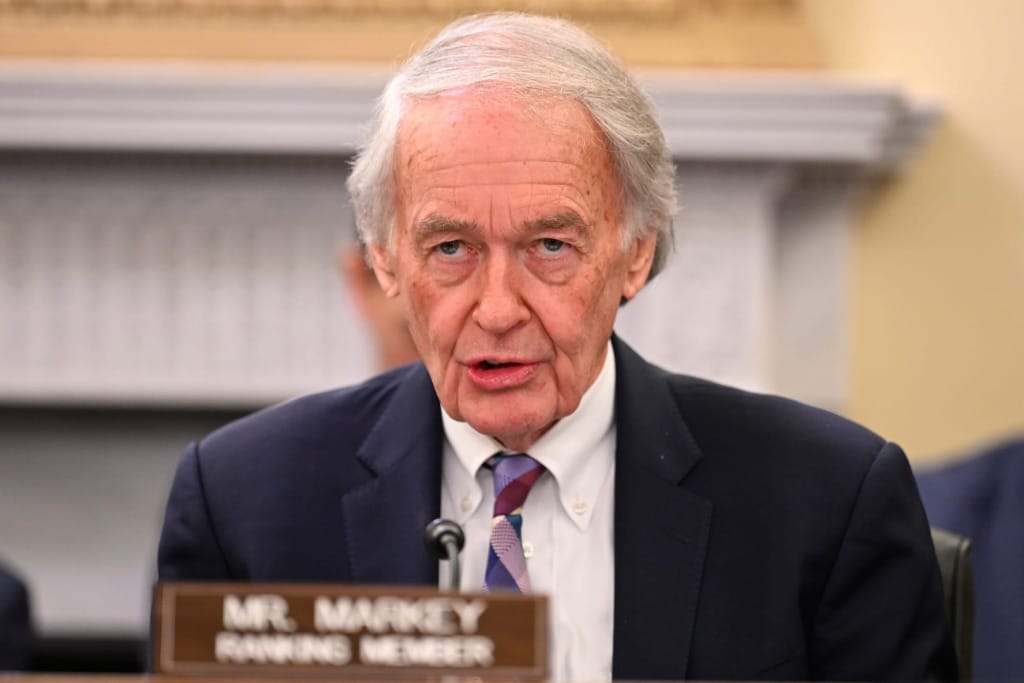
WASHINGTON, Jan. 7, 2025 – Senate Democrats are ramping up efforts to block President Donald Trump’s executive order limiting states’ ability to regulate artificial intelligence.
Ten senators joined Sen. Ed Markey, D-Mass., in introducing the States’ Right to Regulate AI Act on Dec. 17. The legislation was also filed as an amendment to appropriations legislation that the Senate expects to consider in coming days.
“Trump’s lawless AI Executive Order is a direct threat to our children, to workers, to our planet, and to marginalized communities,” Markey said in a release. “While I am confident that the courts will strike down Trump’s illegal power grab, Congress has a responsibility to assert its legislative authority and block this Executive Order.”
Trump’s executive order, issued Dec. 11, represents an unprecedented federal effort to centralize control over state AI regulation, and mobilizes multiple federal agencies to enforce compliance.
It directs Commerce Secretary Howard Lutnick to evaluate existing state AI laws within 90 days, flagging those deemed “onerous” or in conflict with the national framework and referring problematic laws to the Justice Department’s AI Litigation Task Force.
The new task force, which the order gives DOJ Attorney General Pam Bondi 30 days to stand-up, has the sole purpose of litigating against state AI laws.
The order also directs National Telecommunications and Information Administration Administrator Arielle Roth to condition states’ access to remaining Broadband Equity, Access, and Deployment funds on whether their AI laws are deemed burdensome to industry.
Beyond BEAD, the executive order directs all executive departments and agencies to review their discretionary grant programs to see if funding can be conditioned to force states to refrain from enacting AI regulations.
The order also contains explicit instructions for the Federal Communications Commission and the Federal Trade Commission.
The premise behind Trump’s AI order has been widely unpopular in Congress. Sen. Ted Cruz, R-Texas, had previously tried to include its language in budget legislation over the summer. However, senators voted 99-1 to strip the provision, with notable Republicans like Sen. Marsha Blackburn, R-Tenn., speaking out against it.
Over 1,000 AI bills were introduced in state legislatures last year, with at least 38 states adopting roughly 100 measures regulating artificial intelligence in 2025.
Of his new bill, Markey he will be pushing for a vote as part of any appropriations legislation and urging his colleagues to join him in defending the right of states to regulate AI.
The States’ Right to Regulate AI Act is co-sponsored by Sens. Peter Welch, D-Vt., Chris Van Hollen, D-Md., Adam Schiff, D-Calif., Cory Booker, D-N.J., Ron Wyden, D-Ore., Bernie Sanders, I-Vt., Ben Ray Luján, D-N.M., Amy Klobuchar, D-Minn., Alex Padilla, D-Calif., and Dick Durbin, D-Ill.




Member discussion