'Public Interest, Convenience, and Necessity': The 5 Words Behind U.S. Broadcast Licenses
Newton Minow, Kennedy’s FCC chairman, warned in 1961 that broadcasters risked losing their licenses if they neglected educational and other public-service programming.

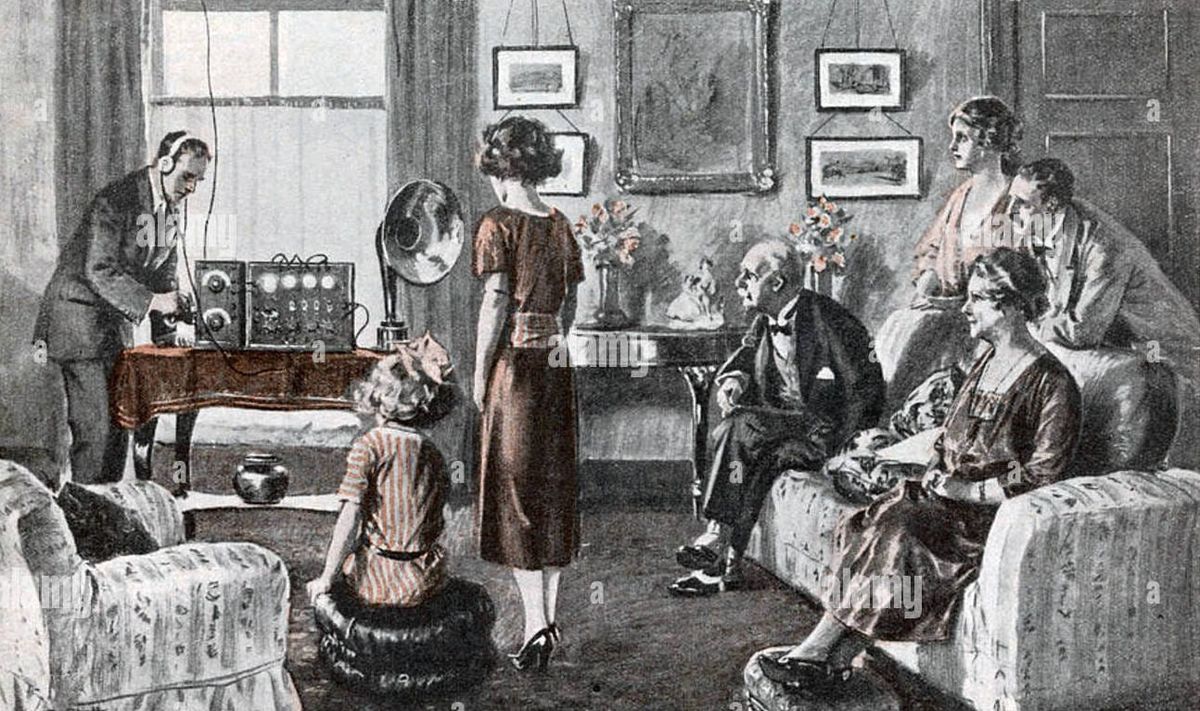
This article summarizes several of the key points in Lesson 5: Broadcast Radio and the Public Interest Standard, which is part of Broadband Breakfast's online course, "150 Years of American Telecommunications." A new lesson will be released every Monday.
No station in the United States may go on the air, or stay on it, without a federal finding that "the public interest, convenience, and necessity" will be served. Congress wrote that test into law in 1927 and has never defined the phrase.
The statute words it two ways. Section 309(a) of Title 47, which governs action on a license application, reads "public interest, convenience, and necessity," while Section 307(a), which directs the commission to grant licenses, reads "public convenience, interest, or necessity." The Radio Act of 1927 used "or" throughout, and the "and" arrived with the 1934 Act.
The difference is primarily textual, as courts and the commission apply a single standard under both wordings.
What the standard was written to solve
The problem Congress faced in the 1920s was radio interference. Competing stations on the same frequency drowned each other out, and a federal authority had to decide which station transmitted on which frequency.
The industry and the government tried to settle that themselves first. The Commerce Department had convened annual radio conferences since 1922, and the fourth one took up licensing directly.
Commerce Secretary Herbert Hoover, who would be elected president three years later, opened it in Washington on Nov. 9, 1925. Over three days the delegates resolved "that public interest represented by service to the listener shall be the basis for the broadcasting privilege."
A conference committee recommended freezing the number of stations. It proposed licensing no new ones until existing stations left the air, because the band held only so many frequencies and each new station crowded one already on it.
Where the wording came from
The phrase predates radio. The Interstate Commerce Commission (ICC), the federal railroad regulator, had for years issued certificates of "public convenience and necessity," granted only when a railroad could show a need for the new line or service.
A single retrospective account describes how the phrase reached the radio bill. Newton Minow, who chaired the FCC in the early 1960s, recalled a conversation with Sen. Clarence Dill, D-Wash., who managed the bill. The drafters had stalled, Dill told him, until a young ICC lawyer working temporarily for the Senate suggested the phrase.
The account is secondhand and came decades later. Minow recorded it long after 1927, and it leaves the lawyer unnamed.
1926: The Commerce Department loses authority
Congress had not acted, so the conferences' resolutions carried no legal force. Enforcement still depended on the Commerce Department's powers under the existing statute.
The Commerce Department had been assigning frequencies under the Radio Act of 1912, a statute written for ship-to-shore telegraphy before broadcasting existed. In 1926 the courts and the Justice Department stripped that authority away.
A federal court in Illinois ruled that year that the department could not set a station's frequency, its power or the hours of the day it could broadcast, and an acting attorney general's opinion in July agreed.
Roughly 200 stations went on the air in the months that followed. When the Federal Radio Commission, the five-member agency Congress created in 1927, took over that March, it counted 732 stations competing for roughly 90 broadcast frequencies.
The standard reaches programming
The commission defined what the public interest meant one license at a time. Two renewal cases from its first years mark the kinds of broadcasting it would refuse to renew.
In 1930 it refused to renew KFKB in Milford, Kansas, a station owned by John R. Brinkley, a physician who performed goat-gland transplants and diagnosed listeners on the air. He then prescribed medicines sold through a pharmacy association he controlled, and the commission found that the broadcasts endangered public health and served his private business.
In 1931 it refused to renew KGEF in Los Angeles, a church station whose pastor, Robert Shuler, used its broadcasts to attack Catholics, Jews and local officials. The appeals court reviewing the case cited his unsupported accusations and broadcasts that interfered with pending criminal trials.
The federal appeals court in Washington upheld both decisions. Together they established that the commission could weigh what a station had broadcast when it decided whether to renew the license.
The vagueness challenge, 1943
The Communications Act of 1934 replaced the Radio Act of 1927 and gave the new FCC the same licensing test. Broadcasters challenged that test in court within a decade.
The challenge arrived through the commission's chain broadcasting rules, the 1941 regulations limiting how much control a network could exercise over the local stations that carried its programs. NBC and CBS, the two dominant national radio networks, sued in federal district court in New York, arguing that the standard was so vague that Congress had delegated lawmaking power it could not give away.
The district court dismissed the suits, and the Supreme Court affirmed in National Broadcasting Co. v. United States, decided in 1943. Justice Felix Frankfurter, writing for the majority, called the criterion "as concrete as the complicated factors for judgment in such a field of delegated authority permit." The broadcast band held a fixed number of frequencies and more applicants wanted them than it could fit, he reasoned, so the government had to choose.
The opinion set one limit on how it chose. "Congress did not authorize the Commission to choose among applicants upon the basis of their political, economic or social views, or upon any other capricious basis," Frankfurter wrote.
From JFK to Reagan
The 1943 ruling settled the standard's validity. It did not settle what the standard required.
Minow, President John F. Kennedy's FCC chairman, told the broadcasters' convention in 1961: "Some say the public interest is merely what interests the public. I disagree." A license made its holder a trustee of the public's airwaves, he argued. That meant there was an obligation to airing news, public affairs and children's programming even when entertainment drew larger audiences.
He attached a consequence to that duty. License renewal "will not be pro forma in the future," he told the room, meaning the commission would stop granting renewals automatically. "There is nothing permanent or sacred about a broadcast license," he said.
President Ronald Reagan's FCC Chairman Mark Fowler, a broadcast lawyer, gave a different answer two decades later. The commission should defer to a broadcaster's own decisions about how to attract viewers, he wrote, and competition for audiences should replace government judgment about programming.
Under that reading, what the audience chose to watch defined the public interest, and a regulator overriding that choice substituted its own taste for the viewers'.
Eleven Congresses sat between the two speeches, the 87th through the 97th. They amended the Communications Act repeatedly, but none of them changed the five-word standard.
Fast forward to September 2025
The standard drew attention again in September 2025, through another chairman's public remarks.
On Sept. 17, FCC Chairman Brendan Carr warned of possible commission action against broadcasters over remarks by Jimmy Kimmel, an ABC late-night host, about the killing of conservative activist Charlie Kirk. "We can do this the easy way or the hard way," Carr said.
ABC suspended the program that day, and Nexstar and Sinclair, two large owners of local television stations, pulled it from their stations. The show returned to ABC on Sept. 23, while those station groups kept airing other programming in its slot for several more days.