
Security Risks and Spectrum Battles in Space Expected at World Radiocommunication Conference
ITU's choice to hold the conference in Shanghai has raised some fears about security.

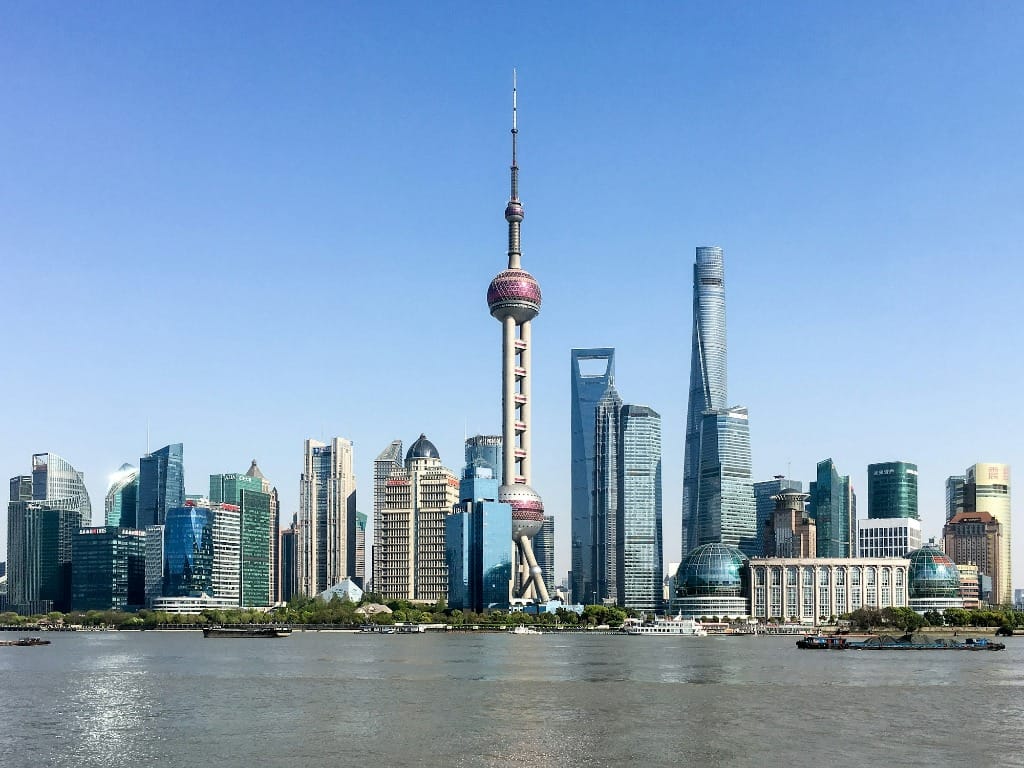
WASHINGTON, October 4, 2025 – American telecommunications and satellite industry leaders are raising concerns about security risks and Chinese influence as they prepare for a pivotal global spectrum conference set to take place in Shanghai in 2027.
The World Radiocommunication Conference, held every four years by the International Telecommunication Union, will determine how radio spectrum is allocated globally. But the choice of Shanghai as host city has sparked worries about espionage, restricted participation and China's aggressive positioning on spectrum policy.
"There are definitely a lot of concerns," said Madeleine Chang, Director of Policy at the Satellite Industry Association during a Broadband Breakfast Live Online panel discussion on October 1. "Communication, especially with classified information, will be difficult to find those safe spaces where you can discuss like hey this is what our hardware looks like, this is our intellectual property."
Highlights Reel:
 Broadband Breakfast
Chang noted that China has detained foreign industry executives and U.S. government employees in the past, posing "a physical danger for the delegates that do go there because they may be prevented from leaving the country."
More than 80% of the agenda items for WRC-27 are space-related, reflecting the explosive growth of satellite communications. The conference comes as the U.S. and China compete for dominance in low Earth orbit constellations and spectrum allocations.
Mary Brown, executive director of Wi-Fi Forward, warned that Chinese telecommunications giant Huawei is working to undermine U.S. spectrum priorities globally, particularly around the 6 gigahertz and 7 gigahertz bands.
"They are everywhere. They are ubiquitous. They are relentless," Brown said of Huawei representatives. "Whatever is good for Huawei, China wants."
Brown said the U.S. needs to begin preparations now, two years ahead of the conference, to build coalitions with other countries. She noted that developing nations in China's economic sphere may side with Beijing on spectrum issues due to trade or debt concerns, even when it conflicts with their own interests.
The Trump administration has signaled that protecting Wi-Fi access to 6 gigahertz spectrum is a priority. The FCC opened the full 6 gigahertz band to Wi-Fi in 2020, enabling what Brown called "an incredible wave of innovation" that has resulted in 300 million Wi-Fi chipsets already shipped in the United States.
But cellular interests are also seeking access to upper 6 gigahertz and 7 gigahertz bands, setting up a potential conflict between two massive technology ecosystems.
Some U.S. satellite companies that are sanctioned in China may be unable to participate in the Shanghai conference, meaning "important stakeholders who use and care about spectrum will not be represented," Chang said.
Sal Austin, CEO of DGX Security, emphasized the local impact of these international decisions. "The future of broadband can't just be decided in Geneva or Beijing. It needs to be built in Detroit, Tulsa by the people for the people," he said.
Brown expressed cautious optimism about U.S. preparations, noting that former National Telecommunications and Information Administration head Alan Davidson has called Wi-Fi "an American technology and American success story."
"The good news is that our friends in the White House inside the Trump administration recognize this is an issue," Brown said, adding they are "taking the WRC-27 preparations very very seriously."


Member discussion