Should Network-Sharing Rules Reach Big Tech?
Experts revisited AT&T’s 1984 breakup and the 1996 Act for lessons on regulating technology platforms.


WASHINGTON, Oct. 4, 2026 — Because of the strong monopolistic tendencies of network effects in communication businesses, one key approach to enhancing competition is to require incumbents to interconnect with rivals.

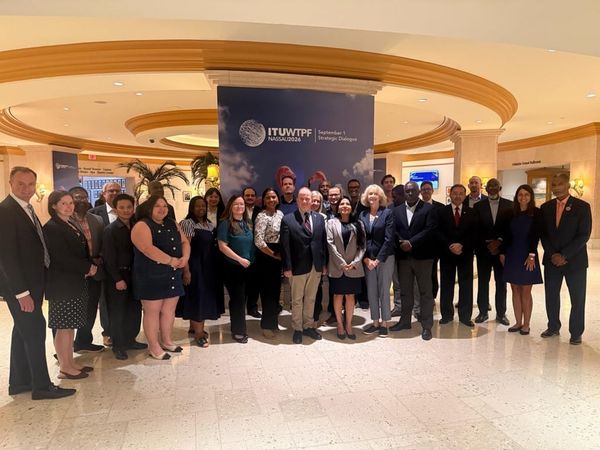
Breakfast Club Members Watch Panel 2 at America250 / Telecom150
That emerged as a key theme of the final session at Broadband Breakfast’s historical-policy event on Thursday, “250 Years of American Independence and 150 Years of American Telecommunications.”
Whether requiring AT&T to interconnect with rivals or using the 1996 Telecom Act to open up new competitive offers, measures to force interconnection was a subject of substantial agreement by the diverse group of panelists. But they split over how far that remedy should reach into technology platforms. A former Federal Trade Commission general counsel warned against extending it to Google's search algorithm or the source code behind ChatGPT.
Rules that opened telephone networks supported roughly 7,000 dial-up internet providers, said Gigi Sohn, executive director of the American Association for Public Broadband, and a former counselor to then-Federal Communications Commission Chairman Tom Wheeler.
She tied today's higher U.S. prices to the end of those network-sharing requirements. U.S. households pay an average of $81.16 a month, compared with $31.43 in England, which still requires network sharing
Number portability lowered the cost of switching
Number portability, which lets customers keep their telephone numbers when changing carriers, was a clear success, said Jonathan Nuechterlein, the former FTC general counsel. Before it, customers risked losing their numbers when switching providers, a prospect that could deter them even from a better offer.
Congress required local telephone companies to offer portability through Section 251 of the Telecom Act of 1996. Sohn counted it among the law's most consequential provisions, particularly for wireless competition.

Customers can still face costs and inconvenience when switching technology platforms, Nuechterlein said. He cited difficulties transferring services and information from an Apple iPhone to a phone running Google’s Android operating system. Those obstacles can discourage switching, much as the prospect of losing a telephone number once did.
Connecting networks does not guarantee competition
Interconnection lets customers on different telephone networks call one another. Requiring those connections was necessary during the telephone monopoly era, Nuechterlein said. Internet networks, by contrast, exchange traffic through agreements that do not depend on telephone access rules.
Connecting networks does not automatically promote competition, said Milton Mueller, a Georgia Institute of Technology professor who studies internet governance, and the author of a book about AT&T’s early bouts with competition, Universal Service.
Competing telephone systems once operated separately, leaving subscribers unable to call customers on other networks. AT&T president Theodore Vail used those disconnected systems to argue for a unified monopoly, Mueller said.
The dial-up boom had two competing explanations
The 1996 Telecom Act required established local telephone companies to connect with rivals, resell service at wholesale rates and open their poles and rights-of-way. It also required them to lease individual network elements, such as the lines connecting customers to telephone exchanges. That practice, called unbundling, let rivals compete without building an entire network.
Those open-network policies helped support the dial-up providers that connected customers over ordinary telephone lines, Sohn said. Americans had an average of 13 providers to choose from, she said.
Nuechterlein disputed the role of the network-leasing requirements. He attributed the growth to common carrier obligations, which required telephone companies to carry customers' calls on nondiscriminatory terms.
Sohn attributed the decline of independent providers to FCC decisions exempting broadband from telephone-style access requirements. In 2002, the agency classified cable modem service as an information service, outside common carrier regulation. The Supreme Court upheld that classification in its 2005 Brand X decision.
Satellite service has not resolved the affordability problem, Sohn said. Nuechterlein countered that rivals using different technologies, such as Starlink, the satellite internet service operated by SpaceX, could weaken the case for regulation by loosening the concentration of communications markets.
Competition emerged without an AT&T-style breakup elsewhere
Competition can also develop without breaking up the dominant telephone company, argued Eli Noam, a Columbia University professor emeritus and former New York public service commissioner. He pointed to Canada, which he said reached a broadly comparable communications market without a breakup. Local telephone competition was also emerging in New York before the 1996 Act, he said.
The 1982 antitrust settlement took effect on January 1, 1984, and separated AT&T's local telephone operations into seven regional companies. Sohn emphasized that the split reduced the opportunity for local telephone companies to favor affiliated services over competing providers.
The economics of communications have repeatedly favored large firms, Noam said. Building networks requires substantial upfront investment, while serving an additional customer costs comparatively little, and networks grow more useful as more people join. Those conditions can produce oligopoly, a market of a few major providers. He favored protecting new competitors' ability to enter and connect to existing networks.
Tech platforms inherit the traits that justified telephone regulation
The three conditions that once justified heavy telephone regulation now appear in technology markets, Nuechterlein said. A rival phone network attracted few customers because they could reach only a fraction of the people they wanted to call. It also paid more per customer than the incumbent, and switching costs kept customers from leaving.
Social networking platform Facebook holds its position partly because a user's friends are already there, Nuechterlein said. Search engine Google draws data from more users than its rivals, which helps it answer rare queries that smaller competitors handle poorly.
Those advantages do not settle how regulators should respond, Mueller argued. He pointed to the European Union's Digital Markets Act, which requires certain large messaging services to let users communicate across platforms. Forcing firms to share what they built could weaken the incentive to innovate, and it raised security concerns, he said.
Regulation was more appropriate when competition was unlikely to develop, Nuechterlein said. He cautioned against extending access requirements to a company's core technology, citing Google's search algorithm and the source code for ChatGPT, the AI chatbot developed by the artificial intelligence company OpenAI.
Building duplicate networks strains broadband subsidies
The physical networks that carry broadband pose a separate problem, Sohn said. Building additional wireline networks is costly, and she pointed to deployment difficulties under the $42.5 billion Broadband Equity, Access, and Deployment program. A shared network open to multiple service providers could serve customers better, she said.
Sohn credited the 2021 Bipartisan Infrastructure Law, which created that program and included $2.75 billion through the Digital Equity Act for digital skills and adoption programs. However, the previous administration was slow to distribute broadband funding, and the current administration is "micromanaging it," she said.
The Trump administration canceled Digital Equity Act grants in May 2025. Following litigation, the Commerce Department aims to reopen applications for the program in December 2026.
Federal research and spectrum decisions have also produced competitors that policymakers did not anticipate, Noam said. Microwave transmission enabled MCI, the long-distance carrier that challenged AT&T, and federally funded research networks helped give rise to the internet.
Policymakers should keep protecting emerging competitors but be cautious about attributing every improvement to their own interventions, Noam said.