State Broadband Chiefs Await Guidance on $21 Billion of Remaining BEAD Funds
Four state broadband directors, still awaiting federal guidance on billions in remaining BEAD funds, speak at Broadband Breakfast Live Online event.


WASHINGTON, July 22, 2026 — Four state broadband directors said Wednesday they remain in the dark about how they can spend billions in leftover federal broadband dollars, uniting behind a single plea to Washington: Give states the flexibility to fund what their residents actually need.
Speaking during a Broadband Breakfast Live Online panel, the officials described a monthslong wait for guidance from the National Telecommunications and Information Administration on the remaining Non-Deployment funds, money remaining after states finish connecting unserved locations under the $42.5 billion Broadband Equity, Access and Deployment program.

 Broadband Breakfast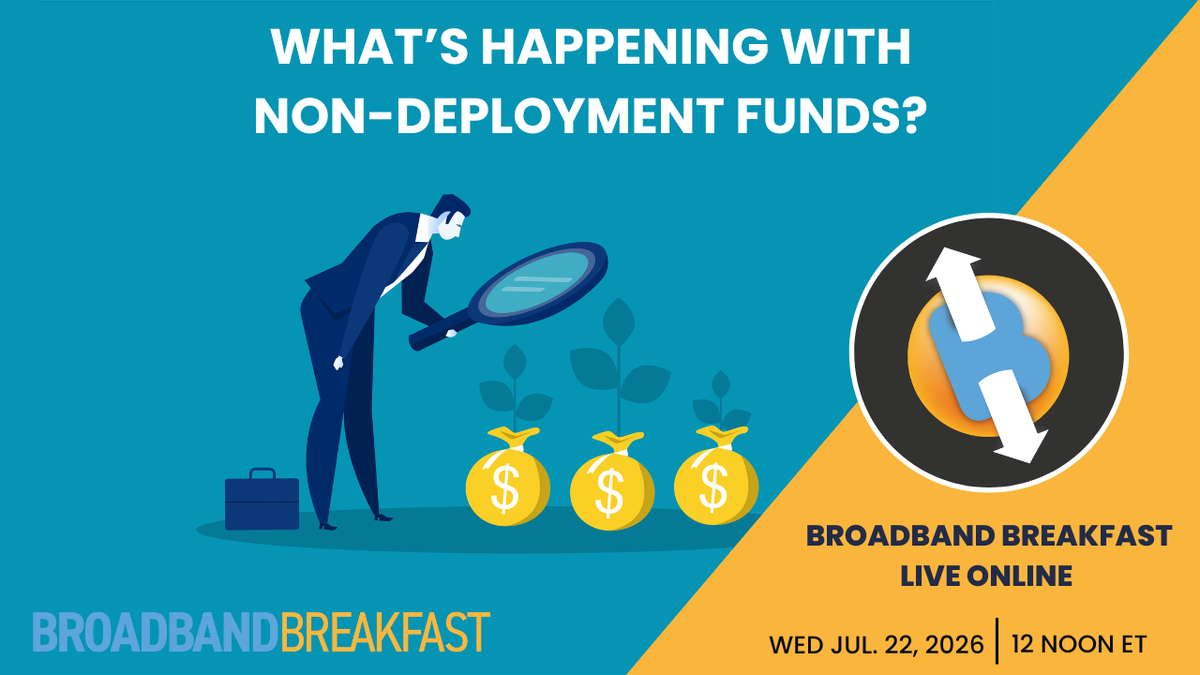
The guidance was first expected in March, and then June, and has still not arrived.
Nobody knows what's coming, panelists said
The absence of direction has bred rumor, said the chief of BroadbandOhio, Peter Voderberg: "Right now, we really don't know what the guidance is going to look like," he said. "There's a lot of people out there saying what they think it looks like or saying that they have seen it."
That uncertainty has carried costs. Ohio was forced to dismantle its industry sector partnership, a national workforce model, after promised non-deployment dollars were suspended, Voderberg said.
"It's very difficult for me to convince my legislature to provide $50 million or any kind of financial support to something that they all think is gonna be paid for from the BEAD program anyway," he explained.
The delay itself is consequential, said Chandler Vaughan, director of the Virginia Office of Broadband, because workforce investments meant to speed construction "needed to start happening two years ago, right, much less two months ago."
Finishing the job first
For all their differences, the directors agreed that universal broadband coverage lays the first claim for any remaining dollars.
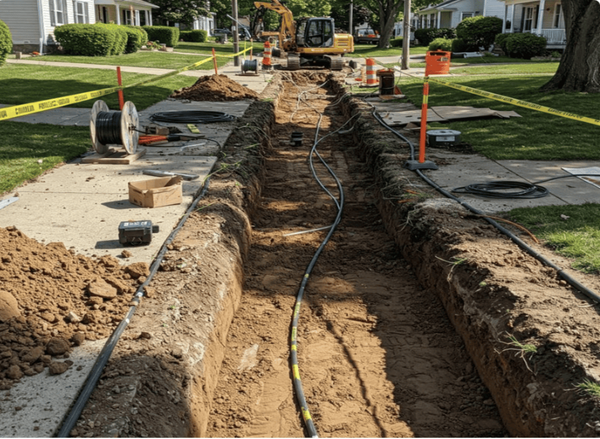
Vaughan argued the funds should shore up recent investments hit by "unforeseen cost adjustments in the permitting process," describing the gap between careful application estimates and the moment crews start "to bury fiber in five inches of rock underneath topsoil and then costs go through the roof pretty quickly."
That points toward what several described as a cleanup round, a way to catch projects that fall through. Bree Maki, executive director of the Minnesota Office of Broadband Development, said dollars should backfill locations dropped through defaults in other federal programs "for no reason of their own, but because of a situation within that whole program."
Ohio has floated a "get it done fund" for cost overruns and defaults, Voderberg said, recalling one provider that "went bankrupt six weeks after their RDOF award," referring to the Rural Digital Opportunity Fund.
The stakes are ultimately about results, said Veneeth Iyengar, executive director of ConnectLA in Louisiana, who warned a program reaching only "60 percent of your population" would be "a busted program."
More than infrastructure
The conversation frequently returned to workforce and skills training. Panelists insisting that pipe in the ground is not enough.
"You can't just focus on infrastructure, but you need to focus on the infrastructure and skilling," said Iyengar, and that skills need to be tailored: "A farmer is going to require a different skill set when it comes to leveraging precision ag[riculture]" than a health care provider who needs to improve outcomes.
Vaughan echoed the point, calling "hyper-specialized workforce development programs" that ready workers "for the next generation of work under AI" a central use of the money.
Maki grounded that work in Minnesota's community-driven digital opportunity plan, built through more than 110 local committees. "We don't need to dust it off," she said of digital equity plans created for a previous version of the BEAD program. "It is at the forefront of the work we do."
The variety of priorities is precisely why the directors pressed so hard for latitude.
Maki likened the competing pitches during federal listening sessions to "a child in the middle of a divorce," with everyone claiming to know the child's best interest. Vaughan, meanwhile, flagged emerging uses beyond the usual list, including public safety for the 40,000 Virginia homes and 10,000 miles of roads that he said sit in "complete dead zones" without 911 access.
For now, the directors said they can only wait. "We'll adapt and try to figure it out," Iyengar said.