Telehealth, Precision Ag, and Aging Share a Single Dependency: Reliable Connection
The closest emergency room to parts of Perry County, Kentucky is 55 miles away. Telemedicine fills the gap.

Akul Saxena
ORLANDO, May 19, 2026 — Medicare telehealth flexibilities that enabled rural patients to access specialists remotely during the COVID-19 pandemic remain temporary, and Congress has not acted to make them permanent.
The Rural Health Transformation Program, a $50 billion five-year federal initiative, cannot be used to pay for broadband installation or monthly internet costs at individual homes despite the program's stated goals including improving access to broadband-enabled telehealth.
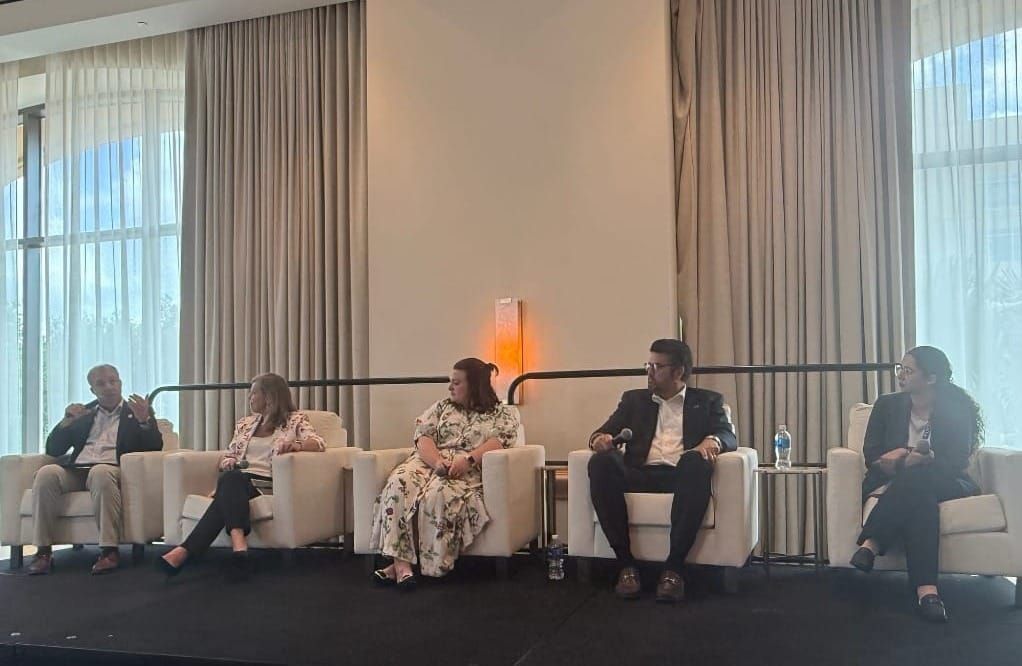
Those contradictions framed a panel Tuesday examining broadband's role across rural healthcare, agriculture, and aging. A consistent finding emerged across all three sectors: connectivity gaps must be mitigated, and the policy frameworks and legislative action meant to reduce those gaps must catch up.
Sustained, uninterrupted connectivity is the baseline requirement for modern rural care, said Aaron Maguregui, a partner at Foley and Lardner, the national law firm, whose practice spans digital health and AI. For a telehealth appointment, a connectivity lapse produces an incomplete data set that degrades AI-assisted diagnosis, delivering what Maguregui called partial answers and partial outcomes for the patient.
Continuous glucose monitors, hospital-at-home programs, and AI-enabled remote care all depend on sustained connectivity, Maguregui said. He described a critical access hospital in Perry County, Kentucky, routing serious burn cases to Massachusetts General Hospital, the Boston academic medical center with one of the country's leading burn programs, over a telemedicine connection. The closest emergency room to parts of that county is 55 miles away.
A national medical licensing framework
Congress has not made Medicare telehealth flexibilities permanent, said Sara Raza, a visiting lecturer at the University of Washington School of Law and a fellow at the Benton Institute for Broadband and Society, the nonpartisan research organization focused on broadband policy. Current law requires physicians to be licensed in the state where the patient is located, making interstate telehealth costly and burdensome to scale, she said.
Interstate and nurse licensure compacts exist but cover only a fraction of the states and providers needed to make rural telehealth fully functional, Raza said.
Providers who want to help bridge the gap by offering patients free or discounted devices or internet access face a separate obstacle: federal fraud and abuse laws restrict what hospitals and providers can give patients, even when the intent is simply to improve access to care.
Aging in place, disconnected
Eleven thousand Americans turn 65 every day, said Ramsey Alwin, president and chief executive of the National Council on Aging, the 75-year-old nonprofit working through 10,000 senior centers and more than 600 area agencies on aging nationwide. The 55-and-older demographic represents $7 trillion in annual consumption, he said, and 22 million Americans aged 65 and older remain unconnected.
ElliQ, the AI-driven companion robot made by Intuition Robotics, a Tel Aviv-based aging technology company, that monitors medication adherence, exercise, and social connection, is advancing toward Medicare reimbursement consideration, Alwin said. It requires fiber to the home or fiber to the facility to operate, placing it out of reach for the 22 million unconnected older adults most likely to benefit.
The Affordable Connectivity Program, the federal subsidy that provided eligible low-income households up to $30 per month toward internet service and a one-time $100 device discount, expired in June 2024 after Congress declined to appropriate additional funding. More than 23 million households had relied on it, and an estimated 5 million have cut internet service entirely since it ended, Alwin said.
Fiber to the farm and field
Autumn Lankford Higgins, director of government affairs at the American Farm Bureau Federation, representing 5.5 million farming families across all 50 states and Puerto Rico, described an Indiana farmer who can stand on his front porch and see exactly where federal broadband funding stopped. The fiber reached his small town but not his farmhouse, his barn, or his fields.
Farmers are investing in precision agriculture technology expecting connectivity that has not arrived, Lankford Higgins said, forcing them to seek alternative providers at additional cost on top of an already strained farm economy. She called for remaining BEAD non-deployment funds to focus on rural areas fiber has not reached and said FCC coverage maps still need updating to reflect actual service gaps.
The Trump administration's executive order on AI, which has signaled potential withholding of BEAD non-deployment funds over state AI laws, could affect rural healthcare access directly, Raza warned. BEAD is not a healthcare program, she said, but its reach into rural communities makes it one in practice.