Tower, Fiber Trade Groups Back Thumann Severs for FCC
The Congressional Hispanic Caucus said the Senate shouldn’t move forward without a Democratic pairing

WASHINGTON, Sept. 10, 2026 – Several broadband and telecom trade groups want the Senate to quickly confirm President Donald Trump’s pick for a new Republican Federal Communications Commissioner.
Meanwhile Democratic lawmakers in the Congressional Hispanic Caucus urged top Senate Republicans not to advance the nominee, Danielle Thumann Severs, unless she were paired with a Democratic nominee as presidents have historically done.

Thumann Severs was nominated last month. She’s currently a senior counsel in FCC Chairman Brendan Carr’s office and spent two years as a legal advisor to him when he served as a commissioner.
She left in July 2023 to work as a senior attorney at Crown Castle before rejoining Carr’s office in August 2024.
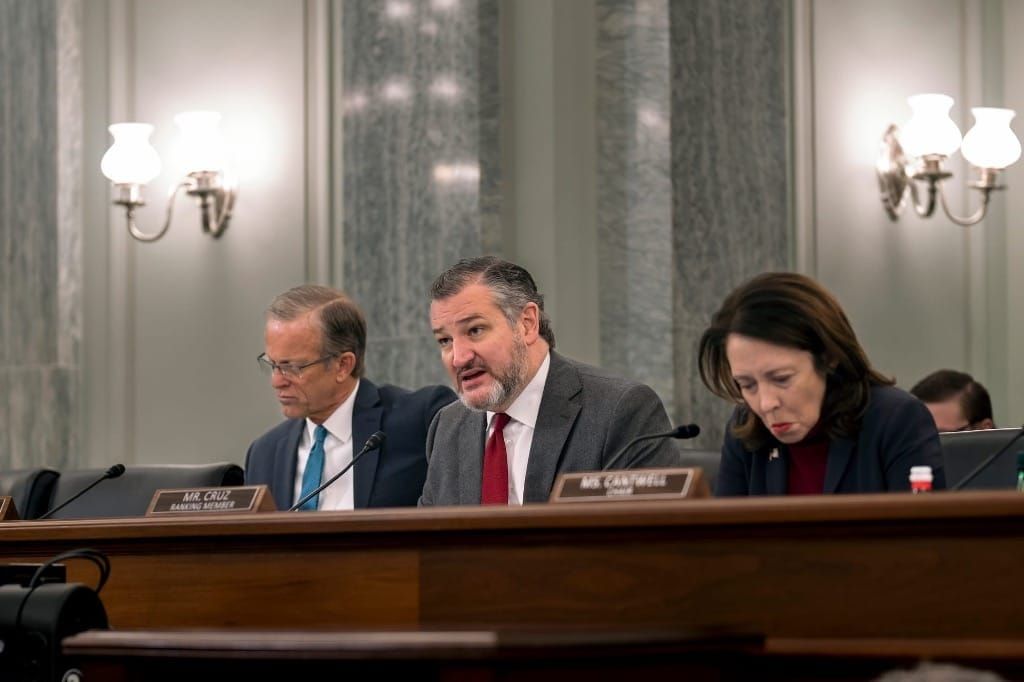
“Few nominees bring both a command of the Commission's institutional record and firsthand knowledge of what it takes to permit, build, and maintain a network,” the groups wrote in a Thursday letter to Senate Commerce Committee Chairman Ted Cruz, R-Texas, and Senate Majority Leader John Thune, R-S.D.
The letter was led by NATE, which represents telecom contractors, and joined by NCTA, INCOMPAS, NTCA, FBA, WIA, and ACA Connects, among others.
Major broadband groups USTelecom and CTIA did not join the letter. CTIA issued a statement supporting Thumann Severs when she was nominated.
Cruz’s committee has yet to set a confirmation hearing for Thumann Severs. She would have to clear Senate Commerce before being voted on by the full Senate. She needs just a simple majority to be confirmed.
The trade groups said Thumann Severs had “worked directly with tower and fiber builders — many of the small, family owned firms —” on permitting and siting policies. They also said she had substantial experience with the FCC’s universal service policies and worked directly on recent rule updates making it easier to retire copper infrastructure.
No Democratic pairing
If confirmed, Thumann Severs would give Republicans a 3-1 majority at the FCC.
The FCC by law can't have more than three members from the president’s party. Thumann’s nomination was not paired with a candidate for the open Democratic seat, as presidents prior to Trump have typically done.
Rep. Adriano Espaillat, D-N.Y., chairman of the Congressional Hispanic Caucus, urged Cruz and Thune not to advance Thumann Severs unless she were paired with a Democrat. That could include renominating FCC Commissioner Anna Gomez to another term, he wrote in a Tuesday letter with former chair Nanette Barragán, D-Calif.
Gomez's term officially ended June 30, but she can remain in her seat unless she is replaced or until the next session of Congress ends. That would be in January 2028.
“The bipartisan pairing of FCC nominations has long reflected Congress’s intent that the Commission maintain meaningful representation from both parties. We urge you to uphold that principle now,” Espaillat and Barragán wrote. “Any new Republican nomination should be accompanied by the renomination of Commissioner Gomez, ensuring that the Commission retains bipartisan representation and that its consequential decisions are subject to meaningful debate and consideration from more than one political perspective.”
Sen. Maria Cantwell, D-Wash., the top Democrat on the Senate Commerce Committee, opposed FCC Commissioner Olivia Trusty’s nomination last year, citing a similar lack of Democratic appointees despite an open seat.
In a recent Harvard Business Review paper, former FCC Chief of Staff Blair Levin said it was likely Trump would nominate a third Republican before firing Gomez, if he were going to fire her as he has done to other Democratic appointees. That would avoid the disruption that would come from lacking the three members necessary to vote on new rules and proposals.
But he cautioned that that path also faced "legal and political challenges," and could be fought in court. Carr also already has a 2-1 majority that allows him to enact his agenda unencumbered.