Towers, Moffett Bearish on Direct-to-Device Mobile Competition
The FCC might take comment on opening three unlicensed bands to the service: 902-928 MHz, 2400-2483.5 MHz, and 5725-5850 MHz

Jake Neenan
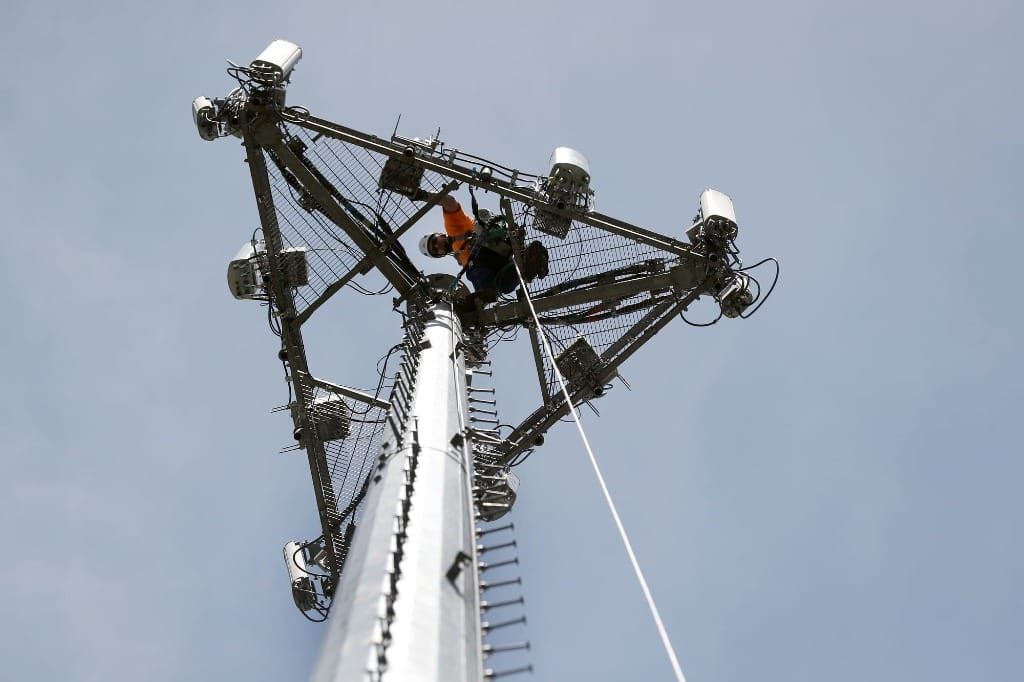
WASHINGTON, July 20, 2026 – The tower industry wants you to know it won’t be made obsolete by satellite direct-to-device connectivity.
The Wireless Infrastructure Association commissioned two reports on direct-to-device last week, which argued the service was a complement to terrestrial mobile service rather than a direct competitor.
Direct-to-device has been gaining attention recently, especially after SpaceX’s massive IPO and various companies’ multibillion-dollar deals aimed at acquiring scarce direct-to-device spectrum. The company also said in its IPO filing that it intended to provide a mobile service that could compete with terrestrial carriers.
Tim Farrar, founder of TMF Associates, wrote in one of the WIA reports that satellite beams cover much larger areas than cell towers, effectively forcing many more users onto the same capacity.
SpaceX’s planned next generation of satellites for its Starlink Mobile service are supposed to have beams covering 45 square miles, he wrote, 15 times the area covered by a typical cell tower.
That, combined with limited spectrum resources and the massive distances involved, does not bode well for SpaceX’s prospects of providing large numbers of people with service comparable to the mobile carriers, he wrote.
“D2D is not an alternative, it is simply a last resort fall back solution outside of terrestrial coverage,” he wrote. “That is a valuable complement to terrestrial networks in truly remote areas, and it may also be useful in the event of a disaster, such as a hurricane or earthquake, that makes terrestrial infrastructure temporarily unavailable.
Joe Madden, president of Mobile Experts, wrote that in-building coverage would be difficult or impossible to provide via satellite because of the signal degrading over long distances.
He also wrote that the cost per gigabit of data provided was likely to be higher for direct-to-device, since each satellite orbits the entire Earth multiple times per day and can’t focus its capacity as much as a well-placed cell tower.
Moffett: Starlink Mobile needs MVNO to compete
The CEOs of the three nationwide mobile operators have said effectively the same thing. They view direct-to-device as a compliment for hard-to-reach places and emergencies, rather than a direct competitor.
Each company has also said they’re not interested in giving SpaceX a mobile virtual network operator (MVNO) deal to sell service provided in part by their networks.
But that’s SpaceX’s only real route to competing in the U.S. wireless market, MoffettNathanson analysts wrote in a Monday report. The firm is unoptimistic about the company competing with only its satellite network.
But the carriers are unlikely to grant an MVNO — the cable giants have MVNO deals with Verizon, and are competing more and more for wireless subscribers — and a terrestrial network would be incredibly costly to build from scratch and require more spectrum, they wrote.
The other options are accessing Charter’s MVNO through a partnership or acquisition, which the analysts wrote was unlikely to be allowed under the deal, or buying a carrier outright.
“Owning a telco would catastrophically compress SpaceX’s multiple. It makes no sense. You don’t buy an incumbent to disrupt the incumbents,” they wrote. The report was authored by MoffettNathanson founder Craig Moffett and analysts Julie Zhu and Nick Del Deo.
The most likely scenario, they’ve argued, is SpaceX will try to hoover up more spectrum assets that it can trade for an MVNO with an otherwise reluctant carrier. It’s already spending more than $20 billion on EchoStar spectrum.
SpaceX “will continue to negotiate, cajole, and, if necessary, coerce, in an effort to secure an MVNO agreement with one of the Big Three,” they wrote. “It is clear, however, that the Big Three fully understand the clear and present danger that would be posed by Starlink’s market entry as another Cable-like hybrid MNO/MVNO.”
FCC draft proposal
The Federal Communications Commission will vote next month on whether to take comment on opening 225 megahertz of unlicensed spectrum for direct-to-device. The agency cited the rising demand for airwaves set aside for the service, which also motivated Amazon’s $11 billion acquisition of Globalstar and Rocket Lab’s $8 billion acquisition of Iridium, both of which are pending.
In a public draft of the item released Thursday, the agency revealed the bands under consideration. The item will ask about direct-to-device services in the 902-928 Megawertz (MHz), 2400-2483.5 MHz, and 5725-5850 MHz bands.
That would allow satellite communication with consumer devices that already operate in those bands, but Moffett wrote some of the bands are not supported by current smartphone chips.