
12 Days of Broadband Covered Spectrum, AI Infrastructure, BEAD and Affordability
Leaders from the Vernonburg Group, Ookla, NextNav and Broadband Breakfast discussed linkages between spectrum, AI, BEAD and affordability.

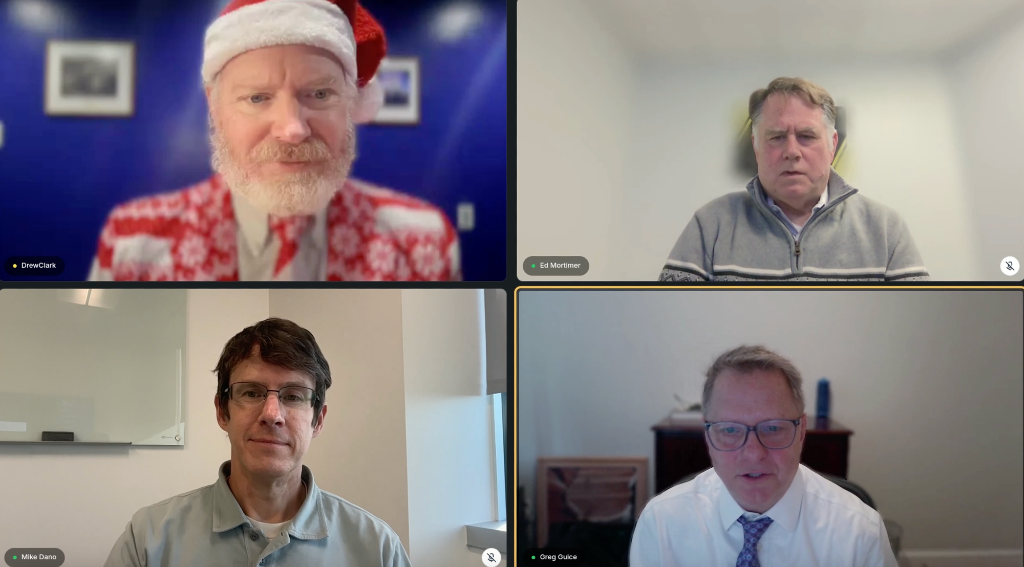
WASHINGTON, Dec. 17, 2025 — The telecommunications industry faces critical decisions in 2026 on spectrum allocation, artificial intelligence infrastructure and broadband affordability as federal policies shift under new leadership, industry experts said Wednesday.
Speaking at Broadband Breakfast's holiday season panel discussion, three analysts reviewed major 2025 developments and outlined priorities for the coming year, from renewed spectrum auction authority to mounting energy demands from AI data centers.
Ed Mortimer, vice president of government affairs at NextNav, highlighted restored FCC spectrum auction authority as a game-changer after a three-year lapse. Congress mandated identification of 800 megahertz for commercial use by 2027.
 Broadband Breakfast
"Just getting that authority going has reenergized the FCC, the NTIA," Mortimer said. "This administration has really focused on how do we use spectrum for the most effective ways."
Mortimer warned that China maintains significant advantages in the global AI race, calling spectrum policy critical to competitiveness.
"China is way ahead of us, and it's all about data and information," he said. "We need to have several backups to GPS, and it's all about data driven and how we use that data."
Greg Guice, chief policy officer at Vernonburg Group, emphasized that spectrum innovation will determine AI leadership, cautioning against policies that favor licensed spectrum over unlicensed alternatives.
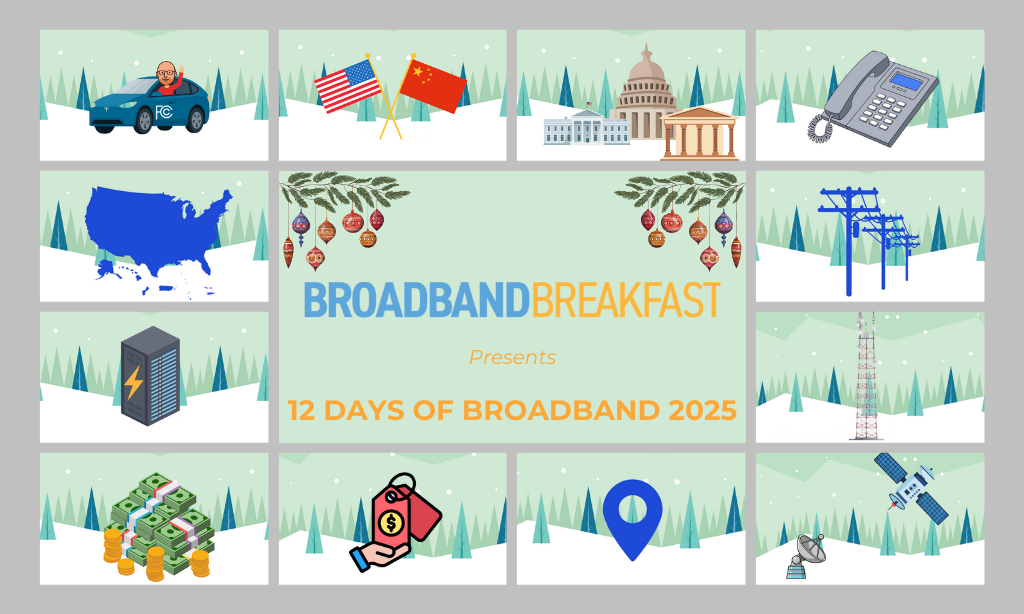
12 Days of Broadband 2025 (click to open)
- On the First Day of Broadband, my true love sent to me: One Carr driving the Federal Communications Commission.
- On the Second Day of Broadband, my true love sent to me: Two superpowers racing toward AI superintelligence dominance.
- On the Third Day of Broadband, my true love sent to me: Three branches of government (and some formerly independent agencies).
- On the Fourth Day of Broadband, my true love sent to me: Four programs with Universal Service Funds.
- On the Fifth Day of Broadband, my true love sent to me: 56 states and territories without digital equity grants.
- On the Sixth Day of Broadband, my true level sent to me: Less than 6 months for a broadband permit.
- On the Seventh Day of Broadband, my true love sent to me: Data center-powered electricity bills up 70 percent.
- On the Eighth Day of Broadband, my true love sent to me: 800 megahertz of spectrum to sell at auction.
- On the Ninth Day of Broadband, my true love sent to me: $9 billion + 12 billion (or $21 billion) in BEAD remaining funds.
- On the Tenth Day of Broadband, my true love sent to me: Not even $10/month for an affordable connectivity program.
- On the Eleventh Day of Broadband, my true love sent to me: Through BEAD and broadband, 110 million locations served.
- On the Twelfth Day of Broadband, my true love sent to me: More than 1200 megahertz of spectrum for unlicensed wireless.
"If we really want to innovate and have America lead, I think we've led the Wi-Fi revolution in this country," Guice said. "We need to preserve those opportunities, and 6 gigahertz is prime for where we're at and future opportunities around unlicensed use of spectrum."
Mike Dano, lead industry analyst at Ookla, said data clearly shows spectrum availability directly improves network performance.
"The correlation between spectrum, additional spectrum, and improved network performance is one of the easiest correlations that we can see in the data," Dano said.
On AI infrastructure, panelists noted energy consumption presents immediate challenges. Data centers currently consume approximately 4 percent of U.S. electricity, with projections suggesting that could triple within five years.
"The power draw from data centers is a real thing," Dano said, citing recent deals to retrofit jet engines for temporary data center power ahead of grid connections.
However, Dano noted AI services have not yet strained broadband networks significantly, though he questioned whether uplink capacity will suffice as AI inference capabilities expand.
Guice suggested some data center facilities could move to privately-owned power networks to accelerate deployment and protect ratepayers from cost increases.
On affordability, Guice pointed to lessons from the now-expired Affordable Connectivity Program, which provided subsidies to low-income households.
"If you empower consumers, low income consumers, with some money to go buy service, they want the service, and they'll keep the service," Guice said.
Guice also noted remaining BEAD program funds could support digital skills training and affordability initiatives in 2026, with guidance expected from the National Telecommunications and Information Administration by March.
The discussion covered Broadband Breakfast's "12 Days of Broadband" series, which examined major 2025 issues including FCC leadership changes, universal service fund challenges and satellite broadband deployment.

Member discussion