More Non-Deployment Guidance Not Coming Soon, NTIA Says
State officials were glad to secure coverage for more locations but had mixed feelings about a new policy notice

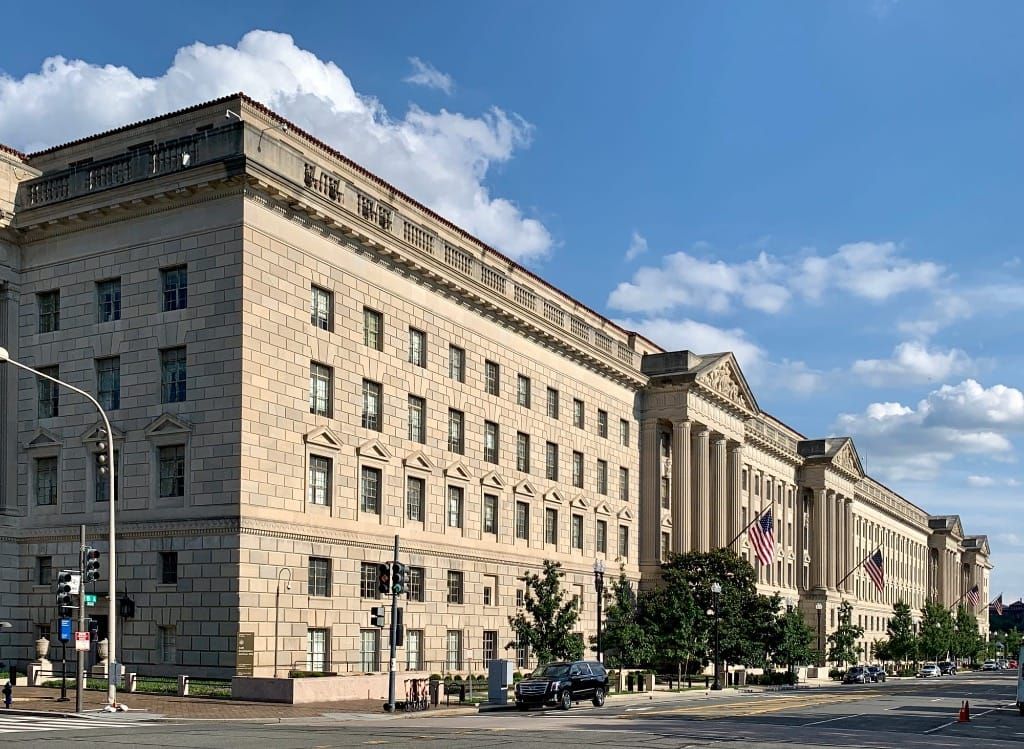
WASHINGTON, Sept. 4, 2026 – Additional non-deployment guidance isn’t coming right away, the National Telecommunications and Information Administration said Friday.
The agency said Thursday that some of the $21 billion remaining in the Broadband Equity, Access, and Deployment program would be directed toward homes and businesses that still lacked service but were not marked as eligible for bidding last year.

That was the guidance NTIA Administrator Arielle Roth was referring to when she promised lawmakers guidance on how states could use remaining funds would come by the end of this summer, an agency spokesperson said in an email.
“Other uses of BEAD funding will be addressed in subsequent guidance once NTIA has a better sense of how much this true up round will cost the states and territories,” the spokesperson said.
Based on the policy notice NTIA published Thursday, that could be months away. The process of refining lists of eligible locations could take up to 97 days, with another 90 days for bidding and 90 more after that for NTIA to review and approve the true-up spending plans.
The newly eligible locations will be from defaults from other programs and locations shown to be unserved by the Federal Communications Commission’s latest coverage map, the notice said.
Michael Santorelli, head of the Advanced Communications Law and Policy Institute at New York Law School, said that based on public broadband coverage data up to 1 million extra locations could be eligible under the new round, and that it could take anywhere from $5.6 billion to $9.3 billion to reach them.
An NTIA slide deck obtained by Broadband Breakfast put the number of locations closer to 477,000, but it said each state’s numbers were tentative.
Before the true-up round, BEAD is set to reach about 3.79 million locations and spend about $18.2 billion. That number is also in flux though, since updated FCC maps also prompted NTIA to ask states to remove hundreds of thousands of satellite locations from awards.
Multiple state officials said states hadn’t yet received lists of newly eligible locations from NTIA. Those lists are the starting point for determining how many new locations a state will have to secure coverage for, and they’ll be refined through a challenge process.
Jeff Lopez, director of New Mexico’s broadband office, said NTIA’s notice made it clear that unserved locations, those lacking broadband speeds of 25 * 3 megabit per second (Mbps) would be eligible.
But underserved locations, those with speeds above 25 * 3 Mbps but below 100 * 20 Mbps, might not, he said. Under the 2021 Infrastructure Law, BEAD’s main round of bidding had to cover both un- and underserved, but the new true-up round is being conducted under a different authority that gives NTIA more freedom, he said.
The policy notice only refers to unserved locations, aside from one passing reference.
‘Cautiously optimistic’
States officials had mixed feelings about the guidance, but Lopez said he was “cautiously optimistic.”
“I think this certainly solves a need,” he said. “It will expand connectivity in New Mexico.”
Lopez said New Mexico was eager to get universal coverage at 100 * 20 Mbps, so he was hoping underserved locations would be eligible.
He said the most recent FCC maps showed about 6,000 newly constructed locations in New Mexico (NTIA’s tentative total of newly eligible locations there was about 4,500).
An official from another state, who requested anonymity to speak freely, agreed a true-up round like the one NTIA laid out was something states had long asked for and thought would be necessary.
The official said some locations technically covered by other programs, like the FCC’s Rural Digital Opportunity Fund, are almost certainly going to be defaulted on, but wouldn’t be eligible for the BEAD true-up round.
The official did not read the policy notice to apply to locations defaulted on by BEAD winners that refused to sign contracts. They said that could create a patchwork in which BEAD defaults were bid separately from the true-up round, when the areas might be more attractive to bidders if they could be included in one larger project.
Bree Maki, head of Minnesota’s broadband office, said she also was happy to have the chance to secure coverage for more locations in her state.
She said she was disappointed, though, not to have received an update on how to address problems existing BEAD winners were having. Component costs have been rising since bidding last year, and she said her office had submitted waivers to NTIA to address the issue that were still pending.
Those included using additional remaining funds to increase support, and waiving domestic manufacturing requirements around fiber-optic cable, she said.