
Senate Vote-a-Rama on $9.4 Billion Rescissions Package Begins
Bill would eliminate $1.1B in public broadcasting support for PBS and NPR

WASHINGTON, July 16, 2025 – The Senate kicked off a high-stakes vote-a-rama Wednesday on a $9.4 billion rescissions package that would slash funding for public broadcasting and foreign aid.
H.R. 4, the Rescissions Act, would revoke $1.1 billion in previously allocated funds to the Corporation for Public Broadcasting, effectively stripping two years of federal funding from PBS and NPR, as well as $7.9 billion in foreign aid.
On Tuesday, the Senate voted 51-50 to advance debate on the proposed cuts, with Vice President J.D. Vance casting the tie-breaking vote, after three Republican Sens. Susan Collins, R-Maine, and Lisa Murkowski, R-Alaska, and Mitch McConnell, R-Ky., voted against the motion, along with all 47 Senate Democrats.

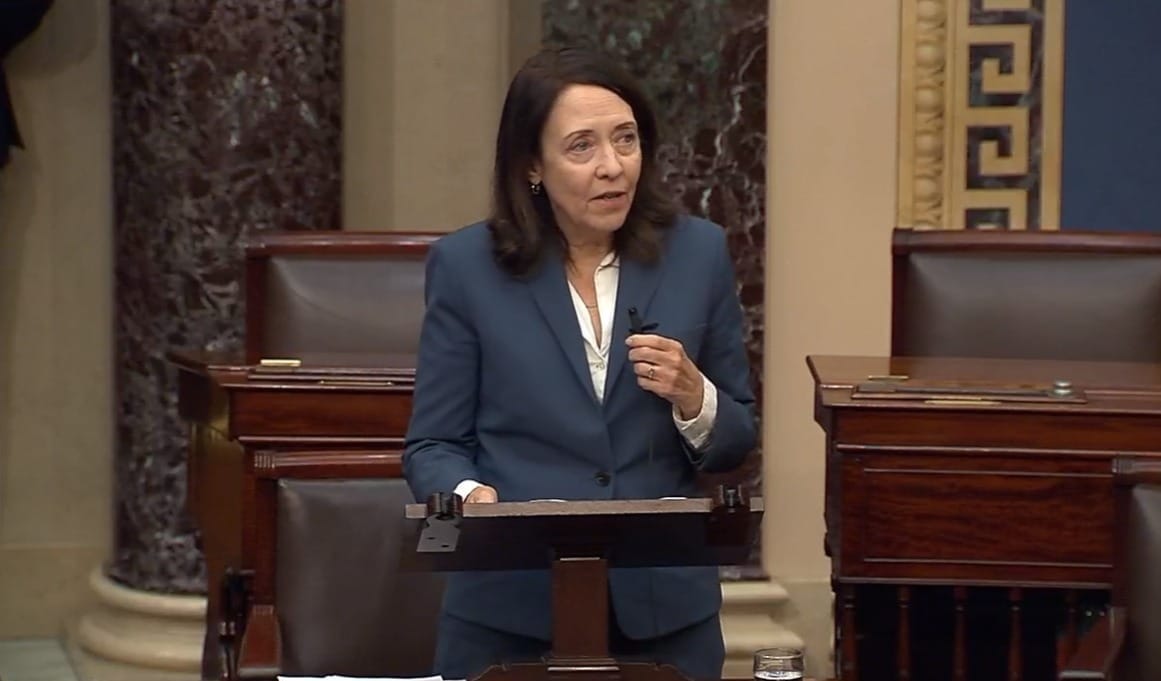
Speaking on the Senate floor Wednesday, Sen. Maria Cantwell, D-Wash., claimed that the cuts would compromise public safety. She noted times when PBS stations were the only way that government officials could communicate with the public during emergency situations, such as during a 2018 earthquake in Alaska and during a 2021 tornado outbreak in Kentucky.
“We’re not just putting PBS at risk here, we’re putting millions of Americans who depend on local media for lifesaving information,” she said. “When emergency managers such as someone at FEMA or the National Weather Service or local officials hit send on a lifesaving alert, it normally travels through wireless carriers' infrastructure to reach cell towers. But what happens…when the fiber lines don’t work or they’re cut in the storm…well that’s what PBS’ [Warning, Alert & Response Network] does, it fills in. PBS stations…are built to broadcast through disasters.”
Sen. Eric Schmitt, R-Mo., disagreed with that characterization.
“Let’s be clear about this, the funding rescinded in this package has zero impact on emergency alert systems,” Schmitt said. “The integrated public alert and warning system IPAWS or Next Generation warning system grant program are funded and operated by FEMA, not the Corporation for Public Broadcasting. Those alerts do not rely on CPB and they certainly don’t depend on taxpayer subsidies for partisan media outlets. Any entity could administer these programs without funneling money through a politically biased intermediary.”
At least four motions to recommit the package to committee for revision failed, alongside multiple proposed amendments, during Wednesday’s floor debate. As of 6:15 P.M. Wednesday, senators were still voting on yet another motion to recommit H.R. 4, this one offered by Sen. Mark Warner, D-Va.
Should any of those motions pass, it could doom the legislation. Under the Impoundment Control Act of 1974, Congress has 45 days from the time it receives a rescission request to act on that request. Since the Trump administration sent its rescission request to Congress on June 3, Congress had until July 18 to pass the cuts.
If H.R. 4 fails, the administration will be required to spend the money as previously allocated. The House passed the rescissions package on June 12, by a vote of 214-212. If any of the Senate amendments are adopted, the bill will need to return to the House for another vote.
Republicans have claimed that NPR and PBS are partisan outlets that should not receive taxpayer funding. Democrats have disputed that claim, and have argued that the stations provide necessary information and educational opportunities for vulnerable communities.
The cuts represent a serious threat to the continued existence of PBS and NPR. Although NPR receives only about 1 percent of its funding from the federal government, it receives 30 percent of its funding from fees paid to it by local member stations. Those stations in turn receive an average of 13 percent of their funding from the CPB–funding which, if rescinded, may result in those stations being unable to operate.
PBS stands to lose much more from the cuts. In 2025, 22 percent of its budget came from the CPB and other federal agencies, and an additional 61 percent came from fees paid to it by local member stations. Like NPR’s member stations, PBS’s member stations are also supported by funds from the CPB.





Member discussion