After the Titanic Sank, Congress Passed America’s First Major Radio Law
The system worked while radio was dominated by ships and point-to-point communication. Mass broadcasting in the 1920s exposed what Congress had left unresolved.

This article summarizes several of the key points in Lesson 4: The Origin of Wireless, which is part of Broadband Breakfast's online course, "150 Years of American Telecommunications." A new lesson will be released every Monday.
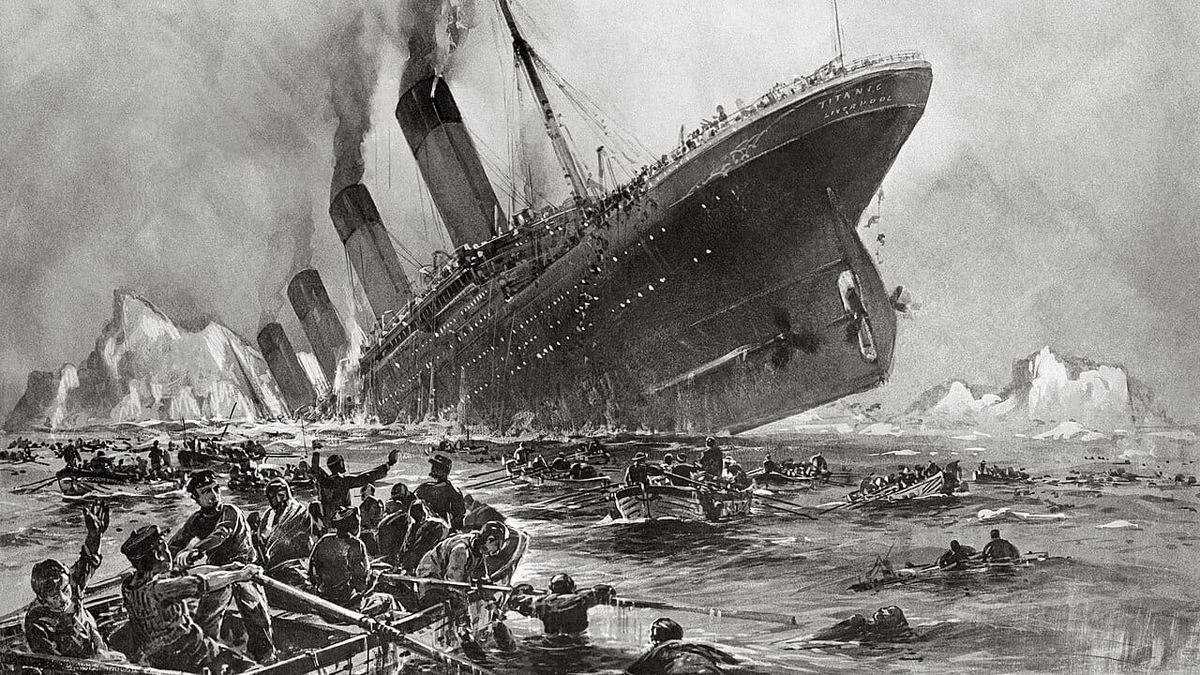
The Titanic struck an iceberg late on April 14, 1912 and sank a few hours later. Its radio was not for listening to. In 1912 radio was closer to texting, one ship tapping Morse code to another, and it is the reason anyone survived.

The ship that answered was the Carpathia, another passenger ship 58 miles away and headed the other direction. Its radio man was still awake and still listening. The Carpathia turned around and found the first lifeboat at ten past four in the morning.
Other ships close enough to help did not receive the distress signal. The Californian, a cargo ship, sat nearer to the Titanic than the Carpathia was, but its one operator had switched his set off. No federal law required a ship to keep an operator on duty at night, and none gave a station a wavelength of its own.
The Senate opened hearings four days after the sinking. In August, Congress passed the Radio Act of 1912, which made it illegal to operate a radio transmitter anywhere in the United States without permission from the federal government. It required two licenses, one for the station and one for the person working it, and let the Secretary of Commerce and Labor set each station's wavelength, the single frequency it was allowed to transmit on, and its hours.
Fifteen years later, Congress wrote down what a license actually was. The Radio Act of 1927 put it in six words: licensees get "the use of such channels, but not the ownership thereof." That is still the law.
That statute and the wreck behind it open Lesson 4 of 150 Years of American Telecommunications, the 35-lesson Broadband Breakfast course, released to members on Monday.
Radio was 20 years old before it had an audience
Radio in 1912 sent written messages from one station to one other station, addressed by call sign. The Titanic's was MGY, and what it sent that night went out as "MGY says CQD," the distress signal before SOS. Nearly all traffic ran between ships at sea and shipping companies' offices on shore. There was nothing for a family at home to hear, and almost no one owned a receiver.
An Italian inventor working in Britain, Guglielmo Marconi, owned the largest radio company in the world, and the shipping lines were his customers. His company owned the set aboard each ship and rented it to the line, hired and paid the operator, and charged for every message he sent. The Titanic's two operators were Marconi employees rather than crew.
A license for anyone who asked
The 1912 Act obliged the Secretary of Commerce to grant a license to every American citizen who applied for one. The Secretary assigned each station a wavelength and set the hours it was allowed to transmit.
From 1912 to 1920 the applicants were shipping companies and commercial telegraph companies. Each one wanted to reach a specific shore station, not a general audience, so two applicants rarely asked for the same wavelength. Broadcasting ended that.
Starting in 1920, station owners applied for licenses to transmit music and speech to the public, many of them in the same city and many requesting the same wavelength. Secretary Herbert Hoover licensed all of them, as the statute required him to.
Two court rulings then removed the rest of his authority. In Hoover v. Intercity Radio in 1923, the Court of Appeals of the District of Columbia held that the Secretary had to issue a license to any citizen who applied. In United States v. Zenith Radio in 1926, a federal court in Illinois held that he could not dictate a station's wavelength, power or transmitting hours. After those decisions, station owners selected their own wavelengths and hours, and the Commerce Department issued licenses recording what the owners had chosen.
The Navy ran American radio, then handed it back
When the United States entered the First World War in 1917, the Navy seized 53 commercial stations and ran radio as one system until 1920. It asked Congress to make the arrangement permanent, and the House committee reviewing the bill set it aside in January 1919.
Radio went back to private ownership on terms the Navy wanted: General Electric bought British Marconi's controlling stake in its American subsidiary, and the Radio Corporation of America was incorporated in October 1919 with foreign ownership capped at 20 percent and a federal representative seated on its board.
RCA was created to carry telegrams. Within three years its largest business was selling receivers to families who wanted to listen to music, a market that did not exist when the company was founded. The firm that would dominate American broadcasting was already running, under ownership rules Congress and the Navy had written, before there was anything to broadcast.