Broadband Affordability Falters in 2025
In spite of the political salience of 'affordability,' federal rollbacks, industry pressure, and stalled state efforts took a toll on low-income Americans' broadband.

Jericho Casper
Affordability was the political buzzword of 2025.
12 Days of Broadband 2025 (click to open)
- On the First Day of Broadband, my true love sent to me: One Carr driving the Federal Communications Commission.
- On the Second Day of Broadband, my true love sent to me: Two superpowers racing toward AI superintelligence dominance.
- On the Third Day of Broadband, my true love sent to me: Three branches of government (and some formerly independent agencies).
- On the Fourth Day of Broadband, my true love sent to me: Four programs with Universal Service Funds.
- On the Fifth Day of Broadband, my true love sent to me: 56 states and territories without digital equity grants.
- On the Sixth Day of Broadband, my true level sent to me: Less than 6 months for a broadband permit.
- On the Seventh Day of Broadband, my true love sent to me: Data center-powered electricity bills up 70 percent.
- On the Eighth Day of Broadband, my true love sent to me: 800 megahertz of spectrum to sell at auction.
- On the Ninth Day of Broadband, my true love sent to me: $9 billion + 12 billion (or $21 billion) in BEAD remaining funds.
- On the Tenth Day of Broadband, my true love sent to me: Not even $10/month for an affordable connectivity program.
But when it came to the affordability of broadband, a conversation that dominated 2024 after a federal subsidy helping one in six U.S. families afford Internet service expired – the topic barely surfaced in 2025.
Governors skipped the topic in their State of the State addresses this year; New York City’s newly elected Mayor Zohran Mamdani did not broach it on the campaign trail, despite his platform centered on affordable housing, transit, and other cost-of-living issues; and Vice President J.D. Vance, who campaigned on the issue in 2024, made little mention in his first year in office.
At the same time, federal actions taken by the Trump administration actively undermined broadband affordability in 2025, as the administration rolled back programs and federal guidance aimed at keeping Internet service accessible.
States tried to keep broadband affordable
Despite this, state legislators tried to keep broadband affordability on the agenda.
The year kicked off with New York’s $15 broadband law taking effect on Jan. 15. The law capped monthly Internet service at $15 for speeds of 25 Megabit per second and $20 for higher tiers, for households participating in programs like SNAP and Medicaid.
The landmark law was mired in nearly four years of litigation as major ISPs challenged it in court. In January, industry groups including AT&T, Charter, and Verizon petitioned the Supreme Court again to overturn the law, but the justices declined in February, leaving the law in full force.
That success inspired a number of states to follow suit early in the year.
States like California, Massachusetts, North Carolina, Vermont, and Minnesota, proposed legislation which sought to make broadband more affordable. But, as had happened in New York, heavy lobbying by ISPs slowed, weakened, or killed similar measures, leaving most proposals stalled or significantly altered.
State affordability bills stalled: The California case
California tried to follow New York’s lead with the California Affordable Home Internet Act, a bill introduced in January 2025 by Assembly Member Tasha Boerner, D-Encinitas.
Both bills required Internet service providers to offer $15-per-month broadband plans to households participating in public assistance programs, though speed requirements differed.
The bill advanced through the state Assembly in June by a 52‑17 vote, but its original promise was undermined by significant amendments, largely driven by lobbying from major ISPs Charter, Verizon, Cox, and AT&T.
Changes lowered the speed definition to 50 Megabits per second (Mbps) down and 10 Mbps up, weakened the California Public Utilities Commission’s authority to hold providers accountable, and created new financial and operational risks for municipal and independent broadband providers.
Boerner told Broadband Breakfast in July that she ultimately decided to hold the bill in committee, after discussions with the National Telecommunications and Information Administration revealed that California ISPs applying for a major federal broadband expansion program would be able to exempt themselves from the state affordability requirements, undermining the bill’s impact.
Trump administration rolls back affordability mandates
Around June, the Trump administration sparked a coordinated attack on federal and state broadband affordability efforts.
“In recent months the federal government under the Trump administration has abandoned any pretense that it cares about broadband affordability,” wrote telecom analyst Karl Bode, in an Expert Opinion on Broadband Breakfast in July.
Bode wrote that state efforts like California’s bill were being undercut by “greed” and industry influence. He said the Trump administration had also actively rolled back other key broadband affordability programs.
“In less than a year Republican lawmakers have dismantled the FCC’s Affordable Connectivity Program, killed a program that provided free Wi-Fi to poor rural school-children, and dismantled the Digital Equity Act – a Congress-sanctioned law taking aim at longstanding digital discrimination in affordable broadband access,” Bode wrote.
Federal broadband program restructured without affordability
Around the same time, NTIA led by Trump administration officials issued a notice restructuring the $42.5 billion federal Broadband Equity, Access, and Deployment program. A major facet was removing affordability criteria included under the Biden administration.
Among the changes made, NTIA eliminated low‑cost requirements from the original BEAD notice of funding opportunity, and stripped out middle‑class affordability provisions, saying the non-statutory provision was “confusing, arbitrary, impossible to operationalize, and deterred provider participation in the program.”
The Biden NTIA’s low-cost model was designed to ensure that recipients of the federal Affordable Connectivity Program, which expired in May 2024, continued to have access to high-quality service plans at affordable rates under the federal BEAD program.
The Biden NTIA suggested state broadband offices set the low-cost service option at a cost of $30 a month or less, or $75 on Tribal lands, inclusive of all taxes, fees and charges. Speeds were set at a minimum of 100 * 20 Mbps, with latency capped at 100 milliseconds.
Every state and territory broadband office released their proposed definition for what would qualify as a low-cost option in initial volume two BEAD proposals. Several states were thinking creatively about how to make low-cost broadband work for different communities.
Utah, for example, proposed a $30 plan for urban providers and a $55 option for rural providers, reflecting the higher costs of serving remote areas. Wisconsin suggested a $30 plan for providers with more than 100,000 subscribers, while smaller providers could qualify with $40 plans. Missouri proposed a $30 plan, but allowed a $50 plan if the provider participated in the ACP device subsidy program, which offers a one-time $100 discount for eligible households, reported Jake Varn, associate manager of the broadband access initiative at The Pew Charitable Trusts.
However, those efforts ran into resistance
In June, NTIA’s notice restructuring BEAD found “that by offering a ‘model’ low-cost service option with specific dollar amounts,” the Biden administration had “engaged in improper rate regulation in the NOFO.”
The notice added that “some eligible entities imposed unreasonable rates consistent with the parameters outlined in the NOFO,” which, according to Trump administration officials, “raised the cost of participating in BEAD and prevented some providers from pursuing BEAD subgrants entirely.”
Affordability had been explicitly outlined as a requirement of BEAD in the Infrastructure Investment and Jobs Act, but it became one of several statutorily mandated provisions the Trump administration later rolled back.
In late June, more than 40 lawmakers, including Sens. Amy Klobuchar, D-Minn., and Rep. Jim Clyburn, D-S.C., sent a letter urging Commerce Secretary Howard Lutnick to reverse the BEAD restructuring, warning it could squander broadband affordability, coverage, and quality if not fixed.
Yet, in August, Trump’s NTIA doubled down, telling states that they could not enforce rate caps on BEAD program participants, even if state law required it. NTIA officials said any violation would jeopardize a state’s federal broadband funding. Only New York currently has such a law on the books.
Officials at ACA Connects, which represents smaller cable operators, had asked NTIA to specify that BEAD participants were exempt from state affordability laws. The group and others spearheaded a fight against state-level rate regulation in 2025.
Industry sought FCC preemption of state rate caps
ACA Connects made similar requests of the Federal Communications Commission, arguing that even price caps of $30 a month could materially affect network deployment.
“Because rate regulations effectively prohibit telecommunications services, the FCC should adopt a rebuttable presumption that state broadband rate regulation violates Section 253 of the Communications Act,” the group said in November.
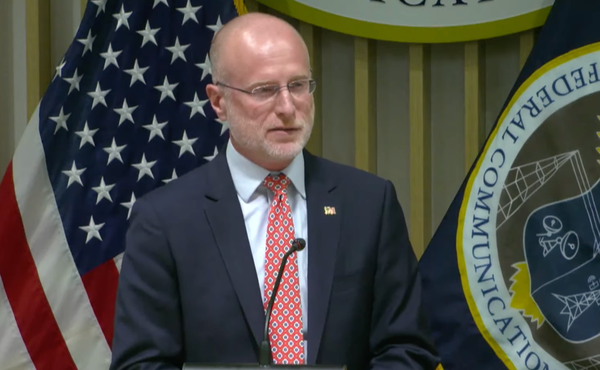
Around the same time, FCC Chairman Brendan Carr pushed forward two rulemakings that considered doing just that. On Sep. 30, Carr said the FCC was “taking a fresh look at its authorities under Section 253 of the Communications Act to preempt state and local barriers to next-gen builds.”
The proposal was embedded within two separate FCC permitting reforms, one addressing wireless infrastructure and the other wireline networks, and has drawn strong opposition from municipalities and residents, who object to the language that may preempt state and local laws.
Other FCC commissioners communicated their own approaches to broadband affordability this year.
FCC Commissioner Olivia Trusty voiced support for expanding broadband affordability during her confirmation hearing in April, but called for doing so primarily through market competition.
Meanwhile, Commissioner Anna Gomez has called on Congress to prioritize affordability as it grapples with modernizing the Universal Service Fund.
Millions struggle without federal assistance
The combined effect left many Americans balancing checkbooks and cutting back on essentials just to afford the Internet in 2025.
A 2025 survey from the National Lifeline Association collected over 68,000 responses and nearly 30,000 personal testimonies from former ACP and Lifeline participants. The results highlighted the consequences of losing federal support.
About 40 percent of survey respondents said they had to cut back on food spending in order to maintain internet access. Thirty-six percent reported discontinuing telehealth services, and 64 percent said they could not stay in regular contact with friends and family.
Roughly one in five adults struggled to work remotely or pick up shift work, and nearly the same share of children had difficulty completing homework.
Overall, 72 percent said they could not pay for internet service each month without support from the Affordable Connectivity Program or Lifeline. Nearly 95 percent said they could not afford any additional payments toward their service, and about half of respondents were unbanked.
For those Americans that struggle to afford Internet access, market forces may be the only factor shaping broadband affordability for the foreseeable future.
Member discussion