Rep. Greg Landsman Wants Federal Rules on Data Center Power Costs
The Ohio Democrat’s bill would put federal regulators in charge of electricity rates for some large data centers

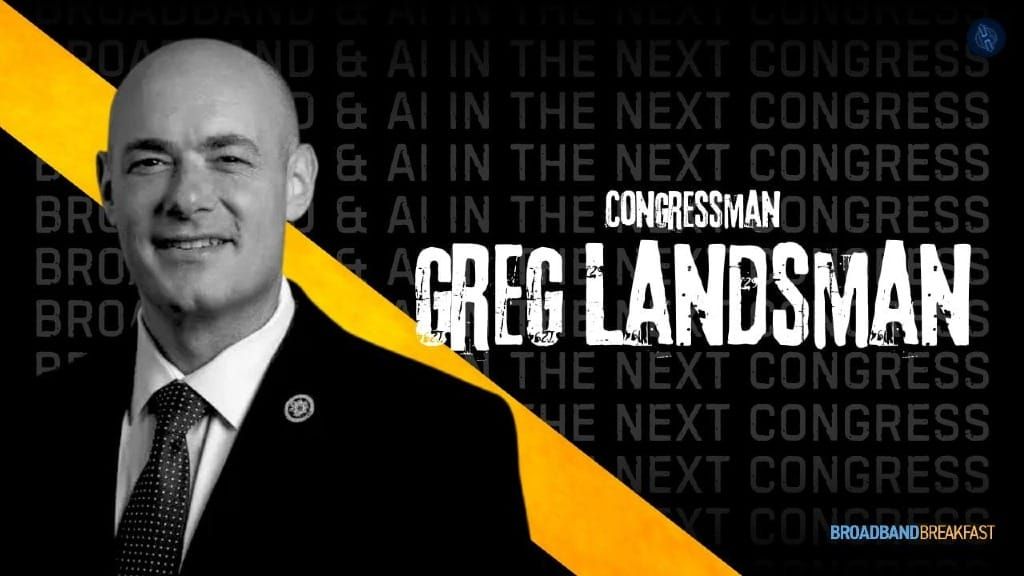
WASHINGTON, Nov. 29, 2026 – Rep. Greg Landsman, D-Ohio, wants large data centers to pay for the power infrastructure needed to serve them. His proposal would also shift authority over certain data center electricity rates from state regulators to the federal government.
The Ohio Democrat made data center costs and transparency part of his reelection campaign, winning a third term in a Cincinnati-area district redrawn to be more favorable to Republicans.
Landsman opens Broadband and AI in the Next Congress with a 9:10 a.m. fireside chat Dec. 1 at the National Press Club in Washington with Breakfast Media CEO and Publisher Drew Clark.


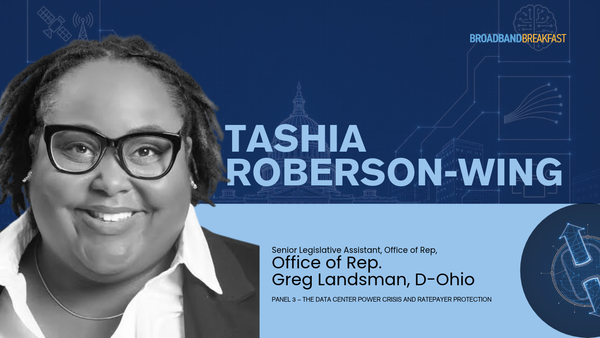
Two members of his staff, Brad Tauber and Tashia Roberson-Wing, also appear on panels addressing permitting and data center power.
A national rule for large data centers
Landsman’s No Harm Data Centers Act, H.R. 8033, would give the Federal Energy Regulatory Commission sole authority to approve retail electricity rates charged by covered utilities to data centers with peak demand greater than 50 megawatts.
Those rates would have to include the full costs of specified generation, transmission and distribution facilities needed to connect data centers and maintain grid reliability as their demand grows. Covered utilities could not shift those costs to other customers.
The bill’s rate provisions would not apply to every utility. They exclude electric cooperatives, state- and locally owned utilities, the Tennessee Valley Authority and federal power marketing administrations, among other limitations.
At a February hearing, FERC Chair Laura Swett said she believed data center operators were willing to cover their costs and understood the importance of community support.
“That’s not been our experience,” Landsman responded, pointing to tax breaks and community opposition in his district. “Ultimately, I think we have to get to a place where they pay everything.”
Federal authority or state control?
Landsman’s proposal goes beyond a measure the House passed 417-3 in September. The Ratepayer Protection Act, H.R. 9340, directs state utility regulators to consider a standard under which data centers pay the full incremental costs of new infrastructure needed to serve them.
The distinction is important: The House-passed bill requires states to consider the standard, not adopt it. Landsman’s bill would give FERC authority over covered retail rates and require the specified costs to be allocated to data centers.
That raises a question beyond who pays: Who decides? State utility commissions generally regulate retail electricity rates.
The National Association of Regulatory Utility Commissioners argued in an April letter to FERC that states already have the authority and tools to allocate transmission costs associated with large electricity customers. The letter was not a response to Landsman’s bill.
FERC has also taken steps under its existing authority. In June, it directed regional grid operators to justify or reform rules governing how data centers and other large electricity users connect to the grid.
Costs, disclosure and the campaign
Data center development became an issue in Landsman’s reelection race as Ohio communities debated electricity costs, water use and local control.
Landsman told the TV station WCPO that the federal government should require data centers to pay their way and operate transparently.
His Republican opponent, Eric Conroy, also said data centers should pay for their electricity and water costs, but favored decisions by local communities over sweeping federal regulation. Conroy also pointed to the importance of competing with China on AI and the potential for local tax benefits.
The new district boundaries would have favored President Donald Trump by roughly 2.5 to 3 points in the 2024 election, WCPO reported. Landsman nevertheless won reelection Nov. 3.
The district includes Cincinnati, where officials have restricted new data centers through February 2027 while developing permanent zoning rules.
What the public gets to know
Landsman’s No Harm bill also addresses agreements that keep data center project details from the public. It would make certain predispute nondisclosure clauses concerning data center construction unenforceable against elected public officials.
The legislation would also have the Environmental Protection Agency seek an agreement with the National Academies to assess data centers’ environmental and public health effects, including water consumption, air pollution, noise and emissions.
In September, Landsman joined Reps. Tom Barrett, R-Mich., and Jamie Raskin, D-Md., in introducing the separate No Secrets for Data Centers Act. It would prohibit and invalidate nondisclosure agreements used by government officials to conceal project details.
“Big Tech needs to be transparent about these deals, not force local officials to sign NDAs and keep secrets from their communities,” Landsman said when the bill was introduced. “Transparency can’t just be a promise – it needs to be law.”
Building broadband faster
Landsman has also backed legislation aimed at removing obstacles to broadband construction.
He is a cosponsor of the bipartisan Broadband and Telecommunications RAIL Act, which would give railroads 60 days to approve or deny certain applications to place broadband equipment in railroad rights of way. The House Energy and Commerce Committee approved the bill unanimously in December 2025.
At an INCOMPAS policy summit in February, Landsman said bipartisan cooperation would be essential to passing permitting reform.
Before Congress, Landsman was a teacher and served on Cincinnati City Council. He also helped lead a local preschool ballot initiative.
What to watch at 'Broadband and AI in the Next Congress'
- How would Landsman build support for shifting certain data center rates from state regulators to FERC?
- Can his bipartisan work on disclosure extend to rules on electricity costs?
- How does he want Congress to speed broadband construction while addressing communities’ concerns about data centers?
Sign up for Broadband and AI in the Next Congress on Dec. 1.