Scrutinizing Jail Calls and Online Ads for Sex Can Catch Trafficking, Investigators Say
A Santa Clara County task force and dozens of partner agencies recovered 73 trafficking victims from February's Super Bowl

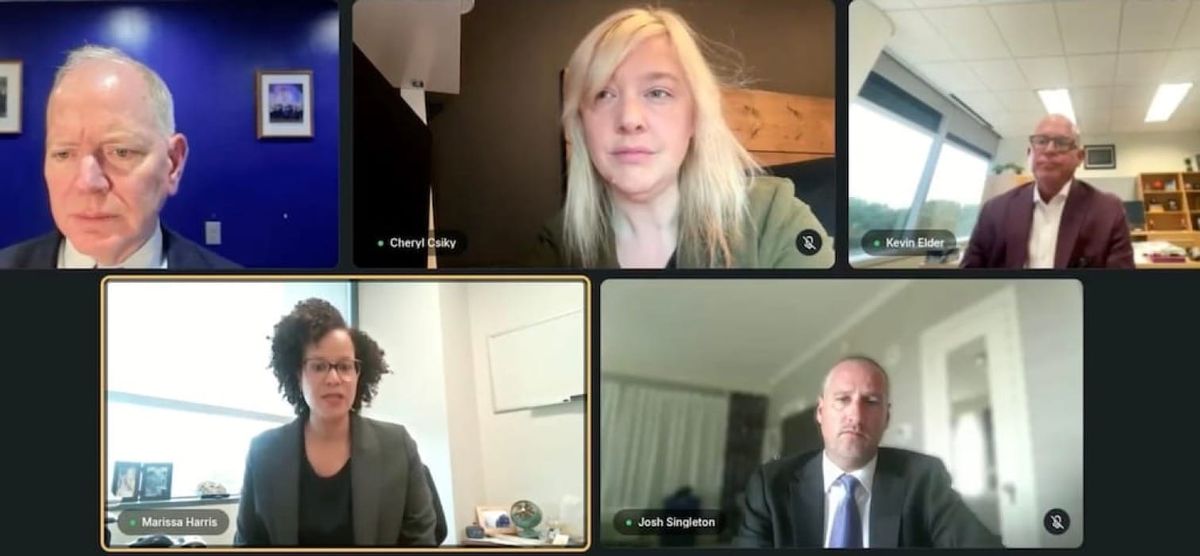
WASHINGTON, Nov. 5, 2026 – Recorded jail calls and online ads for sex have become some of the strongest evidence in human trafficking prosecutions, a federal prosecutor and a county task force commander said Oct. 29.
The panel's central example was February's Super Bowl in Santa Clara, Calif. A county task force and dozens of partner agencies recovered 73 trafficking victims, 10 of them minors, and arrested 29 suspected traffickers. The Santa Clara County District Attorney's Office announced the totals Feb. 19, KQED, the Bay Area public broadcaster, reported.

Panelists described the work on a Broadband Breakfast webinar co-hosted by Securus Technologies, a company that sells phone and video service to jails and prisons. Kevin Elder, its president, was a panelist, and its software was a major source of the operation's leads.
The National Human Trafficking Hotline, a federally funded tip line, identified 15,085 trafficking cases involving 21,457 victims nationwide in 2025. California accounted for 1,908 of those cases, the most of any state.
Operations happen year-round, said Cheryl Csiky, a survivor advocate involved in anti-trafficking efforts. Big events bring the funding that makes a coordinated push possible, she said.
Traffickers even operate from jail
Many traffickers keep running their operations from custody, said Marissa Harris, an assistant U.S. attorney and the human trafficking coordinator for the Northern District of California. They call victims to tighten their coercive hold or to pressure them not to cooperate with prosecutors.
"Get the jail calls," Harris said she tells the investigators she trains. In one of her cases, a defendant who had pleaded guilty to child sex trafficking tried to start a second operation from jail while awaiting sentencing. An FBI agent reviewing his calls caught it.
Federal cases are built on that kind of corroboration, Harris said. Task force officers and federal agents lead the investigations, and her office carries a case through trial and any later challenge to the conviction. Travel across state or national lines, and the money that moves with it, can make a case federal.
Corroboration matters because jurors tend to doubt both police and trafficking victims, said Lt. Josh Singleton, commander of the Santa Clara County Human Trafficking Task Force. Jail calls blunt defense attacks on a victim's credibility. "It's got great jury appeal because oftentimes these are the words of the trafficker themselves," he said.
Finding time to listen is the hard part, Singleton said. That is the gap Securus aims to fill.
Securus looks for the pattern inside the traffic
The company's software flags words and patterns in jail calls, texts and emails, Elder said. Its analysts, many of them retired investigators, isolate potential trafficking and hand it to police. During the Super Bowl operation, company staff worked inside the command center alongside police and survivor advocates.
Traffickers and victims often juggle several phones, Elder said, so the information moving over those lines becomes a useful investigative tool. Survivors helped the company's analysts recognize which jail communications could be facilitating trafficking, he said.
The aim is speed, Elder said. Task forces have limited staff, and the company wants to deliver the data points that hold up in court faster than investigators could find them alone. Artificial intelligence is the next step, with trained people reviewing every flag. "We're not letting the AI just run wild with that," he said.
Analysts read the ads that run in the open
The second stream of leads came from commercial sex ads, which run openly online. Analysts narrowed about 20 million data points to 60 to 70 packages of leads for Singleton's team, Csiky said. They flagged ads showing several people at once or someone who appeared underage.
In one case, Csiky said, analysts traced an ad's photos to a single original Facebook profile hiding behind eight fake ones. In Our Backyard has worked with Securus since the 2019 Super Bowl in Atlanta, she said.
Survivors read the same data through a different lens, Csiky said. Drawing on her own experience, she looks for the point at which a person became trafficked. She said it took her years to recognize that she had been exploited as a child.
That lens shapes how she pushes investigators. She recalled one who doubted a case because the couple involved was married. "A marriage doesn't discount trafficking," she said.
On artificial intelligence, Csiky said the technology can flag suspicion, but people carry a case across the finish line.
The money leaves a digital trail
Trafficking is a business, and businesses keep records, Harris said. Traffickers store proceeds in banks and digital currency, and they advertise victims online. Little of that is beyond the reach of a federal grand jury subpoena, she said.
Those records support asset forfeiture, the seizure of a crime's proceeds. They also support restitution, court-ordered payments that compensate victims.
Recruitment moved to the same platforms
Boys are also recruited for commercial sex, Harris said, sometimes through sextortion. In sextortion, an offender posing as a peer obtains nude photos, then threatens to publish them unless the victim pays.
The National Center for Missing & Exploited Children, a federally funded nonprofit, received more than 50,000 reports of financial sextortion in 2025. Many involved teenage boys, the center said. The Treasury Department has warned that the schemes can target anyone.
Cases still depend on victims speaking up
Prosecutions rise and fall with victims willing to testify, Harris said, and with investigators who can present their accounts so a jury believes them.
"So we are never actually going to cut humans out of this picture," Harris said.
The same regional model ran again during this summer's six World Cup matches at Levi's Stadium. That effort identified 53 survivors, including 11 children, and led to 25 arrests of suspected traffickers, the district attorney's office said in July.
Anyone with information can reach the National Human Trafficking Hotline at 1-888-373-7888.