Midterm Voters Sent Data Centers a Message
The backlash is about the concentration of power, not AI itself, panelists said on Broadband Breakfast Live Online


WASHINGTON, Nov. 4, 2026 – In four of the biggest data center states, voters chose candidates who ran against the industry's buildout, a power-market expert said on Broadband Breakfast Live Online. on Wednesday, a day after the Midterm Elections.
Watch Full Video for Free:
The results arrive before the Senate's first vote, scheduled for Nov. 9, on a permitting bill that would make data centers pay for the grid upgrades they require. That Monday vote, on a motion to proceed, needs 60 votes just to open debate. Republicans hold 53 seats until January.
AI and data centers ranked last of five issues in the NBC News exit poll, behind government corruption at 90% and cost of living at 89%. Still, 56% of voters called the issue a crucial or major factor in their House vote, and 23% called it crucial.
Four states, one message
Texas, Ohio, Georgia and Arizona all elected candidates who promised to pause, limit or put conditions on data center growth, said Rob Gramlich, founder and president of Grid Strategies, a Washington consulting firm that studies transmission and power markets. In Texas, Democrat Gina Hinojosa won the governorship after pledging to halt data center approvals until the Legislature passes protections.
In Ohio, Sherrod Brown unseated Sen. Jon Husted by framing him as "the face of data centers," Gramlich said. Amy Acton, who opposed data center development, won the governor's race. In Georgia, Keisha Lance Bottoms, who backed a statewide moratorium, was elected governor.
Texas faces a practical problem. Large-load requests there total roughly 200 gigawatts, Gramlich said, more than double the grid's record peak of about 85.5 gigawatts. "There's literally no way to meet 200 gigawatts of new demand in Texas, for example. It's just not going to happen," he said.
Power in a few hands
Voters are not deciding whether they are for or against AI, said Alex Roark, founder and CEO of the American Innovation Policy Forum and former chief of the Federal Communications Commission's Consumer and Governmental Affairs Bureau. "It's really about how Americans feel about the concentration of power and influence over our lives into the hands of a few people," he said.
Data centers make that abstraction physical, Roark said, and many arrived "behind non-disclosure agreements with zero community input."
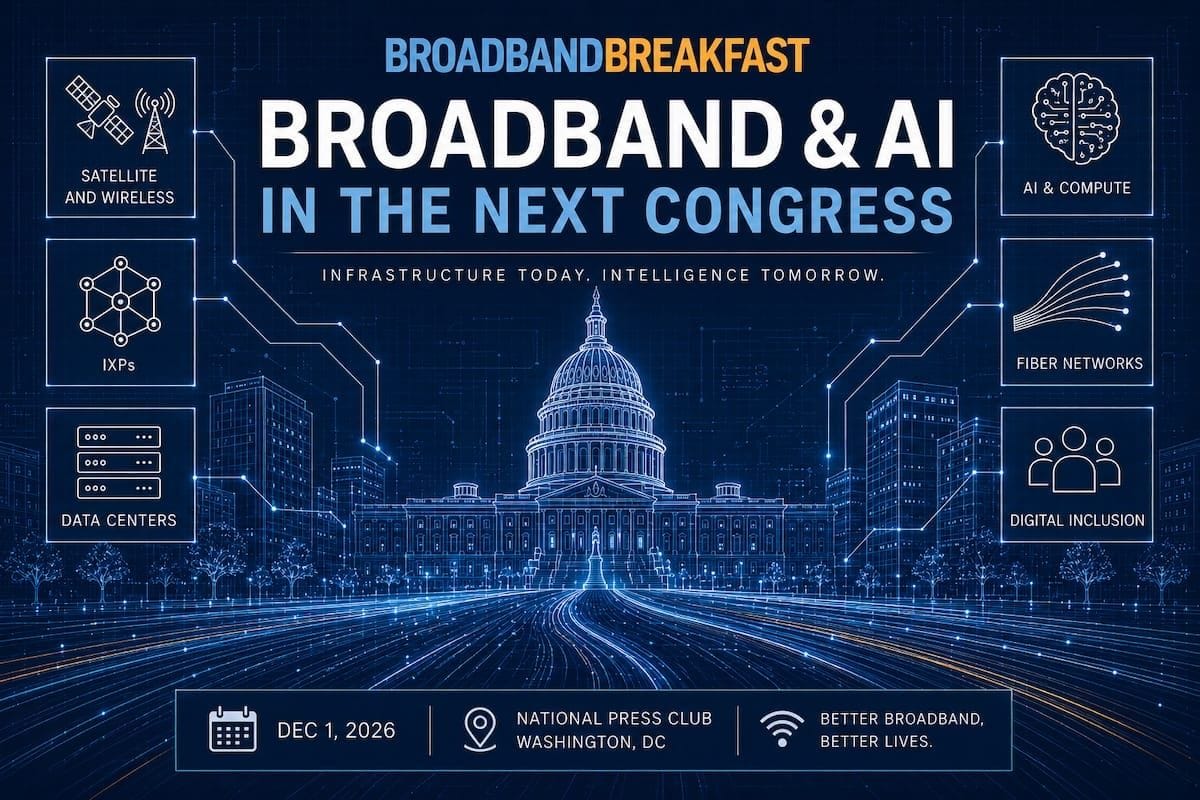
Broadband Breakfast's "Broadband and AI in the Next Congress" takes place Tuesday, Dec. 1, at the National Press Club in Washington, with keynotes from Sen. Ed Markey, D-Mass., and Rep. Buddy Carter, R-Ga.
Utah offered an early warning. In June, Senate President Stuart Adams lost his Republican primary to Stephanie Hollist, 43% to 34%, after championing Stratos, a proposed AI campus of up to 9 gigawatts in Box Elder County, north of the Great Salt Lake. Backed by "Shark Tank" investor Kevin O'Leary, the project would rank among the world's largest AI data centers. Residents feared it would drain scarce water and strain the grid.
As chair of the Military Installation Development Authority, a state body that approved early plans and can override county zoning, Adams became the face of the project. The longest-serving Senate president in Utah history, he had won past races in the deep-red state with ease. He became the first sitting Senate president to lose a primary in modern Utah history. Two Box Elder County commissioners who backed the project also lost.
Ohio hosted 21 of the 41 local data center measures on Tuesday's ballots. At least 14 municipalities passed bans or restrictions. In Trenton, a small Butler County city between Cincinnati and Dayton, 80% of voters approved a charter amendment banning data centers that draw more than 25 megawatts. Neighbors gathered the signatures after plans for a data center surfaced last year. In Oregon, Ohio, opponents of data center limits spent more than $300,000 without turning the tide, Roark said.
Who pays for the grid
Data centers are "one of 20 things" raising utility bills, Gramlich said, alongside replacing grid equipment roughly 70 years old. "But they're kind of getting blamed right now," he said. Electric vehicles, heat pumps that warm homes and offices, and electrified factories are also adding demand.
States are already shifting costs. Large-load tariffs, rate schedules that make the biggest customers carry the costs they add, were pending or in place in 36 states as of March, according to the Smart Electric Power Alliance. After AEP Ohio's tariff took effect, the utility cut its large-load forecast from 30 gigawatts to 13.
Developers could go further, said Steve Haro, founder of the government affairs firm Haro Solutions. He proposed an Alaska-style dividend for neighbors. "Everyone in this catchment area, we're going to send you 300 bucks a year to go towards your utility bills," he said.
The model is Alaska's Permanent Fund Dividend, which since 1982 has sent residents a yearly check from the state's oil wealth. Applied to data centers, neighbors would get a direct share of the buildout, not just a promise of future tax revenue.
The benefits are real but uneven. Developers argue AI campuses like Utah's bring jobs and millions in local taxes. Gramlich agreed that community benefits matter but said they are hard to standardize, because about half of data center developers are first-timers, many backed by private equity.
A narrow window
The Senate bill, the Bipartisan American Affordability and Jobs Act, would make new data centers of 20 megawatts or more pay the full added cost of the power and wires built to serve them. It would also give opponents 150 days to sue over a federal permit under the main environmental laws, down from the six years most challenges get under current law.
The bill puts federal reviews on a clock: Two years for a full environmental impact statement and one year for a shorter environmental assessment. It would also give the Federal Energy Regulatory Commission more power to approve major interstate power lines, and only groups that took part in the public comment process could sue.
Power lines now take far too long, Haro said. The SunZia line, which carries New Mexico wind power west to Arizona, first sought permits in 2006 and began operating in April, he said. "I'm not saying we need to speed things up and have things constructed within six months. That is completely unreasonable," he said. "But it should not take 20 years, a literal generation."
The bias runs both ways, said Haro. The Trump administration froze approved wind and solar permits and stalled power lines over what kind of power they might carry, he said, and the Biden administration did the same with coal. "Transmission is generation agnostic," he said, meaning a power line should not care what kind of plant feeds it.
In September, the House passed a narrower Ratepayer Protection Act 417-3, with a 100-megawatt threshold that states could decline. Senate Democrats blocked it 57-43 on Sept. 30. Gramlich said of the Senate language: "This has more teeth in it."
Even if every Republican votes yes, the bill needs at least seven Democrats Monday, said Haro, a former chief of staff to Sen. Martin Heinrich, D-N.M., one of the bill's four authors. Many Democrats now want to wait for their majority, which would cost Republican votes. "We really only have the next few weeks to pass permitting reform or it won't get done," Haro said.
A coalition of 185 environmental, labor and community groups has called the bill a back-door deal for data centers. Even a Senate win would need to be reconciled with the House's SPEED Act. Rep. Buddy Carter's American Broadband Deployment Act, a broadband permitting bill, was pulled from the House floor in April.
A rebuke, not a mandate
Tuesday was "a massive repudiation of the president," Haro said. Democrats were poised to hold at least 250 House seats, he said, against 257 in 2008, on a much less gerrymandered map. NBC News has since projected 258.
Voters are not embracing Democrats, Haro said, citing an NBC poll with the party's approval at 29%. "They're leasing, not buying Democrats. They are dating, not marrying," he said. The data center issue grew faster than any he has seen in his career, he added. He expects AI to shape the 2028 race, through its effects on household budgets and jobs, and said the candidate with a credible answer to voters' anxiety will win. "But right now, I don't think anybody has a good handle on that prescription," he said.
For Roark, the answer is broader than the frontier models Washington debates. A labor safety net, consumer privacy, digital connectivity and cybersecurity are not "peripheral or optional," he said, but "foundational building blocks of establishing an effective American model for AI governance."
Voters are now forcing a harder question, Roark said: "What does it mean for America to win the AI race if everyday Americans, if all of us don't feel like we're also winning as well?"
Broadband Breakfast's "Broadband and AI in the Next Congress" takes place Tuesday, Dec. 1, at the National Press Club in Washington, with keynotes from Sen. Ed Markey, D-Mass., and Rep. Buddy Carter, R-Ga.