A Troubled Rural Digital Opportunity Fund Program Comes Due
The first deployment deadline for RDOF passed on Dec. 31, 2024 – yesterday.

Jake Neenan
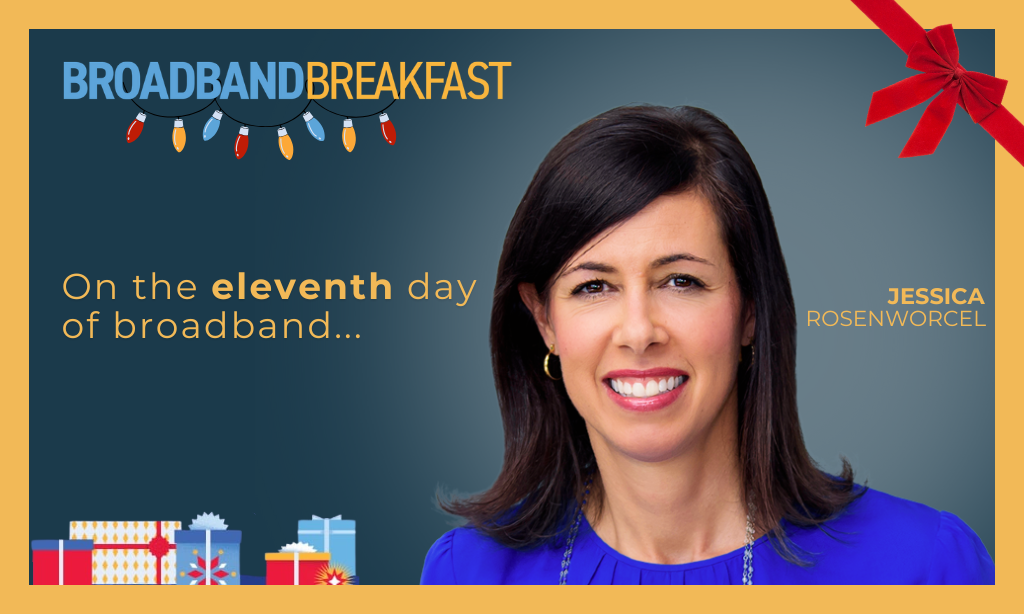
It’s the broadband funding albatross that Federal Communications Commission Chairwoman Jessica Rosenworcel never wanted.
The agency’s Rural Digital Opportunity Fund kicked off with a reverse auction in October 2020 and has been shrinking ever since, both from big winners not passing more stringent FCC review and a trickle of subsequent defaults. 2024 saw more tumult. While the agency did not grant amnesty to providers looking to opt out as costs rose, it did take steps to ease financing requirements.
The 12 Days of Broadband (click to open)
- On the First Day of Broadband, my true love sent to me:
An extra-planetary-life-promoting tech billionaire set on electing a president. - On the Second Day of Broadband, my true love sent to me: 23 million served by the Affordable Connectivity Program.
- On the Third Day of Broadband, my true love sent to me:
3rd year without the Federal Communications Commission having spectrum auction authority. - On the Fourth Day of Broadband, my true love sent to me:
$42.5 billion in Broadband Equity, Access and Deployment funds already allocated. - On the Fifth Day of Broadband, my true love sent to me:
5,500 active satellites currently in Low-Earth Orbit. - On the Sixth Day of Broadband, my true love sent to me:
More than 6 years of service at the FCC by Commissioner and Chairman-designate Brendan Carr. - On the Seventh Day of Broadband, my true love sent to me:
More than 70 billion kilowatt-hours of electricity annually consumed by data centers in the U.S. - On the Eighth Day of Broadband, my true love sent to me:
$8.1 billion dollars in annual Universal Service Funds. - On the Ninth Day of Broadband, my true love sent to me:
$90 billion in global telecom Merger & Acquisition deals value in 2024. - On the Tenth Day of Broadband, my true love sent to me:
100 broadband-related rulemakings at the FCC relying on Chevron Deference. - On the Eleventh Day of Broadband, my true love sent to me:
Nearly 11 years to complete the Rural Digital Opportunity Fund, complete with defaulted locations. - On the Twelfth Day of Broadband, my true love sent to me:
More than a dozen policy-makers and pro-tech thinkers echoing the Andreessen-Horowitz “Little Tech” agenda.
Rosenworcel, a commissioner in January 2020 when the program was voted on, dissented in part from then-chairman Ajit Pai’s initiative, arguing the procedures were rushed and that the agency needed better data before moving forward.
“In the end, this is not the broadband plan we need. It is not guided by maps. It is not guided by data,” she said at the time. “It is guided by a desire to rush out the door, claim credit and pronounce our nation’s broadband problems solved.”
The incredible shrinking RDOF
As originally envisioned after the first round of bidding, the program was slated to serve more than 5.2 million locations. Providers were vetted after winning preliminary awards, and the agency determined some big winners weren’t qualified.
These early defaults were largely responsible for taking the locations served down to 3.5 million. In total, more than $3 billion of the original $9 billion awarded has been defaulted on, owing both to those initial denials and approved providers rescinding commitments to serve locations. (Originally, the program had been touted as a $20.4 billion program, with up to $16 billion in a "Round 1".)
Subsidy support for winning bidders was greenlit over the next two years, with the first deployment deadline passing on Dec. 31, 2024–yesterday. All told, awardees have nearly 11 years - or a full 10 years - to complete the Rural Digital Opportunity Fund, complete with defaulted locations.
Worries came from a coalition of ISP trade groups, local governments, consumer groups, and other organizations who asked the FCC in February 2024 to grant amnesty for RDOF participants looking to hand back locations, which can come with financial penalties.
They wanted lighter penalties for handing back locations in an effort to get potentially doomed RDOF areas off the books in time to make them eligible for a separate rural broadband subsidy run by the Commerce Department, the $42.5 billion Broadband Equity, Access, and Deployment program. If defaults came too late, the thinking went, rural areas might be out of luck with RDOF funding rescinded and BEAD already underway.
There was a lot of discussion about this before the agency, with some participating ISPs arguing pandemic supply chain shocks and rising costs made certain projects unworkable with the given awards. Rural electric co-ops, many of which also provide broadband, had opposed the idea, arguing some winners underbid local competitors that would have been committed to serve their communities and only wanted out once the deal wasn’t as sweet.
Agency ruled against broad relief
The FCC ultimately decided against broad relief in July. The agency noted more than 70 percent of participating providers had reported buildouts underway a full year before the first deployment milestone. That deadline, which required reaching 40 percent of an ISP’s awarded locations, was Dec. 31, 2024 for providers authorized in 2021 (some were authorized in 2022 and have an extra year). The 2021 carriers have until Jan. 15, 2025, to notify the agency of a shortfall and provide an explanation.
The agency said its default process was flexible enough on a case-by-case basis that a broad relaxing of the rules wasn’t necessary. It said in a public notice agency staff coordinate with local governments and state broadband offices, the entities responsible for doling out BEAD cash, in the event of a default in an effort to find other funding solutions.
The agency did take some steps to ease financial burdens for RDOF participants, though. Consolidated Communications had flagged in January 2024 that Wells Fargo, the bank from which it received its required letter of credit, was no longer eligible under the FCC’s bank safety metric. The agency ultimately paused reliance on that metric, noting an unexpected 40 percent decrease in the number of eligible banks nationwide, in March and sought input on permanent changes.
Changes to letter of credit requirements
That was another robust discussion, with the banking industry weighing in along with ISPs who didn’t want to shop around for new credit agreements out of the blue. The agency moved on Dec. 11, 2024 to permanently ditch Weiss, opting to use a standard from federal financial regulators that the FCC thought would increase the number of eligible lenders without adding extra risk.
In that same rulemaking, the agency also let RDOF providers reduce their letters of credit sooner, allowing ISPs to lower the agreement to one year of support after building out to 10 percent of their committed locations rather than 20 percent. Smaller providers were happy with that, saying it would free up funds for deployments—letters of credit typically require putting up an equal amount of cash as collateral.
“Getting this done right requires extraordinary attention to detail. One of the details that matters—really matters—is making sure that the funds we provide go to meaningful broadband buildout,” Rosenworcel said when adopting the new rules. “But over time we have found that aspects of our letter of credit requirements are so stringent that they can get in the way of building better broadband. That is why we update them here. By doing so, we can help speed the deployment of high-speed service to those in places without.”
The defaults that spooked amnesty proponents did continue trickling in in 2024, with the largest being a 23,000-location default from Charter and a more than 64,000-location default in late November from Mercury Broadband. A multitude of smaller areas have also been handed back.
While those are significant for the affected locations, particularly given how far states are into determining their final eligibility maps for BEAD, broadband consultant and former FCC bureau chief Carol Mattey has noted defaults represent a small fraction of the 3.5 million locations set to receive high-speed broadband from the program.
Providers’ support is set to be revised starting in 2027 based on more current broadband coverage data, but the FCC hasn’t issued a definitive ruling on how that process will be handled.
The discontents
The two biggest defaulters from the beginning of the program made clear they weren’t happy with the FCC’s decisions in 2024.
SpaceX-owner Elon Musk posted frequently on X, which he also owns, about the agency’s decision to deny Starlink’s preliminary award of $885 million, first made at the bureau level in 2022 and reaffirmed by commissioners in late 2023 after the company appealed.
Winners in the reverse auction submitted longer applications demonstrating their ability to serve their locations after the fact, and the FCC found SpaceX didn’t demonstrate its satellite broadband service would be able to meet minimum program speed requirements by the Dec. 31, 2024, deployment milestone. Musk, who since became a major GOP donor and close advisor to president-elect Donald Trump, accused the agency of punishing him for his amplifying right-wing political content online, something Rosenworcel has strongly denied.
The Republican chair of the House Oversight Committee, Rep. James Comer, R-Ky., probed the FCC decision in October following Musk’s posts, requesting documents and agency communications related to the decision.
Brendan Carr, the commission’s senior Republican and the incoming chairman, typically a Musk ally, has said the agency is “very unlikely” to revisit the decision since SpaceX didn’t pursue a further appeal.
LTD Broadband, which had its preliminary award of $1.3 billion to serve more than 500,000 locations revoked, took the agency to court and argued its case in November. The FCC had determined the company wasn’t capable of scaling up quickly enough to meet its commitment. In 2023 the company’s owners created a separate entity, GigFire, that now serves the majority of LTD’s customers.
The company argued to the D.C. Circuit Court of Appeals that the agency used an improperly stringent standard of review when reviewing its applications because of its small size. FCC attorneys denied this, insisting the agency found LTD wasn’t qualified under normal RDOF procedures. A decision has yet to be issued.