A Big Launch Year for Low Earth Orbit Satellites
2024 marked the year LEOs went from experimental to expansive.

Jericho Casper
In 2024, the sky was no longer the limit for low Earth orbit satellites, as they became a widely recognized solution for expanding broadband access in rural communities.
What seemed like a futuristic solution when SpaceX’s Starlink was launched in 2019 has now become a crucial tool in connecting the hardest-to-reach – driven by rapidly increasing commercial launches, government efforts to streamline satellite deployment, and the creation of new regulatory frameworks and government bodies to foster innovation and competition in satellite broadband.
The 12 Days of Broadband (click to open)
- On the First Day of Broadband, my true love sent to me:
An extra-planetary-life-promoting tech billionaire set on electing a president. - On the Second Day of Broadband, my true love sent to me: 23 million served by the Affordable Connectivity Program.
- On the Third Day of Broadband, my true love sent to me:
3rd year without the Federal Communications Commission having spectrum auction authority. - On the Fourth Day of Broadband, my true love sent to me:
$42.5 billion in Broadband Equity, Access and Deployment funds already allocated. - On the Fifth Day of Broadband, my true love sent to me:
5,500 active satellites currently in Low-Earth Orbit. - On the Sixth Day of Broadband, my true love sent to me:
More than 6 years of service at the FCC by Commissioner and Chairman-designate Brendan Carr. - On the Seventh Day of Broadband, my true love sent to me:
More than 70 billion kilowatt-hours of electricity annually consumed by data centers in the U.S. - On the Eighth Day of Broadband, my true love sent to me:
$8.1 billion dollars in annual Universal Service Funds. - On the Ninth Day of Broadband, my true love sent to me:
$90 billion in global telecom Merger & Acquisition deals value in 2024. - On the Tenth Day of Broadband, my true love sent to me:
100 broadband-related rulemakings at the FCC relying on Chevron Deference. - On the Eleventh Day of Broadband, my true love sent to me:
Nearly 11 years to complete the Rural Digital Opportunity Fund, complete with defaulted locations. - On the Twelfth Day of Broadband, my true love sent to me:
More than a dozen policy-makers and pro-tech thinkers echoing the Andreessen-Horowitz “Little Tech” agenda.
This year, the number of operational satellites orbiting in low Earth surged to more than 5,500, according to the Union of Concerns Scientists’ satellite database – about half the total number of 11,000 satellites that the Federal Communications Commission estimates are orbiting the Earth in higher, geostationary orbit.
And thats up from just over 2,000 orbiting satellites in 2020, according to the FCC.
The LEO satellite market remains poised for significant growth, projected to expand from $12.6 billion in 2024 to $23.2 billion by 2029, at a 13.0% Compound Annual Growth Rate, according to a report by Research and Markets.
The growth of the LEO sector has triggered a broader surge in the global space economy – rising to $570 billion last year, and expected to exceed $1.7 trillion by 2035.
“Whatever numbers you use, the rate of growth of the space economy is astronomical (couldn’t resist),” said FCC Chairwoman Jessica Rosenworcel in her keynote address this December at the 20th anniversary of the U.S. Space Command and Satellite Industry Association Commercial SATCOM Workshop.
“Promoting investment and innovation in the space economy is one of our top priorities,” Rosenworcel said, underscoring government support.
LEOs are the government’s shiny new toy
2024 has proven to be a game-changing year for LEO satellites, driven not only by rapid technological advancements but also by decisive government actions.
In September, President Joe Biden signed the Launch Communications Act into law, mandating the FCC allocate spectrum to support satellite servicing and relaunch operations.
The law mandated the FCC update its decades-old framework to access these frequencies, and enabled companies to authorize multiple satellite launches and re-entries with a single request – both easing and accelerating the process of gaining federal approval for deploying LEO satellites.
The FCC hit the ground running in 2024, the first full year of operation for its newly established Space Bureau to take the lead in policy and licensing matters related to space-based communications and activities. In its first year, the Bureau produced a 74% increase in satellite application processing.
But there was more to come. In March, the FCC voted to establish a spectrum framework, enabling satellite operators to partner with mobile terrestrial carriers for supplemental coverage from space.
T-Mobile and Comcast swiftly hopped on board, announcing partnerships with Starlink in June and November, respectively, to leverage Starlink satellites to complement their existing terrestrial infrastructure and extend their service reach.
Other companies, including AT&T and Verizon, have similar petitions pending with the FCC, seeking to collaborate with satellite provider AST SpaceMobile.
This framework marked a significant step toward the “Single Network Future,” the FCC’s bold new vision for a future in which fiber, terrestrial wireless, and satellite broadband seamlessly integrate to provide universal connectivity. T-Mobile has already invited customers to register for beta testing of its Starlink-powered satellite phone service.
The FCC also expanded spectrum for satellite broadband by voting to open up 1,300 megahertz in the 17 GigaHertz (GHz) band in September; and continued advancing innovative satellite technologies, including everything from 3D printing in orbit to asteroid mining and lunar communications.
Starlink dominates competitors
No company has embraced the LEO revolution more than SpaceX, whose Starlink constellation as of September boasted over 4 million subscribers globally – having launched more than 5,000 LEOs, of which approximately 4,800 are believed to be in orbit.
In November, SpaceX COO Gwynne Shotwell confirmed that Starlink was nearing 5 million subscribers, further solidifying its position as the dominant player in the satellite broadband market.
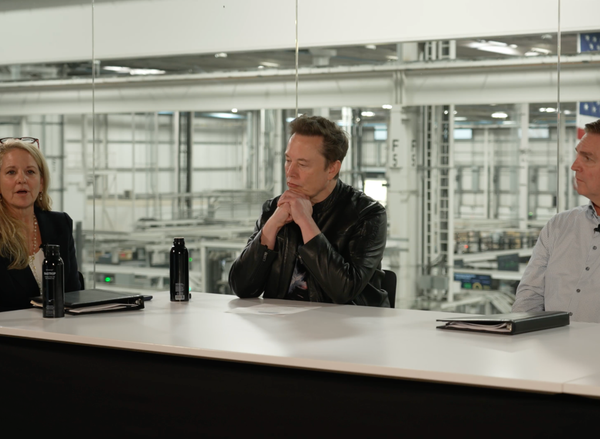
SpaceX CEO Elon Musk has said that Starlink will likely deliver more than 90 percent of all cargo – satellites, spacecraft, and equipment – going into space this year, with its Starlink system now controlling nearly two-thirds of active satellites in orbit, well over 6,800.
Most of SpaceX’s competitors – Amazon’s Project Kuiper, OneWeb, and AST SpaceMobile – have yet to launch their full constellations or are still in the early stages of development.
Eutelsat recently required assistance from SpaceX to launch 20 OneWeb satellites, as it races to complete its constellation of over 600 satellites. Meanwhile, Amazon’s Project Kuiper, which hopes to launch more than 3,000 satellites by mid-2026, has launched two prototype satellites as of October 6, 2023. Similarly, Boeing’s LEO satellite project remains in the development phase.
FCC’s Chair Rosenworcel said in September the agency was taking steps to increase competition in the low Earth orbit satellite internet sector.
Speaking at the U.S. Chamber of Commerce’s Global Aerospace Summit, Rosenworcel emphasized the need for new players to enter the market. “We need lower prices and more innovation – space should be no exception,” Rosenworcel said.
Might BEAD become more LEO friendly?
The Broadband Equity, Access, and Deployment program, with its $42.5 billion allocation, has begun to open doors for LEO satellites to play a larger role in connecting underserved areas.
Under rules adopted in August, states will be able to turn to LEOs as an alternative technology in regions where no terrestrial providers are applying for grants or where the costs of deploying traditional infrastructure would exceed a certain threshold.
Several states have already signaled their intent to work with satellite providers under BEAD. Nevada, for instance, has committed to partnering with Amazon’s Kuiper Systems, which was awarded $14.4 million to serve 4,891 locations, as part of Nevada’s $416 million BEAD allocation. Louisiana has also expressed interest in satellite broadband, though it has yet to announce which LEO provider it will partner with.
As the BEAD program moves forward in 2025, GOP lawmakers and billionaire Trump advisor Elon Musk have raised concerns over the program’s emphasis on fiber, with some advocating for a shift in focus toward LEO satellite technology.
Trump, in an appearance on the Joe Rogan Experience podcast in October 2024, praised Musk’s Starlink. Trump suggested that BEAD federal dollars would be better spent on expanding LEO satellite broadband rather than the slower rollout of wireline connections under the BEAD program.
“They could have gotten Starlinks to everybody with that kind of money,” Trump remarked, referring to the $42.5 billion allocated for the BEAD program.
Musk, a vocal critic of the BEAD program and its delays, also voiced concerns about the effectiveness of the government’s broadband efforts, calling it “an outrageous waste of taxpayer money” and accusing the program of failing to serve people in June 2024.
Echoing Musk's criticism, the FCC’s next chairman Brendan Carr has long advocated for satellite broadband, criticizing BEAD’s fiber preference. In 2022, Carr criticized the FCC for rejecting full grants to Starlink from the $20.4 billion Rural Digital Opportunity Fund, which included $885 million meant to assist Starlink in providing high-speed internet to over 640,000 rural homes and businesses across 35 states.
As the BEAD program continues to distribute funding and LEO satellite technology plays an increasingly pivotal role, the debate over its impact is far from settled.
As writer Karl Bode pointed out, “Some broadband is better than no broadband, and Starlink is a great option for those out of the reach of traditional options — if they can afford it,” referring to the $120 per month service. However, he and observers continue to raise questions about Starlink’s capacity, scalability, and environmental impact.