AI and Child Safety, Cyber Agency Short-Staffed, Google Drops CBRS, NTIA on BEAD Poles
Plus, SpaceX IPO Makes Musk First Trillionaire

Daily Update of the FCC's AWS-3 re-auction:
Total bidding proceeds after Friday: $1,332,565,000
Increase from end of Thursday: $565,657,000
AI
Inside the Race to Protect Children from AI

WASHINGTON, June 14, 2026 – Lawmakers and regulators are scrambling to define how far the government should go in regulating AI chatbots used by children.
AI chatbots, including ChatGPT, Gemini and Bing AI, have entered childhood faster than lawmakers have worked out what to do about them. A child can open one for homework help and, in the same exchange, begin treating it as something closer to a confidant.
One Year After DOGE Cuts, Cybersecurity Agency Struggles Over Staffing
WASHINGTON, June 13, 2026 – The cyber threats facing the United States are growing more sophisticated – yet the agency tasked with defending against those threats is still rebuilding after losing roughly one-third of its workforce.
More than a year after the Department of Government Efficiency's sweeping workforce reductions at the Cybersecurity and Infrastructure Security Agency, lawmakers, cybersecurity experts and former officials are questioning whether the nation's primary cyber defense agency can fully carry out its mission amid rising threats from foreign hackers and growing concerns about election security.
Google Exiting CBRS Spectrum Management
WASHINGTON, June 12, 2026 — Google is retiring its spectrum access system for the Citizens Broadband Radio Service.
The company stopped taking new customers Wednesday and will fully shutter the service on June 10, 2027, according to its website.
NTIA Defends BEAD Pole Rules
WASHINGTON, June 12, 2026 — The Commerce Department wants to expand federal pole attachment rules as part of its flagship broadband grant program. Electric cooperatives, which are usually exempt from the regime, aren’t happy about it.
The National Telecommunications and Information Administration’s top attorney defended the agency’s policy Thursday.

AMERICA250 / TELECOM150
Broadband Breakfast to Mark America250 With Telecom150, a Series on American Telecom AND an In-Person Event
About the In-Person Event
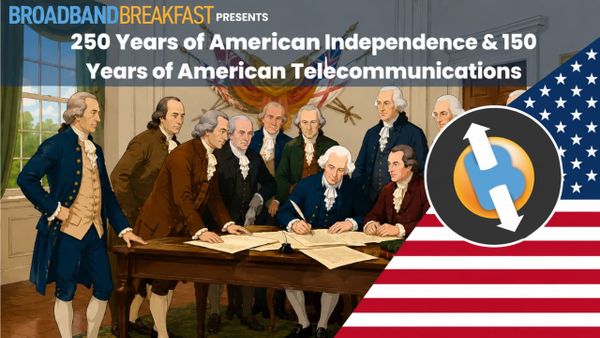
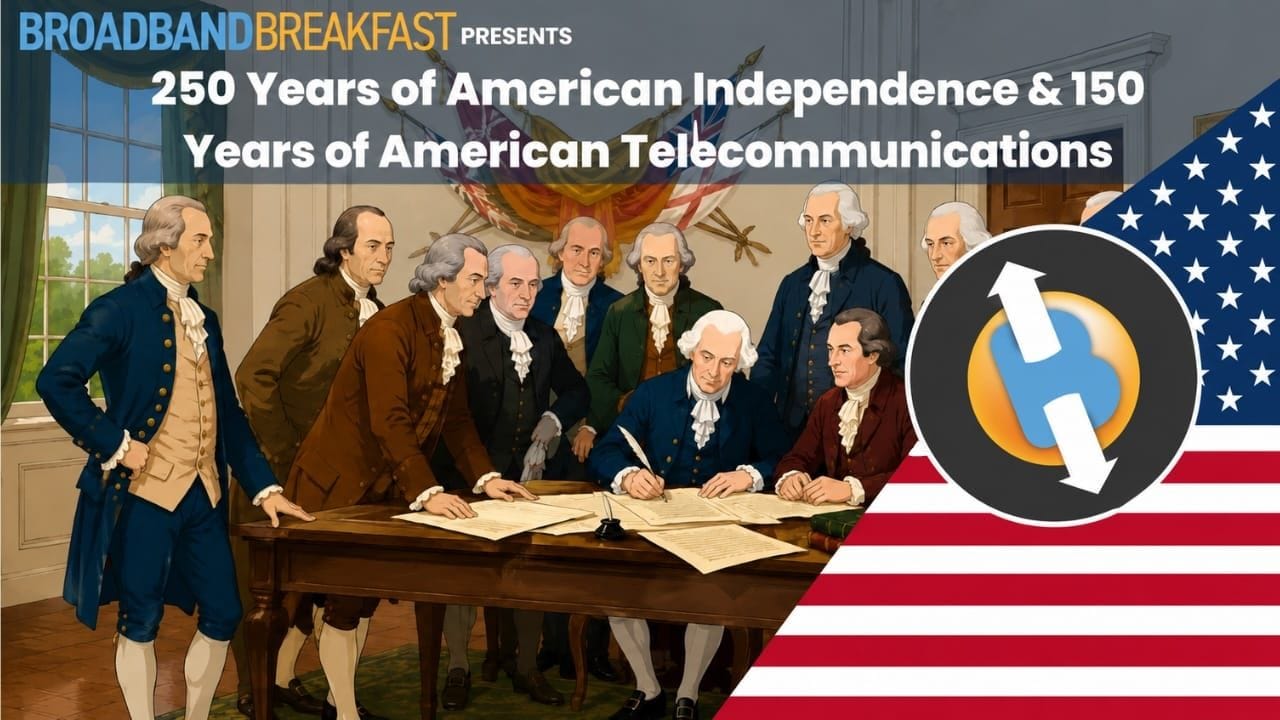
This July 4th marks 250 years of American independence and 150 years since Alexander Graham Bell made the first telephone call on March 7, 1876, a moment that set American telecommunications in motion.
In honor of America's Semiquincentennial (250th Anniversary) and Telecom's Sesquicentennial (150th Anniversary), Broadband Breakfast is hosting a three-part webcast series (June 17, June 24 and July 1, 2026, each at 12 Noon ET), AND an in-person event on October 1, 2026 at the National Press Club in Washington.
About the Webcast Series
This July 4th marks 250 years of American independence and 150 years since Alexander Graham Bell made the first telephone call on March 7, 1876, a moment that set American telecommunications in motion. This three-part live online series traces that 150-year arc, from Bell's telephone through Herbert Hoover's radio conferences to the age of artificial intelligence. Each session brings together historians, technologists, and practitioners to examine a distinct 50-year period of American communications history.
Free Sign up for the Three-Part Webcast
June 17, June 24 and July 1, 2026
Free Sign up for the Three-Part Webcast!POLICYBAND
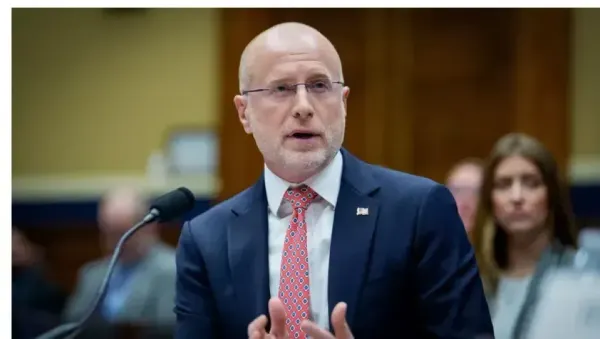
Carr Tells House Democrats Disney Provided ‘Deficient, Nonresponsive, and Disingenuous’ Responses to Lawful FCC Data Requests
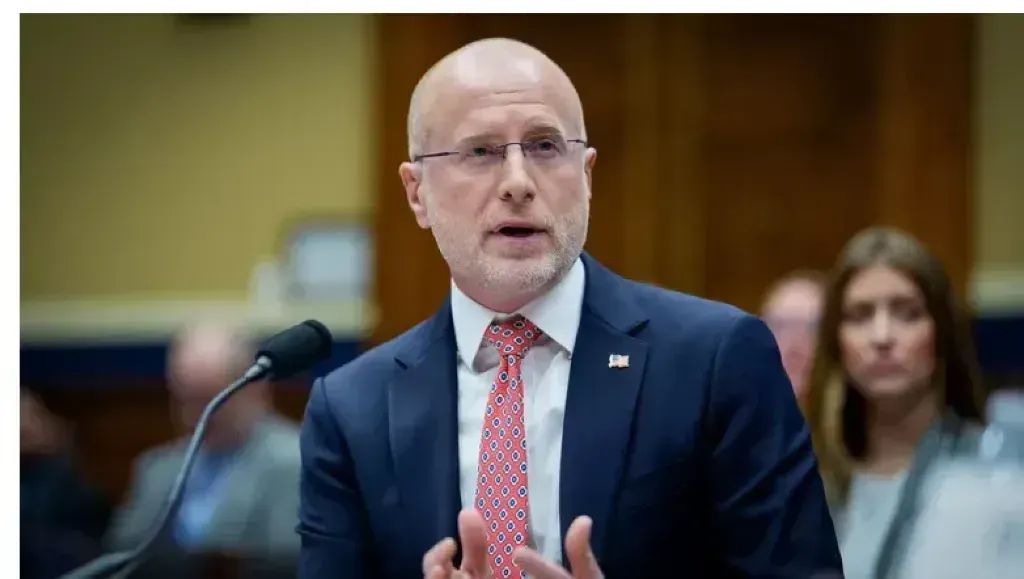
Reply: FCC Chairman Brendan Carr is defending his record against what he calls partisan attacks and inaccurate press reports, telling House Democrats he is enforcing long‑standing communications laws rather than targeting any company for political reasons.
“Under my leadership, the FCC will continue working to ensure fair and even-handed treatment for all parties appearing before the agency while faithfully carrying out the FCC’s statutory obligations,” Carr said in a seven-page May 29 letter to Energy and Commerce Committee Ranking Member Rep. Frank Pallone (D-N.J.), Rep. Yvette Clarke (D-N.Y.), and Rep. Doris Matsui (D-Calif.). Carr, who recently posted the letter on the FCC’s website, became Chairman on Jan. 20, 2025. (More after paywall)
Policyband
Unlimited Access to Broadband Breakfast and Policyband with Breakfast Club Plus
Upgrade to Breakfast Club Plus
Get unlimited access to Broadband Breakfast News Content during Pro Hours (7 a.m.-6 p.m. ET) as a Breakfast Club Member
Ads in New York Must Now Label AI-Generated ‘Synthetic Performers’
The 'first-in-the-nation law' is aimed at enhancing transparency, and signed by Gov. Kathy Hochul in December, it took effect Tuesday.
California Lawmaker Pulls Constitutional Amendment Reshaping Telecom Oversight
Boerner says the proposal needs more work as opponents warn it could undermine the CPUC's telecommunications authority
Fiber Projects Capture Most of $18.2 Million California Broadband Investment
Four projects led by Plumas-Sierra Telecom awarded $14.7 million of approved funding
Anthropic Said Friday it Took Its Latest AI Models Offline to Comply with Export Controls
Fable 5 and Mythos 5 offline as company complied with a directive from the Trump administration to prevent tool's use by foreign nationals.

Juneteenth Special: How DigitalC and Tarana Are Connecting Cleveland...10K Connections and Counting!
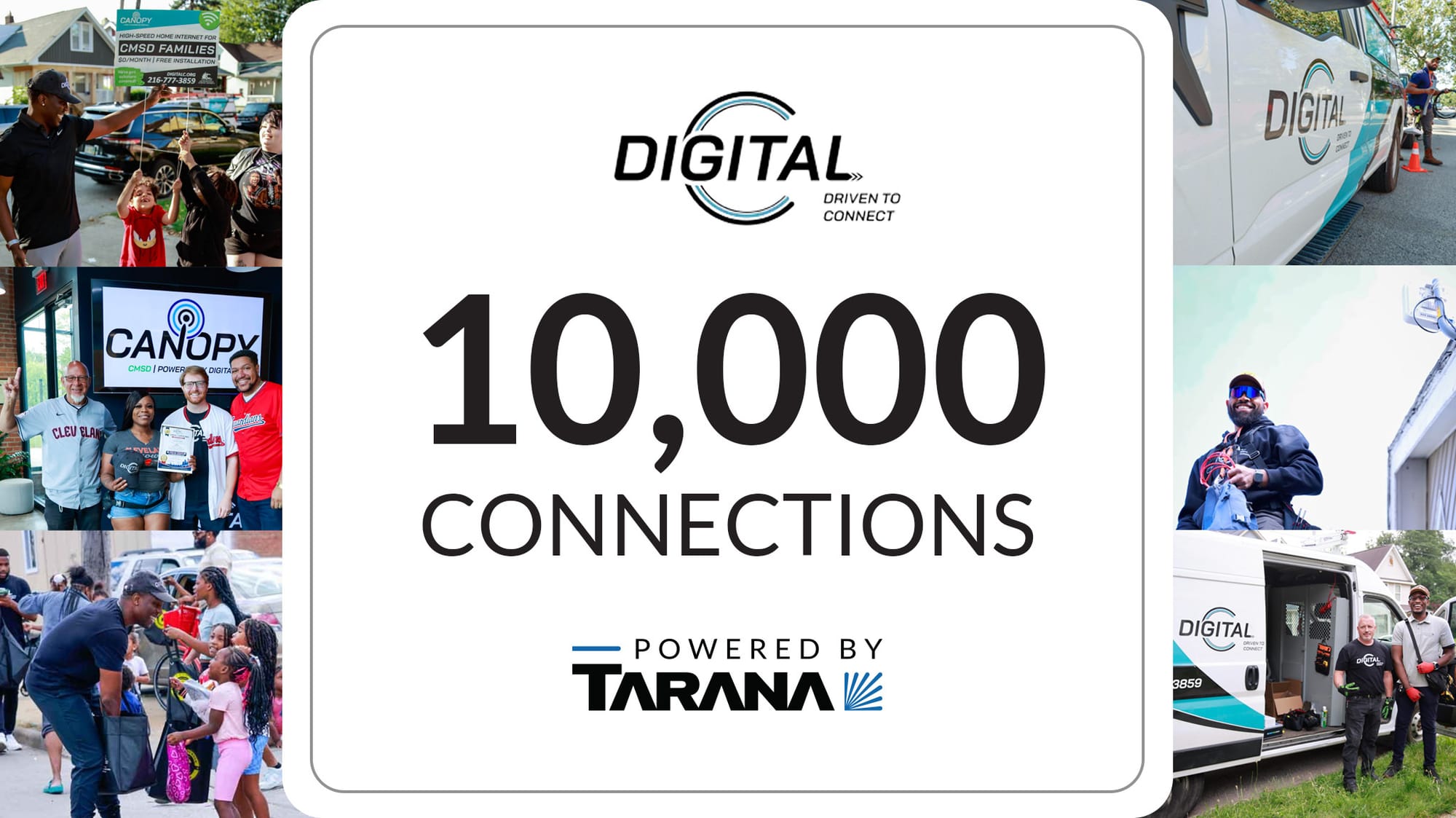
DigitalC, a nonprofit technology social enterprise on a mission to bridge the digital divide, for good, has surpassed 10,000 connections in Cleveland, Ohio. With Tarana’s next-generation Fixed Wireless Access (ngFWA) technology, DigitalC has deployed a citywide, high-speed broadband network, delivering affordable internet service to neighborhoods long overlooked by traditional telecom investment in Cleveland and beyond. Join this webinar to learn what enabled DigitalC’s success, what’s next for the organization, and how other operators and cities can replicate this approach, now known as The Cleveland Model, to make meaningful progress on the digital divide.
Join Broadband Breakfast, Digital C and Tarana Wireless for this special Juneteenth Event about Connections in Cleveland on Friday, June 19, at 1 p.m. ET.
Panelists
- Councilman Brian Kazy, Ward 13, City of Cleveland, Ohio
- Carl Guardino, Vice President of Government Affairs & Policy, Tarana Wireless
- Joshua Edmonds, CEO, DigitalC
- Drew Clark (moderator), CEO and Publisher, Broadband Breakfast
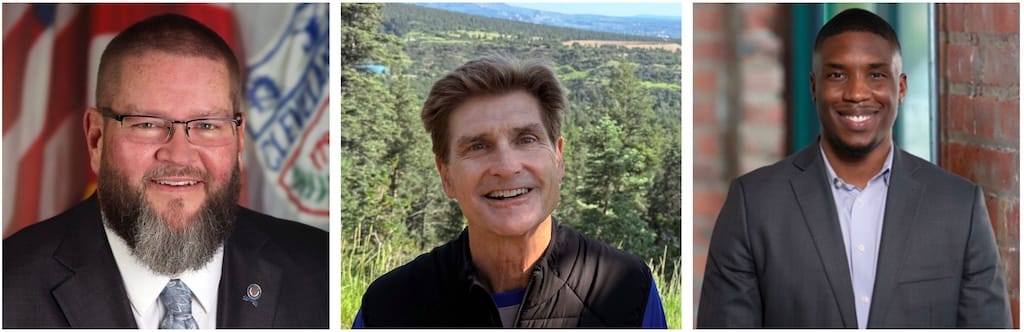
Councilman Brian Kazy represents Ward 13, which spans from the Lakewood border near West 117th Street to the boundary of Brook Park, and includes the West Side neighborhoods of Bellaire-Puritas, Puritas-Longmead and Rockport which together make up part of West Park. He was recently appointed Chair of the National League of Cities (NLC) 2025 Public Safety and Crime Prevention Federal Advocacy Committee. In this leadership role, he will also serve a one-year term on the NLC Board of Directors.
Carl Guardino serves as the Vice President of Government Affairs & Policy at Tarana. After three decades in CEO and senior officer roles, including 24 years as CEO of the Silicon Valley Leadership Group, Carl came to Tarana after leading global government affairs for Bloom Energy. Carl also serves as Chair of the CA Transportation Commission, which annually programs and allocates nearly $15 billion in transportation improvements throughout the state. Through his past leadership roles, Carl has led and co-led 19 statewide, regional, and countywide ballot initiatives, winning 18 out of 19 campaigns.
Joshua Edmonds, CEO at DigitalC, is revolutionizing Cleveland's digital landscape with bold ambition. By securing $53 million in public, private and philanthropic investments for the nonprofit social enterprise, DigitalC is disrupting the telecommunications industry and bridging the city's glaring digital divide. Edmonds leads DigitalC with relentless tenacity, embodying the consistency and leadership that define the organization's ethos. Under his guidance, DigitalC redefines connectivity through community-based collaborations to deliver superior high-speed home internet and tailored digital skills training.
Breakfast Media LLC CEO Drew Clark has led the Broadband Breakfast community since 2008. An early proponent of better broadband, better lives, he initially founded the Broadband Census crowdsourcing tool to collect and verify broadband data left unpublished by the Federal Communications Commission. As CEO and Publisher, Clark presides over the leading media community advocating for higher-capacity internet everywhere through topical, timely and intelligent coverage. Clark also served as head of the Partnership for a Connected Illinois, a state broadband initiative.
About Tarana

Tarana is the creator of ngFWA (next-generation fixed wireless access) — an entirely new technology built from the ground up to deliver reliable residential broadband. G1, our ngFWA platform, overcomes previously insurmountable industry challenges for service providers in every market to deliver better broadband more efficiently.
BRIEFS
State Department, Starlink to Cooperate on Disaster Response
Agreement will enhance U.S. and international humanitarian efforts.
Broadcasters Support NO FAKES Act
Senate bill would protect Americans from unauthorized AI deepfakes.
Demand Picked Up This Week in AWS-3 Re-Auction
Analysts say proceeds clearing $2.9 billion is looking more and more likely.
SpaceX Soars 25% in Wall Street Debut and Makes Elon Musk the First Trillionaire
The company has a market value of $2.21 trillion, with Forbes estimating Musk’s net worth at $1.1 trillion.
BROADBAND LIVE
Broadband Breakfast on June 17, 2026 – 1876-1926: The Telephone and the Transatlantic Cable
Join Broadband Breakfast for the first installment of our three-part series celebrating the 250th Anniversary of American Independence, and the 150th Anniversary of American Telecommunications.
The first installment will explore the half-century from 1876 to 1926. This is the era in which American communications were transformed by the telephone and the rapid spread of long-distance cables. Beginning with Alexander Graham Bell's patent on the telephone on March 7, 1876, and the founding of Bell Telephone the following year, this era saw the rise of AT&T, the buildout of nationwide copper networks, and the completion of the first transcontinental telephone line in 1914. Submarine and overland cables stitched together commerce, government and family life at unprecedented speed, laying the physical and regulatory groundwork for everything that followed. Our panel will examine how the policy debates, monopoly questions, and infrastructure investments of this period continue to shape today's broadband landscape.
Panelists
- Claude S. Fischer, Distinguished Professor of the Graduate School in Sociology, University of California, Berkeley; author of America Calling: A Social History of the Telephone to 1940
- Menahem Blondheim, Professor of Communication and History, Hebrew University of Jerusalem; author of News over the Wires: The Telegraph and the Flow of Public Information in America, 1844-1897
- Other panelists have been invited
- Drew Clark (moderator), CEO and Publisher, Broadband Breakfast

AI
Jonathan Turley Raises Automation Fears in Free State Foundation Address
Fox News contributor also spoke on Thomas Paine’s life and legacy
Experts at Free State Event Warn Against Expanded Federal Role in Broadband, Media Regulation
Speakers at the foundation’s 20th anniversary luncheon criticized the Universal Service Fund and questioned the FCC’s broadcast public-interest standard.
Some Lawmakers Wary Of NextNav Proposal
Other witnesses promoted GPS backups using alternative satellites options or TV broadcasting infrastructure.
BROADBAND LIVE
Broadband Breakfast on June 24, 2026 - 1927-1976: Broadcasting, Cable and the Creation of the Media
Join Broadband Breakfast for the first installment of our three-part series celebrating the 250th Anniversary of American Independence, and the 150th Anniversary of American Telecommunications.
From the golden age of radio to the rise of color television and the dawn of cable, the 1927-1976 era reshaped the mass media and how Americans consume news, entertainment, and political discourse. This Broadband Breakfast Live Online session will trace the founding of NBC in 1926, the creation of the Federal Radio Commission in 1927, the passage of the Communications Act of 1934, and the postwar television boom: Including the landmark 1960 Kennedy-Nixon debates, the emergence of PBS and cable systems that began challenging the big three broadcast networks. Along the way, regulators wrestled with spectrum allocation, public interest obligations, the Fairness Doctrine, and the alleged tension between broadcast “scarcity” and the First Amendment. Panelists will unpack how broadcasting's regulatory bargains and business models may still echo in today's debates over content moderation, media consolidation and universal access.
Panelists
- Michael J. Socolow, Professor of Communication and Journalism, University of Maine; author of Six Minutes in Berlin: Broadcast Spectacle and Rowing Gold at the Nazi Olympic
- Other panelists have been invited
- Drew Clark (moderator), CEO and Publisher, Broadband Breakfast

BEAD
Roth Provides BEAD and Spectrum Updates
The NTIA administrator discussed some of the challenges and updates facing the administration.
FCC's Trusty: Infrastructure Vandalism Is a National Security Crisis
After 16,000 attacks, and 10 million customers cut off, Congress still hasn't acted.
AI Preemption Battle Lands in Congress With Substantive Discussion Draft
Bipartisan bill would block states from regulating AI development for three years, reigniting a fight between states and the Trump administration
BROADBAND LIVE
Broadband Breakfast on July 1, 2026 - 1977-2026: Computing, the Internet and Artificial Intelligence
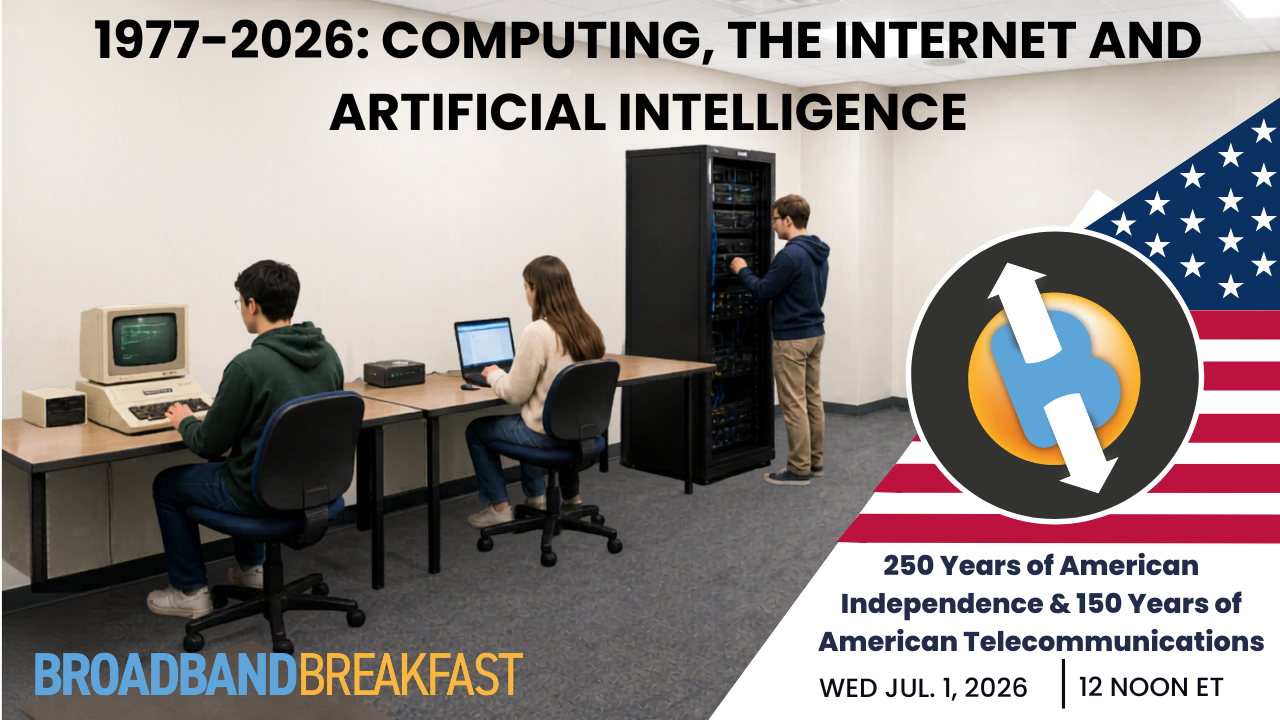
Join Broadband Breakfast for the first installment of our three-part series celebrating the 250th Anniversary of American Independence, and the 150th Anniversary of American Telecommunications.
At the 200th anniversary of American Independence 50 years ago, the personal computer was a hobbyist's curiosity. Today, artificial intelligence drafts our emails, writes our code, and reshapes entire industries overnight. To close out Broadband Breakfast's series celebrating 150 Years of American Telecommunications, we trace the breathtaking arc from the Apple II computer, the breakup of “Ma Bell,” the transition from the ARPANET to the commercial Internet, including the World Wide Web, the smartphone revolution and the generative AI boom now testing the limits of policy, infrastructure and even human imagination. Key inflection points along the way include the 1996 Telecommunications Act, the dot-com era, the rise of broadband and big tech, net neutrality battles and the explosion of large language models in the ChatGPT era. Our experts will debate what this fast-paced half-century tells us about innovation cycles, regulatory lag, and the next 150 years of American Telecommunications.
Panelists
- Vint Cerf, Vice President and Chief Internet Evangelist, Google
- Other panelists have been invited
- Drew Clark (moderator), CEO and Publisher, Broadband Breakfast
About Broadband Breakfast:
Broadband Breakfast is the leading media company advocating for higher-capacity internet everywhere through topical, timely and intelligent coverage. The company’s annual Digital Infrastructure Investment conference champions a robust 21st century information economy.
Learn About Broadband Breakfast